Languages
Friday, October 16, 2026



News and Views from the Global South
Haiti
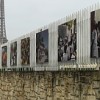
HAITI: Artists Join UN to Rebuild Cultural Life
As international donors prepare to meet at the United Nations headquarters in New York to discuss ways to rebuild Haiti, after the devastating Jan. 12 earthquake, the country’s artistic community has been mobilising to make culture a key aspect of reconstruction.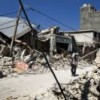
DEVELOPMENT: Haiti Must Destroy Before Rebuilding
When the Jan. 12 earthquake struck this mountainous country, in less than a minute, it transformed it from one of the poorest countries in the Western Hemisphere to the largest construction site this side of the Atlantic.HAITI: Recovery Bill Estimated at 11.5 Billion Dollars
Two weeks before a major donors conference, the Haitian government has estimated that the country will need some 11.5 billion dollars over the next three years to recover from the devastating Jan. 12 earthquake.HAITI: Caribbean Unites Behind Recovery Plans
As he travels back to his headquarters in Washington, World Bank president Robert Zoellick must be painfully aware that Caribbean Community (CARICOM) countries have very strong feelings on the redevelopment of Haiti following the Jan. 12 earthquake.
HAITI: The Camp That Vanished
Perched near the top of a steep hill, the fractured pink walls of Villa Manrese overlook the rest of the capital city. Both ends of the three-story compound have collapsed, spilling into mounds of rubble. The first floor was pulverised into a layer of dust. There are still bodies inside.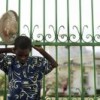
HAITI: U.S. Acts Quickly on Debt Relief Ahead of Preval Visit
With U.S. President Barack Obama preparing to host Haitian President Rene Preval at the White House Wednesday, Congress is moving quickly to show support for far-reaching debt relief and additional aid for the earthquake-stricken Caribbean nation.HAITI: Experts Urge Sea Change in “Culture of Aid”
A delegation of human rights experts is preparing to visit Haiti to assess the human rights and aid situation in the earthquake-crippled nation and to urge the international community to follow a series of guidelines they have prepared to help donors' to "overcome the mistakes of the past."
CHILE: A Tidal Wave of Solidarity
Chile has been wrapped in a blanket of international solidarity, while offers of cooperation for the relief of victims and the reconstruction of the country shower down upon it, after the devastating Feb. 27 earthquake and tsunami.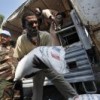
HAITI: Earthquake Epicentre Copes with Aftermath
Marie Saintus sat regally on a wicker chair in the narrow alley by her makeshift home at the Anacaona Stadium, in the middle of this once bucolic city, as she teased her neighbours.
US-HAITI: Katrina Victims Feel Kinship, Offer Help
Many survivors of Hurricane Katrina, which struck New Orleans and the U.S. Gulf Coast in August 2005, have been seeing their own reflection in media images of Haiti earthquake victims. And despite - or even because of - their own struggle, many feel personally driven to help organise assistance for the people of Haiti.
HAITI: Secure Shelters Scarce as Rainy Season Looms
A cacophony of murmurs and cries echoed through the neighbourhoods of Haiti's capital city Monday night as a violent aftershock shook people awake. Ten minutes later, another tremor rocked the ground, this time more smoothly back and forth.LATIN AMERICA: Mexico Dusts Off Leadership Role
Below the surface, discussions about the international aid effort for Haiti hide undercover jockeying for position between Latin American countries wishing to consolidate or attain dominance in the Caribbean region.
HAITI: Private Contractors ‘Like Vultures Coming to Grab the Loot’
Critics are concerned that private military contractors are positioning themselves at the centre of an emerging "shock doctrine" for earthquake-ravaged Haiti.HAITI: Food Crisis Looms
Haiti's misery after last month's earthquake will be compounded by a food catastrophe if the international community continues to ignore the country's agricultural needs, the United Nations has warned.HAITI: U.N. Supports Move to Protect Heritage
The United Nations’ cultural agency, UNESCO, and the government of Haiti have joined forces to try to safeguard and protect the Caribbean nation’s artistic heritage in the wake of the Jan. 12 earthquake which destroyed not only countless lives but also many national art treasures.
HAITI: Quake Victims Overwhelm Medical Capacity
Seriously injured people continue to provide deep challenges to the city's barely functioning hospitals, weeks after a massive earthquake overwhelmed medical staff.
HAITI: Repairing the Third Rail – Part 3
As Haitians struggle to comprehend what has happened to their lives – and begin to try to put them back together – the United Nations is reaching out to "a vast and influential network" of about 60,000 voodoo priests.
US-HAITI: The Failure of Aid – Part 2
The sick, injured and stressed people of Port au Prince are unlikely to be impressed by the small army of reconstruction contractors and development experts who are preparing to descend on Haiti. The reason? They've seen it all before.
US-HAITI: The Loan that Wasn’t – Part 1
On the one-month anniversary of the devastating earthquake of Jan. 12, Haitians continue to perish from a variety of causes, including death by red tape: they fall between the cracks of a still poorly-coordinated aid effort.
HAITI: Tensions Put on Hold as Dominican Republic Reaches Out
Despite a history of often tense relations, the first nation to render assistance to Haiti after last month's devastating earthquake was its island neighbour, the Dominican Republic.US-HAITI: Civil Rights Delegation Calls for Reparations
A U.S. delegation to Haiti led by civil rights veteran Joe Beasley is calling for a 30-billion-dollar restitution payment by France to help Haiti rebuild after the devastating Jan. 12 earthquake, and the end of what Beasley refers to as an unofficial blockade of Haiti.« Previous Page — Next Page »





The Week with IPS

NEXT STOP - SDGs
Tracking global progress towards a sustainable world
Tracking global progress towards a sustainable world
