Languages
Thursday, October 15, 2026



News and Views from the Global South
Haiti
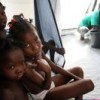
Flooded with NGOs, Haiti Looks to Fall Presidential Polls
They descended in droves after the Jan. 12 earthquake devastated the French-speaking Caribbean Community (Caricom) country, killing an estimated 300,000 people and leaving more than one million homeless.Caribbean Summit Seeks United Front to Economic Crisis
Caribbean Community (Caricom) leaders are gathering here next week for their annual summit still struggling to recover from the two-year global economic and financial crisis that has taken a major toll on their individual economies.Fragile States Becoming More Fragile
Some of the world's weakest states are becoming ever more fragile, according to the 2010 edition of the annual "Failed States Index" (FSI) released here Monday by Foreign Policy magazine and the independent Fund for Peace (FFP).
Haitian Farmers Leery of Monsanto’s Largesse
Haitian farmers are worried that giant transnational corporations like Monsanto are attempting to gain a larger foothold in the local economy under the guise of earthquake relief and rebuilding.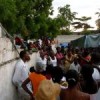
As “Temporary” Camps Linger, Tensions Rise with Haitian Landowners
Thousands of victims of the January earthquake in Haiti are at risk of being displaced for a second time as private landowners throughout the nation's capital city grow impatient with makeshift tent camps on their properties.
Q&A: “Agrarian Reform Is Indispensible for Haiti”
In the wake of unimaginable death and destruction, Haitian farmers continue to work hard to wring food for their country out of a depleted land. But now they have company.HAITI: U.N. Clash with Frustrated Students Spills into Camps
United Nations peacekeeping troops responded to a rock-throwing demonstration by university students Monday evening with a barrage of tear gas and rubber bullets in the area around Haiti's National Palace, sending masses of displaced Haitians running out of tent camps into the streets, according to witnesses.
ENERGY: The Sun Lights Up the Night in Haiti
There are shortages of lots of things in Haiti: clean water, arable land, trees, living-wage jobs, housing, schools, fuel, reliable sources of electricity and Internet access. But one thing Haiti has in abundance is sunny days.Haitian Group Honoured for AIDS Work, Earthquake Aid
A non-profit group founded in Haiti nearly three decades ago to fight what was then a mysterious killer disease later identified as AIDS has been awarded the prestigious 2010 Gates Award for Global Health.
Haiti Asks Expat Professionals to Return and Help
Members of the Haitian diaspora responded with "massive and spontaneous" aid immediately after the Jan. 12 earthquake, with thousands of professionals leaving jobs abroad to go and assist their compatriots, according to a government minister.U.S. House Clears Haiti Trade Bill
The U.S. House of Representatives Wednesday approved a major trade bill designed to boost U.S. and other investment in Haiti's textile and apparel industry following January's devastating earthquake in which at least 200,000 people are believed to have been killed.CUBA: Children Reach Out Through the Screen to Peers in Post-Quake Haiti
Five girls and five boys are taking time to remember the hurricane that devastated their home town of Gibara in eastern Cuba two years ago, mingling their memories with their dreams, and filming images to make a video message for children in Haiti.Haitian-Dominican Relations Warming After Quake
Angela Solis de Pena remembered the story that her parents told her of a Haitian man who tried to rape a Dominican woman; after the woman escaped the man chased her and hacked her to death.HAITI: Disorganised Diaspora on Fringe of Post-Quake Decisions
For years, Haitians living overseas have been the lifeline of the troubled country, sending billions of dollars to relatives back home.HAITI: Displaced Fear Expulsion from Makeshift Camps
For decades, the Saint Louis de Gonzague school has groomed some of Haiti's most elite political players. Francois Duvalier, the iron-fisted dictator who ruled Haiti for 14 years, sent his son to the school. About 1,500 children of Haiti's wealthiest class attend each year.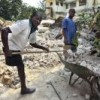
HAITI: Rebuilding Waits on Promised Aid
A week ago, 59 U.N. member states, international institutions and NGO coalitions pledged nearly 10 billion dollars towards rebuilding Haiti over the next decade.
JAMAICA: Haitian Refugees Sent Home
On the evening of Jan. 12 when Haiti was devastated by a massive earthquake, Jamaica, which lies just 160 kilometres to the west, sought to assure President René Préval that Jamaica was is in the process of organising a "practical response" to their plight./CORRECTION*/HAITI: Donors Pledge 10 Billion Dollars in Aid
Eleven weeks after an earthquake killed over two percent of its population and flattened its capital city, Haiti is looking towards a long and complex rebuilding process.
HAITI: Looking More and More Like a War Zone
On an empty road in Cite Militaire, an industrial zone across from the slums of Cite Soleil, a group of women are gathered around a single white sack of U.S. rice. The rice was handed out Monday morning at a food distribution by the Christian relief group World Vision.
HAITI: U.N. Gears Up for Major Aid Meet
Although the humanitarian crisis in Haiti remains dire, with over a million still homeless and hundreds of thousands in need of adequate shelter for the upcoming rainy season, the international community has started looking towards the country's long-term reconstruction.HAITI: Watching the Sky with Dread
With the spring rains and hurricane season just around the corner in Haiti, some 600,000 people are still living in camps, many in areas prone to flooding. And plans to provide solutions for the survivors of the devastating Jan. 12 earthquake are moving forward slowly.« Previous Page — Next Page »





The Week with IPS

NEXT STOP - SDGs
Tracking global progress towards a sustainable world
Tracking global progress towards a sustainable world
