Languages
Thursday, October 8, 2026



News and Views from the Global South
IBSA - Brazil
BRAZIL: Haiti Is Here
In the powerful verses of the song "Haiti", Brazilian musicians Caetano Veloso and Gilberto Gil described similarities between two countries at different ends of the development spectrum in Latin America, summed up by the words "Haiti is here".
BRAZIL: From War on Drugs to Community Policing in Rio
Four decades after Washington declared its "war on drugs" and began to spread the doctrine south of the U.S. border, the government of the Brazilian state of Rio de Janeiro decided to shift away from that approach towards a strategy focused on community policing.
BRAZIL: Amazon Dams Mean Progress for Some, Lost Livelihoods for Others
The Amazonian town of Mutum-Paraná, in the northern Brazilian state of Rondônia, is disappearing. Its last remaining buildings must be dismantled before it is flooded by the construction of the Jirau hydroelectric dam on the Madeira River.
Europe Holds Tight to IMF Monopoly
Since the election of Camille Gutt of Belgium as the first managing director of the International Monetary Fund (IMF) back in 1946, the Europeans have continued to claim that job as their political and intellectual birthright.
BRAZIL: Megaprojects Revive Class Struggle
The rage was proportional to the size of the crowd cornered between the jungle and the wall that will dam up the Madeira River in northwest Brazil. Over the space of three days, workers set fire to some 50 buses and other vehicles, work installations and even their own lodgings, which were built to house 16,000 people.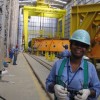
BRAZIL: Women Break Down Barriers in Heavy Construction
They represent just seven percent of the workers building the Santo Antonio hydroelectric dam on the Madeira River, which cuts across the Amazon jungle in northwest Brazil. But the women workers total 1,200, and many of them have had to break down barriers to jobs seen as the preserve of men.
DEVELOPMENT: South-South Axis Strengthens
The glass isn’t exactly half-full, but it certainly is not entirely empty either. Within the broad failure of the weeklong Fourth U.N. Conference on the Least Developed Countries (LDC-IV) in Istanbul that concluded Friday, many delegates are taking heart in a strengthening South-South front that has emerged.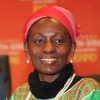
Q&A: Translating Southern Successes Into LDC Solutions
"In South-South cooperation we are all partners," Josephine Ojiambo, ambassador of Kenya to the U.N. and president of the U.N. General Assembly High-Level Committee on South-South Cooperation, told IPS. "SSC specifically shies away from the donor-client relationship."
BOLIVIA: Dam Spells Hope and Fear for Small Jungle Town
Arturo Sánchez, 72 years old and nearly blind, dreams of bringing ecotourism to Cachuela Esperanza, a Bolivian town of 1,336 people on the Beni river, and hopes the construction of a huge hydroelectric dam will give a boost to his dreams.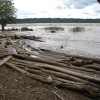
BOLIVIA: The Boomerang Effect for Morales
It wasn't easy to get to the Bolivian city of Riberalta from Brazil. The adventurous journey included potholes on the Brazilian highway, a rickety boat that ferried us across the Mamoré - the border river - and an unnerving ride on a motorcycle taxi. But the biggest complication was the roadblocks.Emerging Markets Clash with Anachronistic Institutions
The first weeks of April have witnessed a maelstrom of multilateralism – from the chambers of the annual Spring Meetings of the World Bank and the International Monetary Fund (IMF) here to the round tables of the BRICS summit in the resort island of the Hainan province in China – leaving in its wake a tome of unanswered questions regarding the contours and configurations of the new world order.BRAZIL: From Development Aid Recipient to Donor
Although Brazil's international development funds are still small compared to those of the industrialised world, the South American giant's foreign aid has grown considerably in the last eight years, and the country has gone from beneficiary of development assistance to donor.DEVELOPMENT: IBSA Fund Packs Small But Sustainable Punches
Despite only three million dollars a year coming into the India-Brazil-South Africa (IBSA) Fund for Poverty and Hunger Alleviation, it aims to pack punches above its weight with small but sustainable projects.G24 Says Rich Nations’ Policies Hurting Developing World
Finance ministers of the G24 group of developing and emerging countries met on the sidelines the World Bank and International Monetary Fund spring meetings here on Thursday, warning against continued risks to their economies, despite largely "strong" growth as the world climbs out of the global financial crisis.DEVELOPMENT: IBSA’s South-South Funding With No Strings Attached
Development donors typically impose strict conditions on recipient countries. Now a different South-South approach to funding is taking shape through the India-Brazil-South Africa (IBSA) Fund for Poverty and Hunger Alleviation.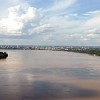
Emerging Powers Harnessing Neighbours’ Hydroelectricity
Emerging countries like Brazil and China are building numerous hydroelectric dams at home and abroad to help drive their economic growth. But while in Latin America the phenomenon is touted as an integration process, in Asia it has generated tension over the shared use of rivers.
BRAZIL: Sugar Cane Fields Turned into Industry in Sertãozinho
"A disappointment" was his first impression of his new city. It was small, half the size of his hometown of Barretos, and had "weak lights," says Marcelo Pelegrini, remembering his family's move to this southern Brazilian city when he was nine years old, after his father got a job transfer.Latin America Logs Largest Increase in 2010 Military Spending
Latin America has displaced traditional high-rollers, including the Middle East and Europe, as the region registering the largest percentage increase in military spending last year, according to a new study released by the Stockholm International Peace Research Institute (SIPRI).
BRAZIL: Belo Monte Dam Faces Endless Hurdles and Controversies
The Xingu river flows around small isles and islands and across rapids and waterfalls in Brazil's Amazon jungle, and has a dramatically reduced flow during dry season. Navigating it presents constant hurdles and risks.DEVELOPMENT: BRICS to Promote More Inclusive Global Partnership
At the upcoming Brazil, Russia, India, China and South Africa (BRICS) summit, to be held on the tropical Chinese island of Hainan Apr. 14, discussion will focus not only on deepening economic ties among members, but will also likely touch on global political events, including the crisis in the Middle East and North Africa. But China insists the club has no political agenda.
IBSA States Do Not Always Have Common Positions on Trade Issues
"IBSA what?" is the question you most often get in Geneva when enquiring about the India-Brazil-South Africa (IBSA) dialogue forum, established in 2003 between these three multicultural democracies and emerging markets "to contribute to the construction of a new international architecture".« Previous Page — Next Page »





The Week with IPS

NEXT STOP - SDGs
Tracking global progress towards a sustainable world
Tracking global progress towards a sustainable world
