Languages
Friday, October 9, 2026



News and Views from the Global South
Iran

Rights Report on Iran Highlights Executions, Political Prisoners
More than a year into his mandate, Ahmed Shaheed, the U.N. Special Rapporteur on Human Rights in Iran, told the Third Committee of the U.N. General Assembly this week that the rights situation in Iran remains critical, especially as it pertains to human rights defenders, journalists, and religious and ethnic minorities.
IRAN : Khamenei Likely to Hold Onto Weakened Ahmadinejad
Amid growing and increasingly harsh criticism of his handling of the economy, talk of President Mahmoud Ahmadinejad’s removal has regained momentum in Iran in recent weeks.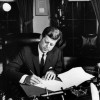
U.S.: 50th Anniversary of Cuban Missile Crisis Offers Lessons for Iran
It was exactly 50 years ago when then-President John F. Kennedy took to the airwaves to inform the world that the Soviet Union was introducing nuclear-armed missiles into Cuba and that he had ordered a blockade of the island - and would consider stronger action - to force their removal.Saudi Insider Likely Key to Aramco Cyber-Attack
Last weekend’s disclosure that Iranian cyber warriors had disabled some 30,000 computers owned by the Saudi oil giant Aramco is attracting considerable attention here, particularly in light of a warning last week by Pentagon chief Leon Panetta that Washington could face a “cyber-Pearl Harbor".Obama Aides Launch Preemptive Attack on New Iran Plan
Although the place and time of the next round of talks on Iran’s nuclear programme have not yet been announced, the manoeuvring by Iran and the United States to influence the outcome has already begun.Syria Stands Between Egypt and Iran
The election of the Muslim Brotherhood's Mohamed Morsi to the presidency this summer was followed by a flurry of conjecture that the restoration of Egyptian-Iranian diplomatic relations – frozen since 1979 – was in the offing. Yet despite some initial indications to this effect, local analysts now say such speculation appears to have been premature.Anti-Iran Hawks Maintain P.R. Offensive
When Israeli Prime Minister Benjamin Netanyahu told the U.N. General Assembly last month that Iran’s nuclear programme was unlikely to breach his “red line” for presumed military action until next spring or summer, many observers here looked forward to some relief from the nearly incessant drumbeat for war by U.S. neo-conservatives and other hawks.New Poll Finds Shifts in U.S. Public Opinion Towards Middle East
The attacks on U.S. embassies in Libya and Egypt last month shocked and scared Americans, but the majority of Americans nevertheless recognise that the violence was the work of extremist minorities and not the majority of the population, according to a new poll.
U.S.: Romney Assails Obama’s “Passivity” in Foreign Policy, Middle East
In what was billed as a major foreign policy address, Republican presidential candidate Mitt Romney Monday assailed Barack Obama for “passivity” in the conduct of U.S. foreign policy, arguing that it was “time to change course” in the Middle East, in particular.“How Much to Lift the Sanctions?” Iranians React to MEK De-Listing
Last week’s decision by the U.S. State Department to remove the Mojahedin-e Khalq (MEK) from its terrorism list has, as anticipated, led to charges by the Iranian government that the administration of President Barack Obama is hypocritical and using double standards.Recent Economic Unrest Unlikely to Alter Iran’s Nuclear Calculus
As Iran faces economic unrest, discussion is intensifying over the impact sanctions are having on Iran’s economy.
Israel’s Hypocrisy on a Nuclear Middle East
When world leaders packed their bags and headed home last week, there was one lingering memory of the General Assembly’s high-level debate: Benjamin Netanyahu’s dramatic presentation of a cartoonish nuclear red line, which hit the front pages of most mainstream newspapers in the United States.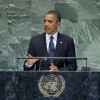
Strained East-West Relations Dominate General Assembly Opening
Addressing the 67th General Assembly at the United Nations in New York Tuesday, U.S. President Barack Obama accused the Iranian government of propping up the dictatorship in Syria and supporting terrorist groups abroad.Iranian Diplomat Says Iran Offered Deal to Halt 20-Percent Enrichment
Iran has again offered to halt its enrichment of uranium to 20 percent, which the United States has identified as its highest priority in the nuclear talks, in return for easing sanctions against Iran, according to Iran’s permanent representative to the International Atomic Energy Agency (IAEA).
U.S. to Take Iran Anti-Regime Group Off Terrorism List
In a move certain to ratchet up already-high tensions with Iran, the administration of President Barack Obama will remove a militant anti-regime group from the State Department’s terrorism list, U.S. officials told reporters here Friday.Canada Tightens Alliance with Israel
Scepticism continues in Canada about why the national government abruptly cut off diplomatic relations with Iran earlier this month, although ties between the two states have been rocky since the 1979 Iranian Revolution.U.S., Israeli Attacks Unlikely to Destroy Iran’s Nuclear Programme
While U.S. or Israeli air strikes may delay the building by Iran of a nuclear weapon, they are unlikely to prevent it altogether and could well prove counter-productive, according to a major new report signed by nearly three dozen former top U.S. foreign-policy makers, military officers, and independent experts.Despite War Anxiety, a Cooperative Mood in Iran
More than three years after the contested 2009 presidential election, many Iranians continue to mistrust their government. But rather than stand on the sidelines, they are still trying to better the conditions in the country.Pink Shrouds Aimed to Draw Attention to Iran Military Site, Analysts Say
Diplomats from an unidentified country and a Washington research organisation considered close to the International Atomic Energy Agency have alleged in recent weeks that Iran has covered two buildings at a military site to hide a clean-up of evidence of nuclear weapons related testing.
After Dempsey Warning, Israel May Curb War Threat
President Barack Obama’s explicit warning that he will not accept a unilateral Israeli attack against Iran may force Israeli Prime Minister Benjamin Netanyahu to step back from his ostensible threat of war.IAEA Report Shows Iran Reduced Its Breakout Capacity
The International Atomic Energy Agency (IAEA) report made public Thursday reveals that Iran has actually reduced the amount of 20-percent enriched uranium available for any possible “breakout” to weapons grade enrichment over the last three months rather than increasing it.« Previous Page — Next Page »





The Week with IPS

NEXT STOP - SDGs
Tracking global progress towards a sustainable world
Tracking global progress towards a sustainable world
