Languages
Friday, October 23, 2026



News and Views from the Global South
Iran
IRAN: Censors Fail to Silence Cyber-Activists
To mark the tenth anniversary of Iran's student uprising in 1999 amid the continued rejection by many voters of the results of the disputed Jun. 12 election, student activists issued a national call to protest last week.IRAN: Picnicking Outside Evin Prison
Outside the gates of Tehran's notorious Evin prison, hundreds wait impatiently – some with blankets spread out in the parking lot on the street below, making time for dinner.POLITICS: U.S. Uses False Taliban Aid Charge to Pressure Iran
The Barack Obama administration has given new prominence to a Bush administration charge that Iran is providing military training and assistance to the Taliban in Afghanistan, for which no evidence has ever been produced, and which has been discredited by data obtained by IPS from the Pentagon itself.IRAN: Rights Group Seeks Release of Mistreated and Ill Detainee
Iranian authorities should release a prominent reformist detained during recent post-election unrest to a medical facility because he has suffered harsh interrogations and inadequate medical care that could have life-threatening consequences, said a prominent human rights group Wednesday.IRAN: Anger and Despair Linger After Govt Confirms Poll
On Monday, after a televised counting of the 10 percent of the ballot boxes, the body that oversees Iranian elections upheld the results of the disputed presidential elections.U.S.: Anti-Regime Exiles Galvanised by Iran Unrest
While mass demonstrations in Iran are dwindling – with large gatherings and the opposition appearing largely paralysed by the authorities' crackdown – the crisis there is causing a return to prominence for groups of Iranians living in the West: the exiles who have long advocated regime change in Iran, sometimes by armed means.US-IRAN: “Obama Effect” Versus “Freedom Agenda”
Two weeks after allegations of fraud in Iran’s presidential elections triggered massive and instantly-iconic protests, partisans here of President Barack Obama and his predecessor, George W. Bush, are debating whose policies deserve more credit for encouraging the Iranian mobilisation.
IRAN: Cries and Whispers
After several tumultuous days, the streets of Tehran are relatively quiet. But the density of police and basij presence has given the city an air of suffocation. It is hard to breathe.MIDEAST: Iran Crisis Ripples Outward
As the political crisis that erupted after Iran's Jun. 12 elections enters its third week, it is becoming evident that this crisis will have repercussions in many parts of the Middle East - and far beyond.EXCLUSIVE-PART 5: Freeh Became "Defence Lawyer" for Saudis on Khobar*
In early November 1998, Louis Freeh sent an FBI team off to observe Saudi secret police officials interviewing eight Shi’a detainees from behind a one-way mirror at the Riyadh detention centre. He planned to use the Shi’a testimony to show that Iran was behind the bombing.US-IRAN: Misreading the Protests in Tehran
After 30 years of enmity that closed off most lines of communication, the recent crisis in Iran has suddenly engendered a boom of U.S. interest in the Islamic Republic.
IRAN: Women at Forefront of Popular Defiance
When tens of thousands of protesters braved the ongoing government crackdown to gather in Tehran's Baharestan Square in front of the Parliament building Wednesday in response to a call by supporters of Mir Hossein Moussavi and Mehdi Karroubi, they were met with some of the harshest violence seen since Iran's post-election turmoil erupted nearly two weeks ago.EXCLUSIVE-PART 4: FBI Ignored Compelling Evidence of bin Laden Role*
Osama Bin Laden had made no secret of his intention to attack the U.S. military presence in Saudi Arabia. He had been calling for such attacks to drive it from the country since his first fatwa calling for jihad against Western "occupation" of Islamic lands in early 1992.
EXCLUSIVE-PART 3: U.S. Officials Leaked a False Story Blaming Iran*
In March 1997, FBI Director Louis Freeh got what he calls in his memoirs "the first truly big break in the case": the arrest in Canada of one of the Saudi Hezbollah members the Saudis accused of being the driver of the getaway car at Khobar Towers.POLITICS-US: Obama "Appalled" by Iran Repression
Facing a growing chorus of Republican criticism to speak out more forcefully on Iran's disputed election results, the U.S. president made his harshest statement yet Tuesday, condemning Iran's leadership for its violent crackdown on protesters.
IRAN: Harsh Crackdown Extends to Leading Opposition Figures
Eleven days after Iran’s disputed Jun. 12 president election, the government of President Mahmoud Ahmadinejad appears determined to round up key members of the opposition, journalists and human rights activists who could play a key role in rallying public support for opposition demands.
EXCLUSIVE-PART 2: Saudi Account of Khobar Bore Telltale Signs of Fraud*
In the last week of October 1996, the Saudi secret police, the Mabahith, gave David Williams, the FBI's assistant special agent in charge of counter-terrorism issues, what they said were summaries of the confessions obtained from some 40 Shi’a detainees.U.S.: Neo-Cons, Republicans Paint Obama as Weak on “Rogues”
In what appears increasingly to be an orchestrated campaign, right-wing Republicans and Israel-centred neo-conservatives are pulling out all the stops in depicting President Barack Obama as "weak" on national security and promoting democracy abroad.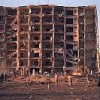
EXCLUSIVE-PART1: Al Qaeda Excluded from the Suspects List*
On Jun. 25, 1996, a massive truck bomb exploded at a building in the Khobar Towers complex in Khobar, Saudi Arabia, which housed U.S. Air Force personnel, killing 19 U.S. airmen and wounding 372.IRAN: “The Streets Were Overtaken by Tear Gas”
The streets of Tehran were a veritable war zone Saturday night, as angry voters took to the streets for the sixth day of protests this week against the Jun. 12 elections that re-instated Mahmoud Ahmadinejad as president.
IRAN: The Day of Confrontation and Clarity
The political crisis that broke out over the Jun. 12 elections entered a new stage here Saturday afternoon as the government's security forces moved aggressively - and sometimes with lethal force - against demonstrators throughout Iran's capital city.« Previous Page — Next Page »





The Week with IPS

NEXT STOP - SDGs
Tracking global progress towards a sustainable world
Tracking global progress towards a sustainable world
