Languages
Friday, October 23, 2026



News and Views from the Global South
Iran

IRAN: Protesters Defy Khamenei-Sanctioned Crackdown
With tens of thousands of police deployed Saturday to suppress the massive crowds that have been demanding new elections, it appears that the political crisis touched off by the disputed victory of Iranian President Mahmoud Ahmadinejad has entered a new phase.US-IRAN: Electoral Chaos Energises Neoconservative Hawks
As U.S. President Barack Obama attempts to navigate the treacherous currents of the ongoing political crisis in Iran, he faces a heated attack on his right flank from neo-conservatives and other right-wing hawks, who are urging him both to offer unequivocal support to the protesters supporting moderate presidential candidate Mir Hossein Moussavi and to scuttle his planned diplomatic engagement with Tehran.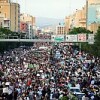
POLITICS: Will “Changed” Iran Complicate U.S. Engagement?
As uncertainty persists about the results of the Iranian election last Friday, the administration of U.S. President Barack Obama remains quiet on just exactly what the next tack will be on engaging the Islamic Republic, which experts say is entering a new and unknown period in its history.POLITICS: Shock and Awe in Iran
Four days after Iran's Jun. 12 election, the country remains in a state of shock and turmoil, attempting to come to grips with what happened.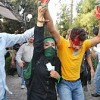
IRAN: Washington Maintains Cautious Response to Election Crisis
As protests over Friday's disputed election continue to rage in Iran, the U.S. has thus far reacted cautiously, reflecting the high degree of uncertainty in Washington both about how much support to give the demonstrators and about the implications of the escalating crisis for President Barack Obama's hopes of engaging Tehran in serious negotiations.
IRAN: Ahmadinejad Victory Sparks Protests and Claims of Fraud
Just a few months after a right-wing government gained power in Israel, Iran's hardliner president, Mahmoud Ahmadinejad, was declared the winner in Friday's election, although his main rival has not accepted defeat and reformist supporters were skirmishing with security forces in the capital Tehran Saturday.POLITICS: Lebanon’s Election: An International Affair
It was touted as an historic election, a vote to determine the future direction of Lebanon. But even with the winners declared, analysts say the Jun. 7 ballot was far from decisive, and did little to alter the fundamental balance of power in the country.POLITICS: Iranian Elections Could Shape U.S. Engagement
Washington is waiting anxiously on the outcome of Friday’s Iranian presidential elections, as incumbent President Mahmoud Ahmadinejad attempts to fend off challenger Mir Hossein Mousavi in a contest with significant implications for the diplomatic atmosphere between Iran and the U.S.
IRAN: Reformist Candidates Complain of Too Many Ballots
Fears that the state apparatus controlled by Iranian President Mahmoud Ahmadinejad is laying the groundwork for possible fraud in Friday’s presidential election appear to be growing among his two reformist challengers and their supporters.POLITICS: Iranians Keen on Improved Ties with U.S.
More than three out of every four Iranian citizens favour improved relations with the United States, according to a major survey conducted less than one month before this Friday's presidential elections in Iran by a U.S. non-governmental organisation, Terror Free Tomorrow (TFT).MIDEAST: Lebanese Polls Closely Watched by U.S. and Region
After emerging from a political crisis last year, the Lebanese people will head to the polls Jun. 7 to determine the composition of the new parliament. A variety of foreign powers, including the U.S., will be watching closely, waiting for the electoral results before they determine their policies towards the new government.
U.S.: Obama Appeals to Muslim World for "New Beginning"
In what was perhaps the most widely anticipated speech delivered by a U.S. president abroad in recent memory, Barack Obama Thursday extended a hand to the world’s 1.4 billion Muslims, receiving repeated applause and a standing ovation from the audience at Cairo University in the Egyptian capital.
Q&A: Notes From Iran’s Underground Music Scene
As Iran’s conservative president Mahmoud Ahmadinejad fights for his political future against two reformist challengers in the June elections, Arash Sobhani, a lead figure in the country’s underground music scene, says it’s a very tough time to be an artist in Iran.POLITICS-US: Report Ties Dubious Iran Nuclear Docs to Israel
A report on Iran’s nuclear programme issued by the Senate Foreign Relations Committee last month generated news stories publicising an incendiary charge that U.S. intelligence is underestimating Iran’s progress in designing a "nuclear warhead" before the halt in nuclear weapons-related research in 2003.POLITICS: Where Iran Fits in the Mideast Peace Puzzle
What is the relationship between the United States' policy towards Iran and its performance on Arab-Israeli peacemaking, including the crucial quest for peace between Israel and the Palestinians?
IRAN: Lawyers Seek Reversal in Second "U.S. Spy" Case
In a case that human rights activists say echoes that of recently released journalist Roxana Saberi, the Iranian government has imprisoned a woman employed by a U.S.-based non-profit organisation working to improve child and maternal health in the country, alleging that she acted as a spy for the United States.POLITICS-US: Iran Hawks Push Obama on Deadline for Diplomacy
After an uneventful first meeting between U.S. President Barack Obama and Israeli Prime Minister Benjamin Netanyahu that seemed to produce no real breakthroughs, hawks in the U.S. and Israel are seizing upon what they claim is a significant concession by Obama: his setting a "timetable" for negotiations with Iran.POLITICS-US: Iran’s Regional Dominance Overstated, Report Says
The threat posed by Iran is little understood in U.S. circles, says a new report from a U.S. research institution which asserts that the expansionist rhetoric of the Islamic Republic is little more than that: rhetoric.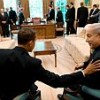
MIDEAST: Despite Smiles, Obama, Netanyahu Seem Far Apart
While reaffirming the "special relationship" between their two countries, U.S. President Barack Obama and Israeli Prime Minister Benjamin Netanyahu appeared unable to bridge major differences in their approaches to Iran and Israeli-Palestinian peace efforts following their White House meeting here Monday.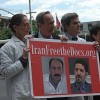
RIGHTS-IRAN: Day of Protests for Jailed AIDS Doctors
A handful of motivated doctors, HIV/AIDS and human rights activists held rallies Tuesday in New York City and 20 countries to protest the imprisonment of Iranian doctors Arash and Kamiar Aleai.MIDEAST: U.S. Thaw with Syria Hits Stumbling Blocks
U.S. President Barack Obama issued a statement on May 8 calling for the renewal of sanctions on Syria, which were set to expire on Monday. The declaration came at the end of a busy week in which both high-level U.S. officials and the Iranian president visited the Syrian capital, Damascus.« Previous Page — Next Page »





The Week with IPS

NEXT STOP - SDGs
Tracking global progress towards a sustainable world
Tracking global progress towards a sustainable world
