Languages
Friday, September 25, 2026



News and Views from the Global South
Iran
US/IRAQ: Tangled Web of Allegiances Leads Back to Tehran
If politics makes strange bedfellows, then the relationship between Iran, the United States and the Islamic Supreme Council of Iraq is the strangest ménage à trois in international relations today.POLITICS: Bush Tour Diminished by Hezbollah Show of Force
While this week's trip by President George W. Bush to Israel, Saudi Arabia and Egypt was never conceived as a triumphant "victory lap" around the region, the swift rout of U.S.-backed forces by Lebanon's Hezbollah Friday has provided yet another vivid illustration of the rapid decline in Washington's influence in the Middle East during his tenure.IRAN: Can P5+1 Offer Break the Nuclear Stalemate?
The P5+1 - the permanent members of the U.N. Security Council and Germany - will present Tehran with a secret incentive package in the next few days to convince Iran to suspend its enrichment programme and enter negotiations.INDIA/IRAN: Course Correction
Relations between India and Iran, which deteriorated over the past three years from traditional friendship and warmth into mutual suspicion and tension, have started looking up again.US/IRAN: Changing of the Guard Key to Talks
A week after Senator Hillary Clinton's harsh remarks that if hardliners in Tehran were to launch an attack on Israel, it would result in the "total obliteration" of Iran, a Republican member of the House Select Committee on Intelligence, Peter Hoekstra, suggested on CNN that "engaging in a full-court diplomatic press with Iran is a good thing to begin the process" of reaching out to Tehran.POLITICS-US: Petraeus Promotion Frees Cheney to Threaten Iran
The nomination of Gen. David Petraeus to be the new head of the Central Command not only ensures that he will be available to defend the George W. Bush administration's policies toward Iran and Iraq at least through the end of Bush's term and possibly even beyond.MIDEAST: Israel Sees Iran Threat Recede
In the clearest indication yet that Israel now believes Iran's nuclear aspirations will be curbed, Prime Minister Ehud Olmert has said that efforts being undertaken by the international community will ensure that Tehran does not acquire nuclear capability.POLITICS: Can the U.S. and Iran Share the Middle East?
By negotiating a Shiite truce, Tehran embarrassed Washington last week and arguably proved itself to be a more potent stabiliser of southern Iraq.POLITICS: Petraeus Hid Maliki Resistance to US Troops in Basra
In testimony before Congressional committees last week, Gen. David Petraeus portrayed Iraqi Prime Minister Nouri al-Maliki's late March offensive in Basra as a poorly planned effort that departed from what U.S. officials had expected.IRAN: Nuclear Crisis – No Progress at Shanghai
Tehran’s defiant position on its nuclear programme has precluded any significant progress at talks among the five permanent members of the United Nations Security Council and Germany on how to resolve the Iranian nuclear crisis.POLITICS: Attitudes Toward U.S. Worsen in Arab World
Despite renewed U.S. efforts to achieve an Israeli-Palestinian peace agreement this year, popular views of the United States in the Arab world have actually worsened since 2006, according to a major new survey of public opinion in six Arab states.
US/IRAN: Tough New Sanctions Could Backfire, Experts Warn
In the more than five years since the George W. Bush administration's misdirected adventurism in Iraq, the fundamental balance of power in the Middle East has shifted.POLITICS: Iran’s Engineered Elections
The results of Iran's eighth parliamentary elections were never meant to be a cliffhanger - the hard-line camp of fiery President Mahmoud Ahmadinejad came out on top; moderate conservatives maintained their stake; reformists were demoralised.POLITICS: Iranian Public Sees Reduced U.S. Threat
While still distrustful of U.S. intentions, the Iranian public believes that the threat posed by Washington has diminished over the past year and favours increased exchanges between the two countries, including direct talks on stabilising Iraq and other issues, according to a major new survey released here Monday by WorldPublicOpinion.org (WPO).US/IRAQ: Petraeus Testimony to Defend False "Proxy War" Line
A key objective of the Congressional testimony by Gen. David Petraeus this week will be to defend the George W. Bush administration's strategic political line that it is fighting an Iranian "proxy war" in Iraq.POLITICS-IRAN: Ahmadinejad Faces Stormy New Parliament
President Mahmoud Ahmadinejad can expect considerable opposition in the newly elected parliament - set to be installed on May 27 - that has a considerable number of representatives from rival hardliners, conservatives and a stronger reformist minority.US/IRAQ: Sadr Offensive Shows Failure of Petraeus Strategy
The escalation of fighting between Mahdi Army militiamen and their Shiite rivals, which could mark the end of Moqtada al-Sadr's self-imposed ceasefire, also exposes Gen. David Petraeus's strategy for controlling Sadr's forces as a failure.POLITICS-US: McCain’s Gaffes Reflect Bush’s Iran-Qaeda Myth
Sen. John McCain's confusion in recent allegations of Iranian training of al Qaeda fighters in Iraq is the result of a drumbeat of official propaganda about close Iran-al Qaeda ties that the George W. Bush administration and neoconservatives have promoted ever since early 2002.POLITICS: A Textbook Tale of Two Reports
Iran's post-revolutionary education system continues to teach children to discriminate against women and religious minorities, according to a report released Tuesday by Freedom House, a Washington-based nonprofit group that seeks to encourage democracy in the world.
POLITICS-IRAN: "The Government Suffers From Delusions"
If your grandfather was the founder of the first Islamic Republic of Iran, you would probably expect to have a very comfortable life in the land of Ayatollahs, where Mahmoud Ahmadinejad is president and Khomeini's successor has absolute power. But you would be wrong.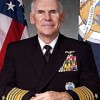
POLITICS-US: Dissenting Views Made Fallon’s Fall Inevitable
Admiral William Fallon's request to quit his position as head of the U.S. Central Command (CENTCOM) and to retire from the military was apparently the result of a George W. Bush administration decision to pressure him to resign.« Previous Page — Next Page »


The Week with IPS

NEXT STOP - SDGs
Tracking global progress towards a sustainable world
Tracking global progress towards a sustainable world
