Languages
Saturday, September 26, 2026



News and Views from the Global South
Iran
CHALLENGES 2007-2008: Internal Problems Worry Iranians More
While Iranians have legitimate worries that their country may suffer a military attack by the United States or become a victim of more sanctions for its nuclear policies, analysts say that the real dangers in 2008 are internally generated ones.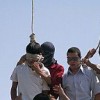
RIGHTS-IRAN: Gov't "Leading by Fear", Activists Say
Iran's recent use of extreme punishments such as amputations and public executions has deepened concerns about the situation of human rights amid the strict enforcement of Islamic law, which has worsened since President Mahmoud Ahmadinejad's hardliner government came to power in June 2005.
MIDEAST: Bush Sent Home Empty-Handed
It is not often that a president of the United States tours the Gulf Cooperation Council (GCC) countries with a long wish-list. And less so when the ‘world’s most powerful leader’ returns home with just a few symbolic gains.POLITICS-US: How the Pentagon Planted a False Hormuz Story
Senior Pentagon officials, evidently reflecting a broader administration policy decision, used an off-the-record Pentagon briefing to turn the Jan. 6 U.S.-Iranian incident in the Strait of Hormuz into a sensational story demonstrating Iran's military aggressiveness, a reconstruction of the events following the incident shows.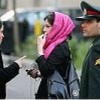
POLITICS-IRAN: Enforcing Islamic Dress Code May Cost Votes
When the government of President Mahmoud Ahmadinejad uncharacteristically denounced the country’s police force for strictly enforcing Islamic dress code (hijab) it was attributed to fears of losing popularity ahead of parliamentary elections in March.
DEATH PENALTY-IRAN: Top Campaigner Harassed, Hangings Increase
Emaddedin Baghi, Iran’s leading anti-death penalty campaigner, is back behind bars in the country’s notorious Evin prison after intense harassment leading to his hospitalisation and concern that he may have suffered a heart attack.
MIDEAST: Iran Looms Large in Bush’s 11th Hour Tour
In the opening days of his trip to the Middle East, U.S. President George W. Bush visited Israel and the Palestinian territories for the first time to spearhead the U.S. role as mediator of the latest push for Middle East peace inaugurated just over a month ago in Annapolis, Maryland.
POLITICS-US: Official Version of Naval Incident Starts to Unravel
Despite the official and media portrayal of the incident in the Strait of Hormuz early Monday morning as a serious threat to U.S. ships from Iranian speedboats that nearly resulted in a "battle at sea", new information over the past three days suggests that the incident did not involve such a threat and that no U.S. commander was on the verge of firing at the Iranian boats.
POLITICS: Will Naval Incident Undermine Bush's Iran Message?
It is by now almost routine. With recurring frequency, U.S. leaders tour the Middle East depicting Iran as the region's greatest threat.POLITICS-US: Christian Zionists Gain Israel’s Inner Sanctum
After raising more than two hundred million dollars for various projects in Israel, Rabbi Yechiel Eckstein and the International Fellowship of Christians and Jews (IFCJ), the organisation he founded and is president of, has hit pay-dirt.POLITICS-US: Rice and Gates Divided over Iran’s Role in Iraq
A State Department official's assertion in late December that Iran had exerted a restraining influence on Iraqi Shiite militia violence signaled a major divergence of views between Secretary of State Condoleezza Rice and Secretary of Defence Robert Gates over how to portray Iran's role in Iraq.CHALLENGES 2007-2008: Bush’s Twilight Year Looks Grim
If the last days of 2007 are any indication, U.S. President George W. Bush’s last year in office is shaping up as grim and lonely.POLITICS-SAUDI ARABIA: Iran Polls Better Than U.S.
Although the image of the United States appears to have improved in Saudi Arabia over the past year, the Saudi public’s view of Washington remains largely negative, according to major new poll released here this week by Terror Free Tomorrow (TFT), a Washington, D.C.-based bipartisan group.POLITICS-US: Did Bush Get New Iran Intel Last Winter?
White House officials have now admitted that George W. Bush was told that the intelligence assessment on a covert Iranian nuclear programme might change last August, but they have avoided answering the question of when the president was first informed about the new intelligence that led to that revised assessment.POLITICS-US: Assassination Jars Nascent Detente with Syria
When the George W. Bush administration asked Damascus to attend last month's Annapolis conference, Emad Moustapha, the Syrian ambassador to the United States, admits he was stunned.POLITICS-IRAN: Tame US Intelligence Report Won’t Stop Sanctions
While a United States intelligence report stating that Iran has not pursued making a nuclear bomb since 2003 may blunt Washington’s warlike stance towards Tehran, it is far from being ‘Iran’s biggest victory of the century’, as President Mahmoud Ahmadinejad has described it.POLITICS: U.S. Jews Tilt Rightwards on Israel
U.S. Jews appear to have become more opposed both to Israel's making key concessions in renewed peace talks with Palestinians and to the U.S. carrying out a military attack against Iran's nuclear facilities, according to the latest in an annual series of surveys of Jewish opinion released here this week by the American Jewish Committee (AJC).POLITICS: White House Fought NIE Over an Old Charge
The reported White House resistance to the National Intelligence Estimate's conclusion that Iran had abandoned a nuclear weapons programme in 2003 was an effort to save a political tactic the George W. Bush administration had been using since early 2004, despite the absence of an intelligence analysis to support it.POLITICS-US: “Laptop of Death”: Revising the NIE on Iran
Nearly one week after a U.S. intelligence report revealed that Iran halted its nuclear weapons programme in 2003, the sabre-rattling inside the Washington Beltway appears to have receded for the moment, and with it, the George W. Bush administration's strongest pretext for a military confrontation with Iran.POLITICS: Is Iran NIE a Blessing in Disguise for Israel?
The U.S. National Intelligence Estimate's assertion that Iran currently does not have a nuclear weapons programme has caused much frustration in Israel. Deputy Defence Minister Ephraim Sneh referred to the report as a lie at a recent breakfast in New York, and Infrastructure Minister Binyamin Ben-Eliezer reportedly "doesn't buy" its findings.
IRAN: Charges Against 'Nuclear Spy' Deepen Political Split
Charges of spying for Britain persisting against former nuclear negotiator Hossein Mousavian appear to have intensified rifts within the alliance of conservatives and hardliners that made Mahmoud Ahmadinejad Iran’s President more than two years ago.« Previous Page — Next Page »


The Week with IPS

NEXT STOP - SDGs
Tracking global progress towards a sustainable world
Tracking global progress towards a sustainable world
