Languages
Tuesday, November 3, 2026



News and Views from the Global South
Israel - Palestine
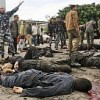
POLITICS: U.S. Weaponry Facilitates Killings in Gaza
The devastating Israeli firepower, unleashed largely on Palestinian civilians in Gaza during two weeks of fighting, is the product of advanced U.S. military technology.MIDEAST: Egypt Pulls Down the Shutters on Aid
Egyptian authorities have almost fully sealed the border with Gaza, preventing delivery of desperately needed humanitarian aid.MIDEAST: Children Found Starving
An international chorus of condemnation has blasted Israel over its human rights abuses in Gaza. Operation Cast Lead, into its 12th day, has now claimed the lives of over 700 Palestinians.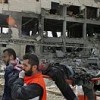
US-MIDEAST: Media Eyeless in Gaza at Key Moment
Consumed by coverage of the Nov. 4 presidential election, U.S. mainstream media ignored a key Israeli military attack on a Hamas target that some Palestinians claim marked the effective end of the ceasefire between the two sides and set the stage for the current round of bloodletting.MIDEAST: Claiming Impartiality, Europe Leans Towards Israel
In carefully crafted official statements, diplomats have portrayed the European Union as something of an honest broker in the Israeli-Palestinian conflict. Yet even though almost all of the people killed over the past fortnight have been Palestinians, some top-ranking leaders in the 27-country bloc have tacitly offered their support for Israel's bombing and invasion of Gaza.MIDEAST: Israel May Face Charges for War Crimes
Israel has committed war crimes and should be prosecuted in an international court, says Raji Sourani, head of the Palestinian Centre for Human Rights (PCHR) in Gaza.MIDEAST: Israel Ponders End to Offensive
"Unlike the Qana tragedy in 1996 which brought about an immediate end to the Israeli offensive in southern Lebanon, Tuesday night's Israeli shelling of the Fakhura UNWRA school will not bring about an abrupt cessation of the Israeli military campaign," says analyst Chemi Shalev in the Wednesday morning edition of Israel Today. "But it will definitely accelerate the diplomatic pressure for a ceasefire."MIDEAST: Obama Silence 'Ends Hopes From U.S.'
With the Israeli assault on the Gaza Strip now in its second week - and as the Palestinian death toll approaches 600 - U.S. president-elect Barack Obama has continued to remain silent. Obama's reticence, say Egyptian commentators, indicates that he will be no more even-handed on the issue of Palestine than preceding U.S. administrations.MIDEAST: Israel Attacks Schools, Ambulances
At least 42 Palestinians sheltering in a UN school in the Jabaliya refugee camp near Gaza city were killed Tuesday afternoon after two Israeli tank shells exploded outside the school.POLITICS: Obama Enigmatic on Mideast Crisis
As U.S. President-elect Barack Obama settles into Washington and meets with congressional leaders about his stimulus plan, he and his incoming administration remain silent about the intensifying crisis in the Gaza Strip.MIDEAST: Civilians Flee Homes in Encircled Gaza
Civilians are fleeing their homes as Israel continues to blanket-bomb a now encircled Gaza.
MIDEAST: U.N. Diplomats Frustrated at Gaza Impasse
Disappointed with the Security Council's inaction regarding the worsening situation in Gaza, diplomats from numerous nations of the global South are close to taking the case of Israeli aggression to the U.N. General Assembly.FILM: 1982 Massacre Rendered Through Dark, Distorted Lens
Recently opened in wide release in the United States, Ari Folman's new animated documentary detailing Israeli involvement in the Sabra and Shatila massacre sheds new light on the Israeli side of that conflict, as well as the one unfolding today.POLITICS: Bush Plan Eliminated Obstacle to Gaza Assault
Until mid-2007, there was a serious political obstacle to a massive conventional war by Israel against Hamas in Gaza: the fact that Hamas had won free and fair elections for the Palestinian parliament and was still the leading faction in a fully legitimate government.MIDEAST: Israel Invades Gaza, Blocks Ceasefire
Israel launched a ground incursion into Gaza late Saturday night, ending a week of speculation whether a ground assault would follow a week's intensive bombardment of Gaza from the air and coast.MIDEAST: In a Battle for Legitimacy
A confident Israel launched the second half of its war against Hamas in Gaza self-assured that it has already secured two central components of the war: the reaffirmation of its right to self-defence, and the legitimacy of its military action. The latter, Israel reckons, derives directly from the modesty, not necessarily of the scope of the operation (the most extensive against Palestinians in 40 years), but of its declared war goals.MIDEAST: U.S. Branch of Amnesty Calls on Rice to Drop “Lopsided” Stance
The U.S. section of Amnesty International sent an "urgent" letter Friday to Secretary of State Condoleezza Rice, calling on her to end what it called Washington's "lopsided response" to the ongoing Israeli air strikes on Gaza that have reportedly killed more than 400 Palestinians, including scores of unarmed civilians.
MIDEAST: Media Banned From Gaza as Humanitarian Crisis Escalates
Israel is again preventing journalists from entering Gaza to report first-hand on the escalating crisis there as its military operation, codenamed Operation Cast Lead, enters its fifth day.MIDEAST: Israel Looking to Silence Hamas Forever
This is the most senseless of all the wars that Palestinians and Israelis have fought, says Israeli President Shimon Peres. The futility, he suggests, stems from the Hamas insistence, ever since Israel withdrew from Gaza in 2005, on continuing to shell Israeli towns and villages.MIDEAST: Egypt Seen as Complicit in Gaza Assault
As the Palestinian death toll approaches 400, much of popular anger throughout the Arab world has been directed at Egypt - seen by many as complicit in the Israeli campaign.MIDEAST: Peace Process Blown to Bits
Formally, the Israeli-Palestinian "peace process" appears set to continue, in line with the last UN Security Council (UNSC) resolution. But the chances of finding a resolution are virtually nil in light of Israel's new campaign against the Gaza Strip.« Previous Page — Next Page »





The Week with IPS

NEXT STOP - SDGs
Tracking global progress towards a sustainable world
Tracking global progress towards a sustainable world
