Languages
Tuesday, November 10, 2026



News and Views from the Global South
Israel - Palestine
MIDEAST: Israel Warns of Further Supply Cuts to Gaza
Already testy relations between Jerusalem and Cairo have frayed further in the last week as hundreds of thousands of Gazans have poured through a hole blasted in the Egypt-Gaza border fence, in a bid to escape a suffocating blockade imposed by Israel on the coastal strip.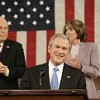
POLITICS-US: One More Year of the Same
With just less than one year left in his presidency, George W. Bush remains as focused as ever on the Middle East and Iraq and appears reluctant to take on any major new foreign policy challenges in the time that he remains in power.POLITICS: Security Council Loses Credibility Over Iran, Israel
The 15-member U.N. Security Council (UNSC) is set to lose its credibility once again as it prepares to impose a third set of sanctions on Iran while failing to pass any strictures on Israel for its continued heavy-handed repression of Palestinians in Gaza.LEBANON: Palestinians Rush for Confirmation They Exist
The Palestinian Liberation Organisation headquarters in the posh neighbourhood of the now closed Summerland Hotel in Beirut is buzzing with activity. A few men in black, Kalashnikovs firmly in their hands, guard the entrance to the elegant building. A handful of veiled women and older men carrying papers scurry past them up the stairs to the PLO offices.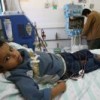
MIDEAST: Faeces Change the Face of Gaza
A stream of dark and putrid sludge snakes through Gaza’s streets. It is a noxious mix of human and animal waste. The stench is overwhelming. The occasional passer-by vomits.MIDEAST: Alarm Bells Sound Over “Jewish State”
Within recent months, several Israeli and U.S. officials have stressed Israel's unique character as a "Jewish state". But according to many Arab observers, the designation negates the right of Palestinian refugees to return to Israel, and leaves the door open to expulsion of Israel's Arab citizens.MIDEAST: Egypt Welcomes Border Breach
Hundreds of thousands of Palestinians flocked into the Sinai Peninsula last week after the border fence separating Egypt from the Gaza Strip was partially destroyed by a series of explosions. In a direct challenge to the Israeli-imposed siege of the territory, Cairo - citing humanitarian concerns - appears to have tolerated the influx.WORLD SOCIAL FORUM: Palestinians in Lebanon Seek Right of Return
"We know when we start a campaign we work for an achievable goal," declares Wafa Yassir, the energetic head of Norwegian People's Aid (NPA), which runs programmes for Palestinian refugees in Lebanon.
WORLD SOCIAL FORUM: Italians Awaken to Palestinian Pain
Several Italian civil society groups will mark the World Social Forum's global day of action Saturday by pledging support for Palestinians.EGYPT: Bush Visit Brings Rift with Washington
During his recent eight-day tour of the Middle East, U.S. President George W. Bush spent only three hours in Egypt, a key U.S. ally. According to some local commentators, Bush's short stopover did much to suggest that the longstanding "strategic relationship" between Washington and Cairo is showing signs of strain.POLITICS: U.S. Stymies Security Council Action on Gaza
Despite intensifying calls for international pressure to address the fast deteriorating situation in the Gaza Strip, observers and some diplomats say the U.N. Security Council has proved as ineffective as it has been for many years concerning issues related to the Israeli-Palestinian conflict.
MIDEAST: In Gaza, It's Darkness At Noon
It gets dark, and cold, and people are getting hungry.Israel closed border crossings Friday, not allowing even UN humanitarian aid trucks carrying basic food. Crossings have been closed frequently since October 2007.
MIDEAST: Christian Zionists Feel “Betrayed” by Bush’s Road Map
President George W. Bush returned home from his trip to the Middle East optimistic about the possibility of a peace agreement between the Israelis and Palestinians before he leaves office in January of next year.
MIDEAST: No Rights, Little Mercy
Seventy-six-year-old Mustapha al-Jamal goes door to door, looking for help in finding medicines for his son.At home, the 53-year-old son Yahya al-Jamal lies back, staring at the ceiling. By his side, an oxygen cylinder keeps him going for now.
LEBANON: For Iraqis, Treatment for Trauma Is Luxury
The young woman was walking with her husband along a Baghdad street when she was abducted, held captive and raped repeatedly by five militia men for several days.
MIDEAST: Bush Sent Home Empty-Handed
It is not often that a president of the United States tours the Gulf Cooperation Council (GCC) countries with a long wish-list. And less so when the ‘world’s most powerful leader’ returns home with just a few symbolic gains.EGYPT: Helpless Before the Lebanon Crisis
With another bombing in Beirut this week, the political standoff in Lebanon appears far from resolution. Egypt's role in the crisis, meanwhile, remains limited to making broad appeals for national reconciliation in line with Arab League resolutions.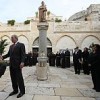
MIDEAST: Iran Looms Large in Bush’s 11th Hour Tour
In the opening days of his trip to the Middle East, U.S. President George W. Bush visited Israel and the Palestinian territories for the first time to spearhead the U.S. role as mediator of the latest push for Middle East peace inaugurated just over a month ago in Annapolis, Maryland.MIDEAST: U.S. Seen in Policy Retreat
Recent months have witnessed several notable political reorientations in the Middle East, involving Iran, the Gulf states, Egypt and Lebanon. Several experts say the changes reflect a shift in Washington's regional strategy following recent U.S. policy setbacks.
MIDEAST: In Exclusion, Hamas Counts
As U.S. President George W. Bush began talks Thursday with Palestinian Authority leader Mahmoud Abbas, Hamas supporters in Gaza were determined to make their absence count.
POLITICS: Will Naval Incident Undermine Bush's Iran Message?
It is by now almost routine. With recurring frequency, U.S. leaders tour the Middle East depicting Iran as the region's greatest threat.« Previous Page — Next Page »





The Week with IPS

NEXT STOP - SDGs
Tracking global progress towards a sustainable world
Tracking global progress towards a sustainable world
