Languages
Tuesday, November 10, 2026



News and Views from the Global South
Millennium Development Goals (MDGs)
HEALTH: Gender Finally Moving to Forefront of AIDS Fight
With women now comprising 61 percent of all people infected with HIV in Sub-Saharan Africa, international donors, governments and advocacy organisations are looking more closely at the connections between HIV/AIDS and gender inequality.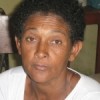
BRAZIL: Seasonal Widows
Maria Vieira dos Santos has raised her six children practically on her own. For more than a decade, her husband would be away from home nearly eight months out of the year, travelling 1,500 kilometres down south to cut sugarcane in the state of São Paulo.WATER-MAURITANIA: Govt Needs to Invest
Ndey Sall, a resident of Sixième, one of the poorest suburbs in the Mauritanian capital Nouakchott, spends the equivalent of a dollar a day on water. That's almost half of her income - not much left to pay for food, rent, or medicine if a family member falls sick.ENVIRONMENT-SOUTH AFRICA: How Friendly is Biodegradable Plastic?
Awareness of pollution and the amount of waste going into limited landfill space is encouraging the growing adoption of products with biodegradable plastic packaging. But environmentalists are challenging the claims made for these green products.
Q&A: "It’s Wrong to Burn Food of the Poor to Drive Cars of the Rich"
The world needs to overcome "the bizarre irony that rural areas, where food is grown, is home to cruel poverty and hunger," says Ismail Serageldin, former chair of the Consultative Group on International Agricultural Research (CGIAR).DEVELOPMENT: MDG Goals Face ‘Triple Crisis’
The developing world faces a "triple crisis" as global economics, food prices and the impact of climate change affect the world's most vulnerable people, a new UN report warns.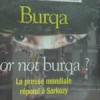
FRANCE: ‘Where Is the Burqa They Want to Ban?’
There was not a burqa in sight. On the bustling streets around Boulevard de Belleville, in one of the most diverse neighbourhoods here, women wore a variety of clothing, including summer dresses, jeans, chadors, headscarves and traditional African dress, but no burqas.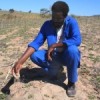
SWAZILAND: Add Water and Stir
What is the first step towards transforming life in a hardscrabble rural community? Address issues of water.DEVELOPMENT-AFRICA: Song and Dance to Empower Women Farmers
Community theatre will be the main thrust of an innovative pilot project that aims to give women farmers stronger influence in agricultural policy-making in Southern Africa.POLITICS-BOTSWANA: Parties Block Women Candidates for Upcoming Elections
As Botswana prepares for general elections in October, gender activists are protesting against the lack of female parliamentary candidates.
Q&A: “The Elites Are Like a Huge Elephant Sitting on Haiti”
Haitian Prime Minister Michèle Pierre-Louis assumed office in September 2008. Born in the southern city of Jérémie in 1947, she left Haiti with her family in 1964 following a pogrom by dictator François Duvalier against his perceived enemies in her town.
AFRICA: Civil Society to AU: Investment Must Address Marginalisation
No gathering hosted by Libyan leader Moammar Gaddafi is ever dull, and the Thirteenth Ordinary Session of the African Union, concluding in Sirte, Libya today has not disappointed.ENVIRONMENT-URUGUAY: Invasion of the Sand Dunes
"A road used to run through here, the sidewalk was over there, and this was the neighbour’s yard. That was an esplanade where people parked their cars, and that area over there was a plaza," says Jackeline, pointing to enormous sand dunes that have swallowed up everything, even entire trees.
HEALTH-LAOS: Inadequate Sanitation Denting GDP
Poor sanitation and hygiene costs the Lao People's Democratic Republic 193 million dollars per year, an estimated 5.6 percent of gross domestic product, according to figures from the Water and Sanitation Programme (WSP) of the World Bank.POLITICS: U.N. Decries Aid Shortfall in Afghanistan
The United Nations, which has expressed disappointment over the slow disbursement of development aid to crisis-stricken Afghanistan, has hurled one of its biggest political insults at Western donors: threatening to turn to a U.S. philanthropist for financial assistance.
AFRICA: Maternal Mortality, A Human Rights Catastrophe
The right to the highest attainable standard of health: not the most fashionable of human rights, but the limits on people's enjoyment of their right to health often coincide with continuing inequalities behind claims of economic growth or political reform.
HEALTH-SENEGAL: Fistula Sufferers Left To Their Fate
In Senegal's southern region, 58 percent of deliveries take place at home without any medical assistance, according to state reproductive health officials in Kolda, a town 425 km from the capital, Dakar. Women in the region suffer from exceptionally high rates of fistula.
RIGHTS: Queer Parade Defies Anachronistic Indian Law
"Not all females are women," reads a poster emblazoned in red. "I am the pink sheep of my family!" is the message on another, while a third, very cheekily proclaims, "I don’t give a f***, I am a greedy bisexual"!
ZIMBABWE: 'Money Comes First, Health Second'
With half her body immersed in a muddy red pond, Esther Nyarambi closely inspects the contents of her wooden panning dish, locally known as zamba. Having spent the entire day pounding gold-bearing rock, she hopes her efforts will be rewarded with even the smallest nugget of gold.
INDONESIA: Presidential Poll Race Disappoints Women’s Activists
As the country prepares to elect its new president next week, Indonesian activists are trying to push gender issues onto the political agenda.
DOMINICAN REPUBLIC: Remittance Crunch, But Women Migrants Keep Sending
Among the colourful houses in the neighbourhood called Vietnam in East Santo Domingo, many families have at least one family member among the 1.5 million Dominicans living abroad.« Previous Page — Next Page »





The Week with IPS

NEXT STOP - SDGs
Tracking global progress towards a sustainable world
Tracking global progress towards a sustainable world
