Languages
Tuesday, November 10, 2026



News and Views from the Global South
Millennium Development Goals (MDGs)
DISARMAMENT: Inching Toward a Global Arms Treaty
The United Nations concluded an open-ended working group for an international Arms Trade Treaty (ATT) Thursday, part of a lengthy and politically contentious process to nail down a basic framework for curbing deadly illegal weapons sales.
DEVELOPMENT: Social Enterprise in the Swazi Highveld
In 2006, faith-based charity organisation Bulembu Ministries Swaziland took over management of an all-but abandoned mining town, situated on a 1,700 hectares in northwestern Swaziland.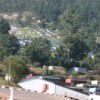
SWAZILAND: Resurrecting Bulembu
In 2005, Bulembu was a ghost town. The once-prosperous mining town's population had fallen from 10,000 to just 100. The beautiful houses that used to accommodate company staff and their families, schools that had been among the best performers in the Kingdom, shops, clinics - all fell quickly into disrepair when the asbestos mine closed.
PERU: Going to School Still a Feat for Rural Girls
María Belén Sabio, a 30-year-old Awajun woman from Peru’s northeastern Amazonia province, was able to complete a teacher training programme despite having five children to raise. "Life here in the countryside is not easy, and I’ve had a hard time getting ahead," she told IPS.CUBA: What Schools Can and Cannot Do for Equality
They are sisters, just two years apart, and had the same upbringing and education, but they have completely different aspirations. While Ana, the younger, dreams of going to university and following a professional career, Marlén is only interested in boyfriends, getting married and living happily and quietly at home.U.S.: Clinton Orders Review to Enhance “Smart Power”
In a new initiative designed to reduce the imbalance between "hard" and "soft" power in U.S. policies abroad, Secretary of State Hillary Clinton has launched a planning process designed to better coordinate U.S. foreign and development policies in pursuit of what Clinton has called "smart power".MEXICO: Int’l AIDS Funds Necessary but Not Sufficient
For the first time, Mexico is eligible for a grant from the Global Fund to Fight AIDS, Tuberculosis and Malaria. But even if its application is successful, resources for HIV/AIDS prevention among high-risk sectors of the population will fall short.DEVELOPMENT: India, China Fight Poverty, Population Growth
The world's two most populous nations - India and China - are placing a high priority on reproductive health and poverty alleviation as part of their efforts to meet the U.N.'s much-touted Millennium Development Goals (MDGs) and its 2015 deadline.
Q&A: Geopolitics Antithetical to Human Development
Sam Worthington is the president and CEO of InterAction, a coalition of 175 U.S.-based non-governmental organisations (NGOs) that focus on aiding the world's most poor and vulnerable people.EAST AFRICA: Raising the Bar for Gender Equality
Mention of the East African Community (EAC) usually elicits thoughts about regional trade, but a campaign is under way to use the regional body to promote gender equality.BRAZIL: Electoral Reform “Just a Sop” to Women
The Brazilian government is congratulating itself on the first-stage approval of a draft electoral law that increases women's participation in party politics. However, the women's movement says it introduces no changes to a power structure that excludes women from politics.
RIGHTS: No Safe Haven for Ugandan Girls
A year ago, a mother in Kashari County took the law into her own hands and castrated a man she caught raping her seven-year-old daughter.MAURITANIA: First Steps for Women's Cooperatives
In December 2008, a group of young women staged a protest against the common practice of fattening women before marriage, intended to make them more attractive in the eyes of men. The protest did not immediately result in the end of the practice, but it was a landmark event showing a new assertiveness among Mauritanian women in a society where men use tradition and sharia law to maintain their dominance.SOUTH AFRICA: Fight Sexism to Help Young Mothers
"My mother was surprised that my breasts were getting bigger, and told me to go to the clinic to take a pregnancy test. The nurses told me I was pregnant and so I cried. I cried because I thought I was too young to have a baby and I thought I wouldn't manage."
HEALTH-MADAGASCAR: Eight Women Die During Delivery Each Day
Eight Malagasy women die per day while giving birth, either due to complications during the pregancny or during delivery, according to a recently-published national Demographic and Health Survey (DHS).
Q&A: Teens Wrongly Excluded From Family Planning
Nafissatou Diop has worked for decades on issues of reproductive health, HIV/AIDS and development in West Africa, including designing and implementing many studies and programmes.
PAKISTAN: Displacement Traumatic for Pregnant Women
Pregnant women uprooted by the violence in the Malakand region, northwest Pakistan, have suffered acutely in refugee camps for the internally displaced.
POPULATION: Poorest Countries to Bear Brunt of Growth
The world's population - already at least 6.7 billion people - will double in the next 40 years if current growth rates are left unchecked, warns the United Nations Population Fund (UNFPA).
G8: ‘Just Invest in Women’
Investment in the health and the rights of girls and women can help economic recovery, civil society groups are telling G8 leaders.G8: Financial Crisis Or No, Rich Can Help Fight Hunger
The World Food Programme (WFP) is urging G8 leaders to turn words into action and meet urgent hunger needs in Africa and other developing nations as they gather in Italy for the 2009 G8 Summit.HEALTH: Private Sector Boosts Public Toilets in Poorer Nations
The United Nations is disappointed that most governments in the developing world have made relatively little progress in providing basic sanitation facilities to nearly 2.5 billion people who still have no access to toilets.« Previous Page — Next Page »





The Week with IPS

NEXT STOP - SDGs
Tracking global progress towards a sustainable world
Tracking global progress towards a sustainable world
