Languages
Sunday, September 27, 2026



News and Views from the Global South
Nepal
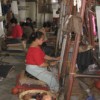
TRADE-NEPAL: Carpet Industry Frayed at the Edges
It was an industry pioneer and had even proved itself successful in the export market. But these days Jawalakhel Handicraft Centre (JHC) is barely able to sustain itself on retail sales, and general manager Chimi Dorjee has been reduced to just recalling how things had been when the going was still good.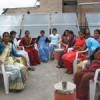
HEALTH-NEPAL: Multiple Problems Mar Fight Against HIV/AIDS
To women who have lost their husbands to the killer AIDS disease, learning a skill to earn a living could be a matter of life and death.NEPAL: Peace Process Survives Scare But Road Ahead Still Bumpy
Nepal’s three major political parties inked a compromise deal Friday, an hour before the expiry of the Constituent Assembly’s (CA’s) tenure, and voted in favor of a bill proposing extension of its term by a year, thus saving the country’s four-year-old peace process from breaking down.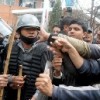
MEDIA-NEPAL: Self-Censorship Creeping Up After Killings
The climate of fear that has been growing in this Himalayan country since the murder of two media entrepreneurs and other attacks on journalists may well push them to turn to more self-censorship.POLITICS-NEPAL: Parties at Odds, Peace at Risk
Nepal’s walk to peace from a decade-long, Maoist-led bloody insurgency that ended four years ago could take longer than expected.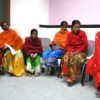
NEPAL: Witch Tag Only on Dalits, Minorities
Just 40 kms away from the capital Kathmandu, in Thasingtole, Lalitpur District, Kalli Kumari B.K., 46, a local Dalit woman, was mercilessly beaten up. She was accused of being a 'witch', imprisoned in a shed and forced to eat her own excretaNEPAL: Widows Break Tradition – Wear Red
Bhagwati Adhikari was a teenager when she was married off to a village boy of the same caste. Just a few years later when she was in her early 20s, she became a widow. Her husband, who worked as a security guard in Kathmandu, was murdered. Adhikari was left alone to support her family.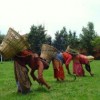
POLITICS-NEPAL: Women Push for Gender Equality in New Constitution
A political crisis, which has dragged on for months, crippling progress in drafting a new constitution for Nepal by the Constituent Assembly (CA) has considerably dampened the euphoria of women's organisations here.
NEPAL: Third Gender Assert Rights
Two years ago, 23-year-old Bhakti Shah, a cadet in the Nepal Army, was dismissed because she was seen to spend most of her free time with a fellow female cadet.
HEALTH-NEPAL: Baby Boom in Maoist Army
At the annual military parade of the People’s Liberation Army, Nepal’s ex-guerrillas, curious bystanders saw a young woman clad in military fatigues kiss and cuddle a baby before handing her back to an older woman.
NEPAL: People's Voices: Reflecting on the Republic
Maoist hammer and sickle graffiti from last year's constituent assembly (CA) election is still fresh on the walls all around Gorkha Bajar. This historic town, some 150 km west of the capital Kathmandu, used to be a Maoist stronghold during the 'peoples war' from 1996-2006.
NEPAL: Displaced Choose Urban Homelessness Over Rural Insecurity
Bishnu Maya Dahal, 51, dreams of going back to her village in eastern Nepal.
DEVELOPMENT-NEPAL: Women Everesters Talk Gender Equality
Seven young women have started a seemingly commonplace programme of video presentations at schools in this mountainous Himalayan country. The programme’s contents however are unique.RIGHTS-NEPAL: Law on Disappearances Provokes Outcry
Despite loud opposition, the Maoist-led coalition government of Prime Minister Pushpa Kamal Dahal has vowed to push through an ordinance to resolve the cases of hundreds of people ‘disappeared’ during the decade-long people's war waged between Maoist rebels and the forces of the former monarchy.HEALTH-NEPAL: On Course to Achieve MDG on Maternal Health
Impoverished Nepal has dramatically reduced maternal mortality cases from 540 per 100,000 live births in 2001 to the present 280 - a feat experts attribute chiefly to the legalisation of abortion.NEPAL: Army-Rebel Integration Hangs Fire
Two years after Maoist fighters put aside their arms and agreed to place themselves in United Nations-monitored camps, the issue of integrating them into the regular Nepal army as part of a peace process hangs fire.RIGHTS-NEPAL: Maoists Attack Journos, Threaten Media Freedom
When Kunda Dixit, editor of the ‘Nepali Times’ and 12 other staff members of the Himalmedia publishing house were attacked and injured by supporters of Communist Party of Nepal-Maoist (CPN-M), a week ago, it was a sign that Nepal’s ruling party intends to influence the media through intimidation.DEVELOPMENT-NEPAL: Returning Power to Local Bodies is Critical
As members of Nepal’s newly-formed Constituent Assembly (CA) begin the process of a writing a new constitution for this former monarchy they will consider reviving devolution of power to local administrative bodies as the fastest way to ensure development.EDUCATION-NEPAL: Increasing Budget Not Enough to Meet Goals
While the new Maoist government has dramatically increased the outlay for education in the annual budget to meet the goal of Education for All (EFA) by 2015, a visit to remote, mountainous Limi village in mid-western Nepal shows that the goal will be hard to reach.NEPAL: Militarising or Demilitarising?
Fighting a decade long ‘People’s War’ for the revolutionary transformation of a feudal monarchy meant that the Maoists had to militarise Nepali society, including women and youth.HEALTH-NEPAL: Meeting MDG on HIV/AIDS – A Dream?
Shibu Giri, programme officer at the National Association of People Living with HIV/AIDS in Nepal, who tested positive in 2000, believed he was fit and fine as his CD-4 count stayed normal.« Previous Page — Next Page »


The Week with IPS

NEXT STOP - SDGs
Tracking global progress towards a sustainable world
Tracking global progress towards a sustainable world
