Languages
Monday, October 19, 2026



News and Views from the Global South
Pakistan
POPULATION: The Worst Places to Be a Refugee
Gaza, South Africa and Thailand are among the world's worst places to be a refugee, according to the latest annual World Refugee Survey released here Wednesday by the U.S. Committee for Refugees and Immigrants (USCRI).MIGRATION: Pakistan Refugee Crisis Worst in a Decade, U.N. Says
Forty-two million people were forcibly uprooted by conflict and persecution worldwide in 2008, said a new report by the United Nations High Commissioner for Refugees (UNHCR) released Tuesday.US-PAKISTAN: CIA Secrecy on Drone Attacks Data Hides Abuses
The U.S. Central Intelligence Agency’s refusal to share with other agencies even the most basic data on the bombing attacks by remote-controlled unmanned predator drones in Pakistan’s northwestern tribal region, combined with recent revelations that CIA operatives have been paying Pakistanis to identify the targets, suggests that managers of the drone attacks programmes have been using the total secrecy surrounding the programme to hide abuses and high civilian casualties.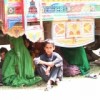
PAKISTAN: IDPs from NWFP Revive ‘Outsider’ Fears in Karachi
"Isn’t this our country? Are we not Pakistanis? When people from Karachi came to Swat as tourists we welcomed them with open arms," fumes Mirza Khan, 39.POLITICS-US: Implementing Af-Pak Strategy Is the Hard Part
With the strategic review for U.S. goals in Afghanistan and Pakistan now complete, the administration of President Barack Obama must shift to the more difficult task of choosing and – even more daunting – implementing policies that seek to quell the militant insurgencies in both countries, says a new report from a think tank here known to be close to the administration.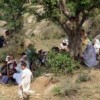
PAKISTAN: Pakhtuns Open Their Doors to Uprooted Civilians
For Pakistan’s Pakhtuns, hospitality is part of an old tradition that assures even strangers a warm welcome into their homes.AFGHANISTAN: Finding a Way Out of the Crossfire
The people of Afghanistan are increasingly caught in the cross-fire between a violent insurgency and a violent counter insurgency but does this mean the entire country is unravelling?PAKISTAN: U.S. to Aid Civilians Fleeing Embattled Swat Valley
U.S. Secretary of State Hillary Clinton announced the provision Tuesday of 110 million dollars in humanitarian aid to assist the mounting number of internally displaced persons (IDPs) in Pakistan.POLITICS: What Happened to the Afghan Elections?
After a series of well-known Afghan politicians announced their candidacy, the up-coming presidential election was widely believed to be a turning-point in the country’s history. But most of the big names declined to register, leaving what critics allege is a weak opposition to President Hamid Karzai.DEVELOPMENT-AFGHANISTAN: ‘We Need a Fundamental Change Here’
The U.S. administration has pledged to increase aid and reconstruction as a central part of President Barack Obama’s new strategy. But critics charge that the new policy contains very little specifics on how to bring development and jobs to the country.AFGHANISTAN-US: More Troops, Humvees, and Dollars
Life in the quaint, muddied town of Maydan Shahr appears to be going on as it has for years. Wrinkled, wizened men manage under-stocked shops in the sleepy central bazaar, while jobless youths idle nearby.PAKISTAN: Exodus From Swat as 'War' Breaks Out
"It’s an all out war now," said 45-year old Zubair Khan. He was talking to IPS over the phone from Swat Valley, in the North West Frontier Province on May 6, the day after the Pakistan military began its operation to weed out militants.U.S.: Mirror, Mirror on the Wall, Who’s the Greatest Threat of All?
A potentially major clash appears to be developing between powerful factions inside and outside the U.S. government, pitting those who see the Afghanistan/Pakistan ("AfPak") theatre as the greatest potential threat to U.S. national security against those who believe that the danger posed by a nuclear Iran must be given priority.Q&A: ‘We will not leave you alone’
U.S. President Barack Obama has made Afghanistan and Pakistan his number one foreign policy priority. As acting U.S. Ambassador, Francis J. Ricciardone, outlined his country's strategy for long-term peace, justice and prosperity in the region in an exclusive hour-long interview. Excerpts: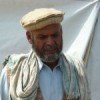
PAKISTAN: Taliban Stop Civilians From Leaving
Thousands of people are stranded in violence-wracked Swat and Buner districts in the North West Frontier Province (NWFP) because the Pakistan Taliban have refused to allow them passage to safer places.POLITICS-US: Officials Admit Pakistanis Reject U.S. Priorities
The advances of the Taliban insurgents beyond the Federally Administered Tribal Areas (FATA) in recent weeks and the failure of the Pakistani military to counter them have brought a rare moment of truth for top national security officials of the Barack Obama administration.POLITICS-US: Af-Pak Troubles Coming to a Head
Despite an overhaul of policy toward Afghanistan and Pakistan, it appears that the U.S. strategy there is running into obstacles as varied as the U.S. Congress and the leaders of those countries, who are both visiting Washington this week.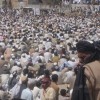
PAKISTAN: Entering a “Bloody Phase”
Alarm bells are ringing in Washington, with the U.S. fretting over what could happen if the "worst, the unthinkable" were to happen and the Tehrik-e-Taliban Pakistan (TTP), toppled the country's year-old democratic government and got hold of its nuclear arsenal.
PAKISTAN: Military Crackdown on Taliban Uproots Civilians
Thousands of civilians are continuing to migrate to safer places from Upper Dir and Buner districts - the new theatres of an internal war between Pakistan’s Taliban and the military in the North West Frontier Province (NWFP).
PAKISTAN: Media in the Taliban’s Crosshairs
Till two months back, Shireen Zada of the private television channel Express News would carry a pistol whenever he covered the news in the restive Swat Valley in Pakistan’s North West Frontier Province (NWFP).U.S.: Major Foreign Tests Likely Over Next 100 Days
While Barack Obama has clearly improved Washington's image abroad during his first 100 days in office, the next 100 will almost certainly prove much more challenging for the new president's foreign policy.« Previous Page — Next Page »





The Week with IPS

NEXT STOP - SDGs
Tracking global progress towards a sustainable world
Tracking global progress towards a sustainable world
