Languages
Saturday, October 17, 2026



News and Views from the Global South
Palestine
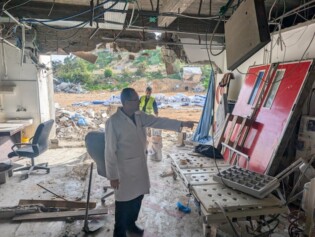
Gaza: Physicians Call For Unimpeded Aid To Restore Reproductive Healthcare
Israel must lift all restrictions on medicine, food and aid coming into Gaza, rights groups have demanded, as two reports released today (Jan 14) document how maternal and reproductive healthcare have been all but destroyed in the country.
Defending Democracy in a “Topsy-Turvy” World
It is a bleak global moment—with civil society actors battling assassinations, imprisonment, fabricated charges, and funding cuts to pro-democracy movements in a world gripped by inequality, climate chaos, and rising authoritarianism. Yet, the mood at Bangkok’s Thammasat University was anything but defeated.
World Leaders Take a Stand as Outrage Against Israel Increases
The world is becoming increasingly outraged at Israel for its actions in the ongoing war against Hamas, particularly amid the recent killings of Palestinian journalists and Israel’s announcement of its plan to seize complete military control of the Gaza Strip.
Aid Denied, Questions Ignored: Israel Keeps Focus on Hostages
At the United Nations media stakeout on Tuesday, Israeli officials kept focus exclusively on the hostages, avoiding questions entirely.
As Gaza Enters ‘Worst-Case Scenario of Famine,’ States Call for Palestinian Self-Determination at General Assembly
As the starvation crisis in Gaza deepens into what aid organizations describe as a “worst-case scenario,” a growing coalition of nations is shifting its rhetoric and policy toward supporting Palestinian statehood. At the United Nations General Assembly this week, the humanitarian emergency has reignited global calls for a two-state solution and reignited scrutiny of the Israeli government’s blockade of aid.
Two-State Solution Conference Presents an “Exceptional Moment” for International Community – The Elders
Dignitaries across the international community have convened in New York to promote the two-State Solution - the coexistence of Israel and Palestine as sovereign states - as the only path forward to shared sustainable peace in the Middle East. Former and current leaders from 145 countries and independent groups will speak at the United Nations to demonstrate their ‘near-universal support’ and discuss the steps that need to be taken to achieve it.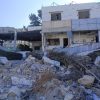
Gaza Counts Costs of Catastrophic Impacts of Israeli Bombardment on Healthcare
With enough steel and concrete, the hospitals that have been smashed to bits in Gaza can be rebuilt. But a construction plan paired with an army of bulldozers will not be enough to reconstruct the entirety of Gaza's health care system, which, after many months of war, has been decimated by the Israeli military forces.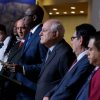
U.S. White House Executive Order Raises Concerns for Its Support to the UN
A new executive order from the United States White House calls for withdrawing support from major UN entities and a review of all international intergovernmental organizations which the United States is a member of. The U.S.’s orders against the UN Palestine Refugee Agency also do not bode well for ongoing ceasefire negotiations in Gaza.
Gaza Humanitarian Aid: How a Lack of Political Will Sabotaged Resolution 2720
Before the three-phased ceasefire deal—proposed by President Joe Biden and dragged over the finish line by the then-incoming Donald Trump administration—silenced the bombs and drones over Gaza and allowed for humanitarian aid to flow into the strip, there was United Nations Security Council Resolution 2720.
Israel’s Moves to Ban UNRWA—Signals Uncertainty for Affected Palestinians
The decision of Israel’s parliament, the Knesset, to adopt two laws that would severely limit or outright ban UNRWA has the potential to set a dangerous precedent, where countries can simply implement their own justification to ban the activity of the United Nations, even if it violates their obligations under international humanitarian law. Even with the rest of the world condemning this course of action, for Israel, this has been a long time coming and they are unlikely to back down.
Seeds of Resilience Despite Massive Destruction in Gaza
It was two weeks before October 7—when Hamas attacked Israel—that Prime Minister Benjamin Netanyahu stood behind the rostrum in the United Nations General Assembly hall clutching a crude map of what he called the "new Middle East," a visual that erased the land of Palestine.
UN Polio Vaccine Campaign in Gaza Will Proceed During Humanitarian Pause
The UN’s multi-agency polio vaccine campaign in Gaza is set to begin this weekend. It will do so under continued constraints on humanitarian operations and mobility, but with the assurance from Israel to pause fighting for the campaign to go ahead.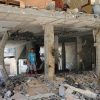
Gaza War: Displaced Palestinian Families Struggle to Access Basic Services
The latest Israeli evacuation order on August 17 led to the displacement of over 13,000 individuals, Secretary General’s spokesperson Stéphane Dujarric told a press conference at the UN headquarters.
Overwhelmed Healthcare Systems in Gaza Struggle Through Evacuation Orders
For nine months, over 2 million people in the Gaza Strip have been forcibly displaced in the wake of the armed conflict between Israel and Hamas. The ongoing fighting and displacement have put significant strain on humanitarian organizations on the ground to address even basic health needs. The United Nations and other humanitarian organizations have stressed that the healthcare system in Gaza has collapsed or has suffered undue pressure as a result of the fighting. Out of 36 hospitals in the area, 13 remain open, operating with partial functionality.
International Court of Justice Orders Israel to Halt its Military Offensive in Rafah
The International Court of Justice (ICJ) ordered Israel to immediately halt its military offense in Rafah. "In conformity with obligations under the Genocide Convention, Israel must immediately halt its military offensive and any other action in the Rafah Governorate which may inflict on the Palestinian group in Gaza conditions of life that could bring about its physical destruction in whole or in part," the court said in it's revised order, which was passed by 13 votes to 2. South Africa approached the court on May 10, 2024 for a modification of provisional measures as prescribed by the court. The court also ordered that Israel must take effective measures to ensure the unimpeded access to the Gaza Strip of any commission of inquiry, fact-finding mission, or other investigative body mandated by competent organs of the United Nations to investigate allegations of genocide. Israel was also ordered to ensure that humanitarian aid should be “unhindered provision at scale by all concerned of urgently needed basic services and humanitarian assistance,” and that Israel should maintain open land crossing points, in particular the Rafah crossing. The full order can be read here. IPS UN Bureau Report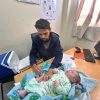
International Community Urged to End Impunity for Violence Against Healthcare in Conflicts
Governments and international agencies must do more to end impunity for violence against healthcare, campaigners have urged, as a new report shows that attacks on healthcare during conflicts reached a new high last year.
1.8 Million More Palestinians Doomed to Poverty if Gaza War Persists
Nearly seven months into the Gaza war, the UN warns that to rebuild and restore the buildings lost in this period, it would take several decades, and to revitalize Palestine’s economy, it would be a great undertaking. Meanwhile, the great losses in housing and public services and the economic stall only threaten to push even more Palestinians into poverty.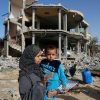
‘Scattered Measures’ in Humanitarian Aid for Gaza Are Not Enough – UN Secretary General
As the humanitarian crisis in Gaza drags into its sixth month on Sunday, April 7, the UN Secretary-General calls for a “true paradigm shift” in the delivery of humanitarian aid. On Friday April 5, 2024, Secretary-General António Guterres spoke before reporters to mark six months since the October 7 attacks, where 1,200 civilians in Israel were killed in a terrorist attack led by Hamas, which has since led to a military campaign by the Israel Defense Forces (IDF) into Gaza.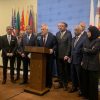
UN Security Council’s Ceasefire Resolution in Gaza Welcomed
After nearly six months of a devastating war in Gaza, the UN Security Council has at last adopted a resolution calling for an immediate humanitarian ceasefire. The resolution calls for the ceasefire to come into effect for the month of Ramadan, demands the unconditional release of all hostages and ensures humanitarian access.
UNWRA Chief Warns Agency’s Fate ‘Hangs in the Balance’
UNRWA Commissioner-General Philippe Lazzarini asked the UN General Assembly to urge member states to support the organization's mandate during this period of unprecedented crisis for the region and the agency. He also called for member states to facilitate a “long-overdue political process” for the two-state solution for Israel and Palestine. Only then, in this context, should UNRWA be allowed to transition.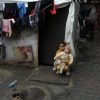
No Ceasefire Gaza Threatens Humanitarian Aid, Raises the Palestinian Question
As negotiations within the UN Security Council and internationally continue, the humanitarian response to Gaza continues to be under threat.Next Page »





The Week with IPS

NEXT STOP - SDGs
Tracking global progress towards a sustainable world
Tracking global progress towards a sustainable world
