Languages
Wednesday, November 11, 2026



News and Views from the Global South
Southern Africa
TRADE: COMESA Summit in Balance Because of Zimbabwe Chaos
Zimbabwe, which is in a political and financial tailspin, has missed out on an opportunity to save some of its tattered international reputation. The Common Market for East and Southern Africa’s (COMESA) 13th summit would have taken place in the country’s north-eastern resort town of Victoria Falls but has been postponed indefinitely.TRADE: Zimbabwe Is the Fly in the New FTA Broth
With an electoral crisis, world-record inflation and a collapsing economy blighted by a brain drain and a generally restive population, Zimbabwe could prove to be southern Africa’s ‘‘problem child’’ as the region seeks to link its economies in a new free trade area (FTA).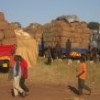
TRADE-MALAWI: Turmoil as Tobacco Prices Fluctuate
Malawi’s tobacco industry has been in turmoil after wildly fluctuating prices led protesting farmers to force the closure of the auction floors.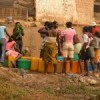
SOUTHERN AFRICA: Water "Undervalued and Not Treated With Respect"
A two-day conference on water issues in the Southern African Development Community (SADC), which opened Wednesday in Maseru, Lesotho, has seen representatives of government, civil society, the private sector, donors and other groups discuss the likely effects of climate change on development in the region.Q&A: "Literally, This Is Energy From Dirt"
You've heard of solar power, and also wind power. Now, you might start hearing about soil power as well.DEVELOPMENT-AFRICA: "Political Will" Needed To Address Food Crisis
The need to give agriculture top billing on governmental "to do" lists has been highlighted at a telephone briefing to discuss the current food crisis as it affects Africa.ENERGY-AFRICA: From Kerosene to the LED, O-HUB and O-BOX
In many of Africa's towns and villages, smoky kerosene lamps are all that keeps the darkness at bay after sunset. However, kerosene is a dangerous and increasingly expensive source of light for Africans who do not have access to electricity - about three-quarters of those living on the continent, according to the World Bank.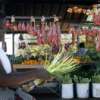
DEVELOPMENT-SOUTHERN AFRICA: Small Can Be Beautiful
Is small the new big when it comes to agriculture in Southern Africa? As rising food prices place this sector firmly in the spotlight, there are compelling examples at hand to make the case for greater investment in small-scale farming.DEVELOPMENT-ZAMBIA: Counting the Cost of Recent Floods
Samson Mwenda, a farmer from Namwala in Zambia’s Southern Province, recalls with bitterness the massive floods of the 2007/2008 rainy season and the harsh consequences they had for his life.
RIGHTS: In South Africa, Zimbabwean Refugees Find Sanctuary and Contempt
As the autumn sun sets over South Africa's most populous city, the halls of downtown Johannesburg's Central Methodist Mission fill with weary figures, many far from home, seeking solace within its walls.Q&A: "We Mustn't Think as South Africans That We Have Won the Day"
Bishop Paul Verryn, who directs the Central Methodist Mission in Johannesburg, South Africa, has long been on the frontlines of the country's political struggles.MOZAMBIQUE: Officials Master Floods – But Battle To Contain Diseases That Follow
More people have died of cholera following recent floods in Mozambique than the number of those who perished in the rising floodwaters. Most rivers in central and northern Mozambique burst their banks after heavy rains in December, January and February, and as a result of Cyclone Jokwe - which hit in early March.Q&A: Labour "Has to Weigh Up the Trade-offs" in Acting to Protect Workers
Co-operation between the African National Congress (ANC), the South African Communist Party (SACP) and forerunners of the Congress of South African Trade Unions (COSATU) goes back several decades to the early days of efforts to end racial discrimination in South Africa.Q&A: Circumcision an “Opportunity To Take Great Strides Forward” Against HIV
Results from trials in South Africa, Kenya and Uganda in 2006 showed that male circumcision reduced the transmission of HIV from women to men by up to 60 percent. On the basis of these results, the Joint United Nations Programme on HIV/AIDS and the World Health Organisation have recommended that countries encourage men to be circumcised.HEALTH-SOUTH AFRICA: Where Have the Piglets Gone?
Each psychiatric patient leaving Tower Hospital in the Eastern Cape Province under a new project to integrate patients into the community is sent home with two piglets. While at the hospital, patients are trained to raise pigs, the hope being that they will use the piglets for breeding to develop a sustainable source of income once discharged.SOUTH AFRICA: Water Supply Proposal Sparks Controversy and Suspicion
A plan to increase the supply of potable water to two coastal towns in South Africa's Eastern Cape Province is provoking heated debate.TRADE: Zimbabwe, ”A Hard Sell”
The Zimbabwe International Trade Fair (ZITF), which ended this past weekend, was once celebrated as a forum to showcase the vast investment opportunities in the then bread basket of the Southern African region. It was established almost five decades ago.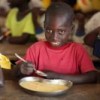
AFRICA: Agricultural Extension Work Both Important and Under-valued
At a time of international concern about the future of the world's food supply, it's a comment that gives pause for thought: "I teach university students agriculture and extension but many of them opt for other professions, especially in ICTs, because agriculture is 'for those who haven't gone to school'."
Q&A: "Between Implementation and Planning, There Is a Disconnect"
Accounting for about a third of the gross domestic product in sub-Saharan Africa, agriculture clearly plays a significant role on the continent. But, figures only tell part of the story. A review of Africa produced under the International Assessment of Agricultural Science and Technology for Development (IAASTD) notes that agriculture is also "woven into the fabric of most societies and cultures in the region."
POLITICS: Democracy Unfinished
A new report by the Geneva-based Inter Parliamentary Union (IPU) has shown that women are changing the priorities and sometimes the tone of legislatures around the world. But, it also highlights the slow pace at which the number of parliamentary seats held by women is increasing.
DEVELOPMENT: Reinventing Agriculture
The results of a painstaking examination of global agriculture are being formally presented Tuesday with the release of the final report for the International Assessment of Agricultural Science and Technology for Development (IAASTD).« Previous Page — Next Page »





The Week with IPS

NEXT STOP - SDGs
Tracking global progress towards a sustainable world
Tracking global progress towards a sustainable world
