Languages
Wednesday, November 11, 2026



News and Views from the Global South
Southern Africa

Q&A: "Increase Agricultural Productivity While Reducing the Environmental Footprint"
Over the past few years, Robert Watson has had what must qualify as one of the world's tougher assignments: heading an initiative to help agriculture cope with the substantial challenges it faces presently, and the even bigger hurdles ahead.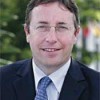
Q&A: "A Collective Ignorance About How Agriculture Interacts With Natural Systems"
Representatives from countries, civil society and the private sector are meeting this week in Johannesburg, South Africa, to review the findings of the three-year International Assessment of Agricultural Science and Technology for Development (IAASTD).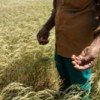
DEVELOPMENT: Towards a New and Improved Green Revolution
As food prices soar and hundreds of millions go hungry, experts from around the world will this week present a new approach for ensuring food security, at the intergovernmental plenary for the International Assessment of Agricultural Science and Technology for Development (IAASTD). The Apr. 7-12 conference is taking place in South Africa's commercial hub, Johannesburg, and will be attended by representatives of an estimated 60 governments.
POLITICS-ZIMBABWE: Hopes for a Move "From Opposition to Proposition"
A leading commentator in Zimbabwe has sounded a note of caution - this after the country passed a political milestone that saw the opposition win control over the lower house of parliament in weekend elections.EDUCATION-SOUTH AFRICA: Making the Blackboard Jungle Less So
Violence in South African schools has claimed the lives of a number of children in recent years, while many more have been hospitalised with injuries.
Q&A: "A World 'Unfit' for 2.2 Billion Children"
As the United Nations plans to commemorate the 20th anniversary of its landmark Convention on the Rights of the Child next year, the world's 2.2 billion children continue to suffer the consequences of growing poverty, rising illiteracy, increasing sexual abuse and widespread military conscription in conflicts worldwide.
Q&A: “No Problems in Voting, So Why Should There Be Problems in Counting?”
While the run-up to Zimbabwe's general elections, Saturday, was plagued with irregularities, the voting process itself has been given a relatively clean bill of health by the Zimbabwe Election Support Network (ZESN), which encompasses 38 civic groups.DEVELOPMENT-MALAWI: Water Utility Over-Stretched and Under-Maintained
Long known as a peaceful and quiet city, especially at night, Blantyre is steadily losing its reputation for tranquility. Residents now find themselves waking up to the hustle and bustle of women carrying metal and plastic buckets as they move around the city most nights and early mornings in search of water.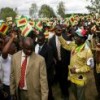
POLITICS-ZIMBABWE: "The Election Will Not Be Free and Fair"
Where to begin with listing the concerns that surround Saturday's general elections in Zimbabwe?Q&A: "We Have Managed to Make the Female Agenda a Current Affairs Issue"
Towards the end of last year, IPS reported on efforts to increase women's political participation in Zimbabwe, ahead of the Mar. 29 elections. As it happens, only about 13 percent of candidates for the House of Assembly are women - along with some 30 percent of Senate aspirants, according to statistics from the Women in Politics Support Unit, a local non-governmental organisation (NGO). So, what went wrong?ZIMBABWE: A Society "Not Ready for Female Leadership"?
Women make up about half the population in Zimbabwe. But, they're far from accounting for 50 percent of those on the ballot for this month's general elections in the Southern African country - sparking concern amongst gender activists.ZIMBABWE: A "Can Do" Approach to Greater Political Involvement of Women
With general elections taking place in Zimbabwe on Mar. 29, efforts have been underway to increase women's political participation in the Southern African country.DEVELOPMENT- ANGOLA: Research Initiative Nets Interesting Discoveries
More than 50 species of fish have been recorded in the initial phase of a two-year joint research project on the Kwanza River in Angola.RIGHTS-ANGOLA: Free Rein for Human Traffickers
There is little awareness on the problem of trafficking in persons, mainly women and children, in Angola, and no laws for cracking down on the growing phenomenon.WORLD WATER DAY-SOUTH AFRICA: Celebrations in the Midst of Crisis?
South Africa is currently celebrating Water Week (Mar. 17-23) to coincide with World Water Day on Mar. 22. The week also coincides with a national crisis in confidence about the ability of government to provide citizens with safe drinking water.POLITICS: Parliamentarians to Tackle Poverty
The link between global warming and poverty, and the effects of poverty on women, will be among the topics put in the spotlight during the 118th assembly of the Inter-Parliamentary Union (IPU), which takes place next month in the South African port city of Cape Town.
RIGHTS-SOUTH AFRICA: Death Penalty Referendum Call – Critics Cry Populism
Jacob Zuma, the president of the African National Congress (ANC), the ruling party in South Africa, has of late been called a chamaeleon who adapts his speeches to what his audience wants to hear. It's a tactic that has proved controversial, not least when Zuma took up the issue of the death penalty.DEVELOPMENT-SWAZILAND: “Leadership Doesn’t Act Like It Is a Crisis”
A substantial increase in the number of Swazis requiring food aid has raised questions in this Southern African country. Why the rise, and how long are the higher numbers likely to prevail? More fundamentally, what has caused such widespread and enduring hunger to begin with?
HEALTH-AFRICA: Training Anaesthesiologists to Do, And To Train
The need for a global effort to address the shortage of anaesthesiologists in Africa was highlighted over the past week during the World Congress of Anaesthesiologists - which took place in Cape Town, South Africa.HEALTH-AFRICA: Anaesthesiology on Life Support
A discussion about anaesthesiology and anaesthesiologists is something that could bring on drowsiness, even sleep...Until, that is, the talk turns to shortages of anaesthesiologists in Africa and how this can increase surgical mortality. Statistics on this matter are frightening enough to keep anyone awake.DEVELOPMENT-SWAZILAND: To Relocate or Not To Relocate?
Climate change appears to have permanently altered certain areas of east and southern Swaziland, where good harvests have not been achieved for over a decade. Agriculture officials and non-governmental organisations (NGOs) now question whether these areas can still support communities.« Previous Page — Next Page »





The Week with IPS

NEXT STOP - SDGs
Tracking global progress towards a sustainable world
Tracking global progress towards a sustainable world
