Languages
Wednesday, November 11, 2026



News and Views from the Global South
Southern Africa
DEVELOPMENT-SOUTH AFRICA: Farmers Can Plan – But Not Indefinitely
Millions of dollars worth of agricultural produce have been lost due to the electricity crisis in South Africa, which has seen rolling power cuts - referred to locally as "load shedding" - across the country over the past few months. Yet industry players who spoke to IPS about the crisis seemed positive about their ability to weather the storm.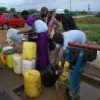
DEVELOPMENT-ZIMBABWE: Full Dams Do Not Translate Into Water Supplies
Heavy rains in Zimbabwe and in the catchment areas of its major rivers in December and January have filled most of the country’s dams to capacity. Yet, many urban households do not have water.
Q&A: "Simply Not Enough People Committed to Proper Water Management"
Following several incidents that have raised questions about water quality and distribution in South Africa, Water Affairs and Forestry Minister Lindiwe Hendricks has tried to allay fears about her department's ability to provide potable water to all South Africans.
HEALTH-SOUTH AFRICA: Too Few Trained Personnel. Too Much Aluminium?
The precarious state of water distribution in Grahamstown, a city in the south-east of South Africa, was highlighted again this month when taps ran dry for almost two days (Feb. 8 and 9) in a large section of the city. Grahamstown's reticulation system has failed residents several times over the last fourteen months in terms of water quality and reliability of supplies.ECONOMY-ANGOLA: (Responsible) Foreign Investment Welcome
A high-level mission from Angola visited Portugal to entice potential investors with new business opportunities arising from the newfound stability in the southwestern African nation, one of the fastest-growing economies in the world today.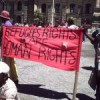
RIGHTS-SOUTH AFRICA: “We Are Just Helping Desperate People Here”
A police raid on a Methodist church which provides shelter to hundreds of refugees in the South African financial centre of Johannesburg is continuing to draw angry responses.RIGHTS-AFRICA: No Sex, Please – You're HIV-Positive
HIV/AIDS policies and programmes disregard the sexual needs of people living with the virus, claim a number of HIV-positive women who attended the third Africa Conference on Sexual Health and Rights - held this week in Nigeria.RIGHTS-NAMIBIA: Gov’t Considering Water Subsidies For Poor
The Namibian government, frequently accused of making water unaffordable to the poor, is finally taking steps to address this countrywide problem that threatens to hamper the country’s efforts to meet the eight Millennium Development Goals (MDGs) set by world leaders at a special United Nations General Assembly meeting in 2000.HEALTH: Rural Zimbabwe Fertile Ground for HIV/AIDS
They left the country in search of jobs to better their lives, but village elders in rural Tsholotsho, say young men who left home to fend for their families are losing their lives at alarming rates to HIV/AIDS related ailments.DEVELOPMENT: Unexpected Benefits of Lesotho Highlands Water Project
The Lesotho Highlands Water Project (LHWP) was conceived and built primarily to supplement the water supply of the industrial hub of South Africa. The additional water has however, provided an important benefit beyond the original aims of the project - it is reducing the salinity of the Vaal Dam reservoir.SWAZILAND: Greatest Threat to Reform Is a Short Memory
Did Swaziland learn nothing from last year’s devastating drought? Some relief agencies and agricultural officials are shaking their heads in dismay that 2007’s devastating crop failures did not spark reform in the way land is utilised in this small country of less than one million people.Q&A: ‘Water Meters Are Good for the Environment and Good for Wallets’
Water shortage is not uncommon in Cape Town, South Africa. For the past years the warm summer months - of November until February - saw water restrictions imposed by the city authorities. The restrictions prohibited residents from using potable water for the irrigation of lawns and gardens as well as using hosepipes to wash motor vehicles, pavements, and any movable or immovable structure.EDUCATION-SOUTH AFRICA: ‘We Need All Hands on Deck to Solve The Crisis’
Teachers who are not trained properly, teacher strikes and HIV/AIDS are taking a huge toll on the educational system in South Africa.CLIMATE-MOZAMBIQUE: Once Again Flooding Brings Risk of Disease
Once again Mozambicans are assessing the damage left in the wake of devastating rains and burst river banks along the floodplains of the Zambezi, Búzi, Púnguè and Save Rivers. Nobody is sure how many people have perished in the most recent floods, but the final death toll could be well over one hundred.EDUCATION-ZIMBABWE: Getting Harder To Keep Children In School
Alois Mufundisi, a media professional, earns 200 million Zimbabwean dollars, about 50 U.S. dollars on the thriving parallel market.DEVELOPMENT-SOUTH AFRICA: Using Culture to Save Wetlands
Wetland conservation projects in South Africa have to take into consideration the culture, traditions and needs of local communities, according to Donovan Kotze of the University of KwaZulu Natal. He believes that the key to proper wetland management lies within communities living in and around these wetlands.ENERGY-SOUTH AFRICA: Maize Farmers Lobby to Supply Biofuel Industry
South African maize farmers are pushing hard to change a government decision to exclude their crops as feedstock for bioethanol, in view of food security concerns.ENVIRONMENT-SOUTH AFRICA: Ban May Push Abalone to Extinction
South Africa’s decision to suspend commercial fishing of wild abalone, a large marine mollusc, from Feb. 1, could drive the species further towards extinction. Conservationists fear the ban will fuel poaching, currently the most criminalized wildlife trade in Africa.SWAZILAND: Income Rating Hobbles Aid Effort
Amanda Dube is literally ‘dirt poor’. Fierce bush fires ravaged Swaziland for months in 2007, and repeatedly swept over the hilly area of Mliba where she lives. Fires burned the trees and vegetation on the small sloping plot where the widowed mother of three attempts to scratch out a maize crop.
Q&A: ‘We Want to Prepare Voters For the Election and the Post-Election Scenario’
"If you run an inherently unfair election it will lead to political unrest in a post- election scenario," Lovemore Madhuku, chairman of the National Constitutional Assembly (NCA) told IPS.POLITICS-ZIMBABWE: Mbeki Attempting to Jumpstart Talks
The Southern African Development Community (SADC)-brokered talks to end the political stalemate between the ruling ZANU PF party and the opposition Movement Democratic Change (MDC) are hanging by the thread.« Previous Page — Next Page »





The Week with IPS

NEXT STOP - SDGs
Tracking global progress towards a sustainable world
Tracking global progress towards a sustainable world
