Languages
Wednesday, November 11, 2026



News and Views from the Global South
Southern Africa
EDUCATION-SWAZILAND: Urban Youth Slipping Through The Cracks
As the new school year begins here many destitute or orphaned children are in need of assistance to pay for their educations. An unknown number of urban youngsters, however, are slipping through the social welfare net.ZIMBABWE: Economy in the Red, Black Market Thriving
When you get out of your car at the Ascot shopping mall in Bulawayo, southern Zimbabwe, it is almost certain that you will soon be approached by a black market trader. Do you need soap? Are your windscreen wipers worn down?DEVELOPMENT-ZIMBABWE: "God Only Loves Mugabe"
Sikhumbuzo* was only 18 when he left Zimbabwe for South Africa. He managed to find a job, and sends home close on 150 dollars a month in cash and goods - although he can’t say how many people he supports.SOUTH AFRICA: Government Set To Reach Sanitation Target. Is it Enough?
The South African Department of Water Affairs and Forestry has narrowly missed one of its most important targets, aimed at improving sanitation for the country's poorest people - but plans to make up the remaining ground soon.POLITICS-SOUTH AFRICA: A Trying Passage for Women in the Ruling Party
The past weeks have been tumultuous for women in South Africa's ruling African National Congress (ANC).ZIMBABWE: Good Intentions Plus Poor Implementation Equals Dry Taps
A 20-litre bucket in hand, Abigail Shonhiwa ponders the stretch ahead in her journey to the next watering hole, a distance of about seven kilometres. Her suburb has been facing recurrent water shortages since 2000, in part because it is built on a plateau in the Zimbabwean capital, Harare.DEVELOPMENT-SOUTH AFRICA: Could Water Meters Be Unconstitutional?
More than 300 residents of Phiri, one of the poorest suburbs in Soweto, demonstrated outside the High Court in Johannesburg earlier this month to show support for a campaign to have pre-paid water meters declared unconstitutional. After a three-day hearing, the judge announced that he would make his findings known early in 2008.MALAWI: Crocodiles Make Fetching Water a Life Threatening Experience
Many communities around the world may take water for granted; but for those living along Malawi’s longest river, the Shire, water is something to die for. The 400 kilometre long river is the main outlet of Lake Malawi as it flows south into the Zambezi River.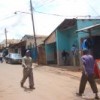
MALAWI: ”Foreign Traders Are Taking Our Jobs”
Foreigners working illegally as small-scale traders are increasingly being regarded as a threat to their local counterparts in Malawi. The outsiders are setting up businesses which, local Malawians believe, are displacing them.TRADE-GHANA: Cocoa Industry’s Future Looking Sweet
After almost a decade of poor cocoa production during the 1980s, the Ghanaian government is upbeat about the subsequent growth in output of the product which is the country’s main export, providing more than 60 percent of foreign earnings.POLITICS-SOUTH AFRICA: Mbeki – 1,505 Votes. Zuma – 2,329 Votes
It was, metaphorically speaking, dirty and very bloody. But the campaign leading up to the national conference of the ruling African National Congress (ANC) in Polekwane, north-east South Africa - where Jacob Zuma was elected president of the party, Tuesday - was democracy in its rawest form.ENERGY-SOUTH AFRICA: Food Security Hobbles Biofuel Strategy
Worried that it may be seen as insensitive to the food needs of Africa, the South African government, which is facing a general election in 2009, has chosen food security in framing a biofuel policy.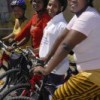
TRANSPORT-SOUTH AFRICA: Culture Puts the Brakes on Women's Mobility
The bicycle has been hailed as having done "more than anything else in the world...to emancipate women" - the words of 19th century American feminist Susan B. Anthony. But for many women in South Africa, culture and tradition make it difficult to take advantage of the increased mobility and access to social and economic opportunities, not to mention the reduced carbon footprint, offered by bicycles.ZIMBABWE: Investment Dwindles in the Face of A Defiant Government
Recent international reports show Zimbabwe’s economic decline hastened by continued capital flight, with the troubled country cited as one of the worst investment destinations in the world.AFRICA: Money, Media and Tradition Complicate Women's Political Aspirations
The challenges confronting women politicians in Africa were given an airing recently during a press conference in South Africa's commercial hub, Johannesburg.ZIMBABWE: Illegal Trade Booming – For The Sake of Survival
Easily portable, consumable goods from Zimbabwe are increasingly finding their way into neighbouring countries as cross-border traders search for deals to earn much-needed foreign currency.DEVELOPMENT-SOUTHERN AFRICA: Local is Essential
Local communities in Southern Africa should be given a greater opportunity to participate in initiatives for the management and conservation of natural resources such as water. This was one of the main conclusions of the third Zambezi Basinwide Stakeholders Forum, held recently in Victoria Falls, Zimbabwe.SOUTHERN AFRICA: The Indispensable Role of Mud Flats, Marshes and Swamps
The need for greater urgency in addressing loss of wetlands in the Zambezi River Basin has been highlighted at a recent meeting in northern Zimbabwe.SOUTHERN AFRICA: Co-operation and Investment a Defence Against Floods
To prevent, monitor and manage floods in the Zambezi River Basin - and reduce the number of flood victims - regional governments and parties involved in the water sector urgently need to adopt a more proactive approach, experts said during the third Zambezi Basinwide Stakeholders Forum, held recently in Victoria Falls, northern Zimbabwe.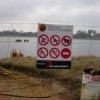
ENVIRONMENT-SOUTH AFRICA: Radioactive Water, the Price of Gold
Large gold-mining companies operating to the west of South Africa's commercial centre, Johannesburg, stand accused of contaminating a number of water sources with radioactive pollutants.ENVIRONMENT-ZAMBIA: An Unwelcome Guest Has Taken Root
An invasive shrub has colonised a corner of the Lochinvar National Park, upsetting the balance of one of Zambia’s most diverse ecosystems. Mimosa pigra, originally from Mexico, is now threatening wildlife and pastoralists who depend on grazing lands in and around the park.« Previous Page — Next Page »





The Week with IPS

NEXT STOP - SDGs
Tracking global progress towards a sustainable world
Tracking global progress towards a sustainable world
