Languages
Thursday, June 25, 2026



News and Views from the Global South
The Information Society
US-CHINA: Public, Elite Attitudes Reflect “Hope and Fear”
While the Chinese and U.S. publics and elites hold generally favourable views of each other, distrust between them also persists, according to a new "mirror" survey of both countries released here Monday.POPULATION: Awards Highlight Media Impact
A U.S. Pulitzer Prize-winning cartoonist, a television news reporter from the Philippines and a radio show host from Cameroon were among the 12 recipients of the Population Institute's 28th Annual Global Media Awards for Excellence in Population Reporting Wednesday.
MEDIA-KENYA: For a Woman Candidate, It's Good To Be a Man
As with political candidates everywhere, women running in this month's general elections in Kenya are doubtless keeping a close eye on the media to see how they are being portrayed by news outlets. Then again, these women may simply be concerned about whether they are portrayed at all.DEATH PENALTY-MOROCCO: Conformist Media Blamed for Public Apathy
Lack of media interest in reporting on death penalty issues is responsible for widespread public indifference to whether or not Morocco eventually abolishes capital punishment, according to analysts and activists here.DEVELOPMENT: Faced with Clashes, It's Good to Talk
With clashing civilisations, as with clashing people, there's one strategy that works: talk your way out of it. Just how is, of course, the more difficult question.
Q&A: 'People Who Work Every Day For Harmony Do Not Make Headlines'
The daily work of ordinary people committed to building dialogue both within and outside their communities make for less spectacular news reports than stories about communities at odds, says Imam Yahya Sergio Yahe Pallavicini. These ordinary people are the majority, and they are more open to productive communication with the West than we generally believe, he says.
MEDIA-PAKISTAN: TV Talk Shows Take to the Streets – Literally
The question on the TV talk show was simple. Celebrity anchor Hamid Mir asks guests from various political parties if they are prepared to participate in a general election under emergency rule. As the cameras roll, the guests squirm uncomfortably in their seats and make non-committal noises.MEDIA-EGYPT: Ahmed To Challenge 'Press Offences'
Makram Mohamed Ahmed, newly elected Egyptian Journalists Syndicate chairman, has promised to pursue the syndicate's longstanding goal of outlawing the practice of issuing jail terms for so-called "publication offences".DEVELOPMENT: Undersea Cable Buoys Africa’s Digital Prospects
Africa, the world's least plugged-in continent, is moving closer to reliable telecommunications and affordable Internet access.
Q&A: "Religion Is The Private Sphere, Not The Public"
To curb fundamentalism and fight terrorism, "Religion must be kept out of politics," warns Shlomo Ben-Ami, former Israeli foreign minister.CULTURE-ASIA: Collectors Turn to Filipino Art
As the contemporary art market continues to boom, interest in Asian art grows and certain works fetch huge prices, Filipino artists are suddenly finding themselves a hot commodity.
PAKISTAN: Media Under Siege
From being the liberal President under whom Pakistan’s independent electronic media was born and flourished, Pervez Musharraf is now seen as the military general who imposed emergency rule on Nov 3 and suspended the Constitution and the independent judiciary.MEDIA: They Made Thrones Tremble
Nearly 500 journalists have been murdered in the last 15 years, according to the New York-based Committee to Protect Journalists (CPJ), and about 85 percent of those crimes have gone unpunished.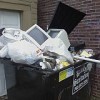
ENVIRONMENT-US: An E-Waste Free-for-All
U.S. citizens will buy 30 million new digital televisions this year alone, sending their old lead-laden TVs to the dump, or more likely, overseas to China or India.ECUADOR: No Dial Tone, No Contract
The possible cancellation of the mobile telephone operating licence granted by Ecuador to Porta Celular, a company indirectly owned by Mexican multi-millionaire Carlos Slim, could set a precedent in Latin America.RIGHTS-US: “Hindu-Phobia” Thrives in Dark Corners of the Web
Last July, a 35-year-old Indian American financial services executive was visiting Lake Tahoe in the San Francisco Bay Area with his fiancée and her cousin. As the group walked along the beach, a couple approached and called the women "Indian sluts and whores".
Q&A: ''Pakistan's Is a Society Trapped In an Undemocratic State''
Adil Najam is co-director of the Project on Human Development at the Pardee Centre for the Study of the Longer Range Future at Boston University.LATIN AMERICA: New ‘Cyber Paradise’ for Paedophiles and Racists?
The crackdown in eastern Europe and the United States on websites posting racist content or child pornography could expose Latin America to the risk of becoming a new "cyber paradise" for on-line paedophilia and racism, experts say.BOOKS-US/IRAQ: Outrage in a Time of Apathy
Unlike most U.S. journalists who went to Iraq to cover a war, Dahr Jamail went to try to stop it.POLITICS: Gagged at Home, Pakistanis Take to Cyberspace
Pakistanis officially gagged by emergency rule are voicing grievances and mobilising resistance in a place beyond their military rulers' writ: cyberspace.CZECH REPUBLIC: The March that Never Was
A failed neo-Nazi march in Prague's old Jewish town has been the object of hyped media attention at a time of growing interest in right-wing extremism in formerly communist Central and Eastern Europe.« Previous Page — Next Page »


The Week with IPS

NEXT STOP - SDGs
Tracking global progress towards a sustainable world
Tracking global progress towards a sustainable world
