Languages
Wednesday, August 26, 2026



News and Views from the Global South
West Africa
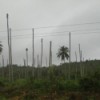
DEVELOPMENT-GHANA: Lethal Yellow Disease Has Scientists Stumped
Older Ghanaians remember when the country's coast was lined with coconut trees. Fishermen would mend their nets in the shade the trees provided, as well as drink the water and eat the fruit. Thousands of women made a living extracting oil from copra - the dried meat of the coconut. But today, the beaches have been stripped bare by Lethal Yellow Disease (LYD).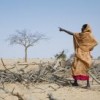
REFUGEES-CHAD: Water and Wood Shortages Worsen
Every morning soon after sunrise, Fatne Abdaraman walks a short distance across the Iridimi refugee camp in eastern Chad hauling a twenty-litre plastic jug. She lines it up along with other women's containers at the water distribution point, then awaits her turn to draw her daily allotment of one of Central Africa's scarcest resources, one that underpins ongoing conflict in the region.DEVELOPMENT-GHANA: No Place to Lay Their Heads
Agbogbloshie Market is a vibrant market in the heart of Accra, Ghana's capital, where one can buy almost anything. But the market is also the stage for a sad tale of many who gain nothing from the commercial bustle: hundreds of young girls from the northern part of the country who work as porters in Accra's markets.TRADE: China and India Should Join Effort to Stop Illegal Logging
‘‘Greed should not lead us to destroy our forests,’’ according to Abraham Ansah, an executive member of the non-governmental organisation (NGO) the Bunso Conservationists.CHAD: European Force Sticks to Mandate Under Early Pressure
The European Union’s first major overseas military deployment - to the impoverished central African nation of Chad - is caught in a war of words between the country’s president and tenacious rebel groups operating on Chad’s arid border with Sudan.TRADE-GHANA: Non-Traditional Exports Are Booming
Impressive growth in exports from Ghana to the rest of the world has been witnessed over the past few years as more and more Ghanaians explore production in non-traditional sectors.CAPE VERDE-EU: Oiling the Wheels of Temporary Migration
Under the watchful eye of "Fortress Europe", the EU has entered into a pilot partnership with Cape Verde based on the "circular migration" model, under which legal migrants are able to move back and forth without major restrictions.
DEVELOPMENT-GHANA: Women Ideal Shea Butter Producers
"Wherever I went, they laughed at me and called me 'Habiba the empty mouth.' I was always embarrassed," says 45-year-old Habiba Alhassan. "I could not afford to smile; I could not open my mouth in public, when I took photographs I had to close my mouth so that I wouldn't look ugly."POLITICS-AFRICA: Critics Target U.S. Military Command
In just a few months, the United States Africa Command (AFRICOM) - Washington's latest military oversight structure for the continent - is expected to be fully operational.TRADE-WEST AFRICA: Nigeria Is Out to Protect Its Industries
Nigeria took a strong stance on determining its own economic development recently when it rejected an economic partnership agreement (EPA) with the European Union. The country has also adopted a different approach towards its neighbours regarding protection for its nascent industries.Q&A: "Literally, This Is Energy From Dirt"
You've heard of solar power, and also wind power. Now, you might start hearing about soil power as well.DEVELOPMENT-AFRICA: "Political Will" Needed To Address Food Crisis
The need to give agriculture top billing on governmental "to do" lists has been highlighted at a telephone briefing to discuss the current food crisis as it affects Africa.ENERGY-AFRICA: From Kerosene to the LED, O-HUB and O-BOX
In many of Africa's towns and villages, smoky kerosene lamps are all that keeps the darkness at bay after sunset. However, kerosene is a dangerous and increasingly expensive source of light for Africans who do not have access to electricity - about three-quarters of those living on the continent, according to the World Bank.HEALTH-SOUTH AFRICA: Where Have the Piglets Gone?
Each psychiatric patient leaving Tower Hospital in the Eastern Cape Province under a new project to integrate patients into the community is sent home with two piglets. While at the hospital, patients are trained to raise pigs, the hope being that they will use the piglets for breeding to develop a sustainable source of income once discharged.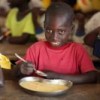
AFRICA: Agricultural Extension Work Both Important and Under-valued
At a time of international concern about the future of the world's food supply, it's a comment that gives pause for thought: "I teach university students agriculture and extension but many of them opt for other professions, especially in ICTs, because agriculture is 'for those who haven't gone to school'."
Q&A: "Between Implementation and Planning, There Is a Disconnect"
Accounting for about a third of the gross domestic product in sub-Saharan Africa, agriculture clearly plays a significant role on the continent. But, figures only tell part of the story. A review of Africa produced under the International Assessment of Agricultural Science and Technology for Development (IAASTD) notes that agriculture is also "woven into the fabric of most societies and cultures in the region."
POLITICS: Democracy Unfinished
A new report by the Geneva-based Inter Parliamentary Union (IPU) has shown that women are changing the priorities and sometimes the tone of legislatures around the world. But, it also highlights the slow pace at which the number of parliamentary seats held by women is increasing.
DEVELOPMENT: Reinventing Agriculture
The results of a painstaking examination of global agriculture are being formally presented Tuesday with the release of the final report for the International Assessment of Agricultural Science and Technology for Development (IAASTD).
Q&A: "Increase Agricultural Productivity While Reducing the Environmental Footprint"
Over the past few years, Robert Watson has had what must qualify as one of the world's tougher assignments: heading an initiative to help agriculture cope with the substantial challenges it faces presently, and the even bigger hurdles ahead.
Q&A: "A Collective Ignorance About How Agriculture Interacts With Natural Systems"
Representatives from countries, civil society and the private sector are meeting this week in Johannesburg, South Africa, to review the findings of the three-year International Assessment of Agricultural Science and Technology for Development (IAASTD).
DEVELOPMENT: Towards a New and Improved Green Revolution
As food prices soar and hundreds of millions go hungry, experts from around the world will this week present a new approach for ensuring food security, at the intergovernmental plenary for the International Assessment of Agricultural Science and Technology for Development (IAASTD). The Apr. 7-12 conference is taking place in South Africa's commercial hub, Johannesburg, and will be attended by representatives of an estimated 60 governments.« Previous Page — Next Page »


The Week with IPS

NEXT STOP - SDGs
Tracking global progress towards a sustainable world
Tracking global progress towards a sustainable world
