Tuesday, September 1, 2026



News and Views from the Global South
POLITICS-CUBA/US: Havana Celebrates Its UN Victory
Dalia Acosta
- The Cuban government is using “resounding victory” to describe the United Nations approval of a resolution calling for “the immediate end to the blockade” the United States has imposed against the Caribbean nation for almost four decades.
“Washington was once again nearly alone in facing the international rejection of its obstinate policy of attacking and encircling” Cuba, said the Fidel Castro government’s mouthpiece, ‘Granma’ newspaper,’ Friday, which described the UN proceedings as a vote against the “irrational.”
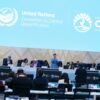
The text presented Thursday before the UN by Cuban Foreign Minister Felipe Pérez Roque was approved by a vote of 167 in favour. Voting against were delegates from the United States, Israel and the Marshall Islands, while El Salvador, Nicaragua, Latvia and Morocco abstained.
According to ‘Granma,’ representatives from 31 countries participated in the debate, and their statements underscored “the isolation of Washington’s anti-Cuba policy.”
The economic sanctions that have been imposed since shortly after the 1959 Castro-led Cuban Revolution, have caused losses estimated at 70 billion dollars and have put the country’s development behind 15 years.
“I have come to speak on behalf of the only blockaded country on the planet,” said the Cuban Foreign Minister as he began his presentation Thursday before the 55th period of sessions of the UN General Assembly.
Pérez Roque stressed how the United States had normalised its relations with other communist states, such as China and Vietnam, and “even with a group of countries it had once called terrorist.” However, the same has not occurred for Cuba.
He also refuted that the bill approved in October by the US Congress would weaken the blockade by allowing the sales of food and medicine to the island, as Washington would have the international community believe.
The measure allows sales but prohibits Cuba’s access to public or private financing for purchases, making makes it impossible for Havana from the outset.
Additionally, the bill converts the ban on travel by US citizens to the island into law.
“No one should claim to have been deceived. All that has been legislated against Cuba (in the United States) throughout the years, with irrational hate and absolute disrespect for international law, remains in effect today,” Pérez Roque added.
Speaking during the session in support of Cuba, among others, were the ambassadors from Russia, China, Mexico, Venezuela and South Africa. France spoke on behalf of the European Union, Nigeria for the Group of 77 and Barbuda for the Caribbean Community (CARICOM).
‘Granma’ pointed out that this is the ninth consecutive year the UN General Assembly has demanded that the US government lift the economic, trade and financial blockade against Cuba – a stance that attracts more supporters with each passing year.
The first resolution in condemnation of the blockade, presented before the UN in 1992, was approved with 59 votes in favour. With time, backing for the resolution kept growing, surpassing 100 votes in 1994 and reaching 158 last year.
For Havana, the significant result is that the number of abstentions dropped from 72 in 1994 to just four this year. The UN member states absent for the vote has also declined, from 46 nine years ago, to 11 on Thursday.
The nations that have voted with Washington have never numbered more than four, and the only one that has remained faithful is Israel. Others who have voted against Cuba are Romania (1992), Albania and Paraguay (1993), Uzbekistan (1995-1997) and this year the Marshall Islands.
The matter of the resolution condemning the blockade against Cuba was to have been debated for the first time in 1991, but the Group of Three (Mexico, Colombia and Venezuela) convinced Havana to hold off for a year saying the moment was “inopportune and counterproductive.”
‘Granma’ also calls attention to the fact that alongside the United States and Israel, now the vote of the Marshall Islands has appeared, a small territory in the Pacific, says the daily, that maintains a “sort of neo-colonial relationship” with Washington.
In defending the position of his country, US ambassador to the UN, James Cunningham, said the embargo “is a bilateral issue” and not a matter for the General Assembly.
But the resolution proposed by Cuba not only expresses concern about the negative effects of the blockade on the Cuban population, it also criticises the extra-territorial impacts of the US policy.
Laws such as the Helms-Burton Act, approved under US President Bill Clinton in 1996 to tighten the embargo, “affects the legitimate interests” of third countries and of the “people under their jurisdiction,” according to the document.
The US legislation, sharply criticised by the international community since it was originally drafted, includes sanctions against foreign businesses that invest in the former properties of US citizens on the island.
 Print
|
Print
|