
Friday, November 20, 2026



News and Views from the Global South
Q&A: 'Don't Think of Migrants in Numbers Alone''
Interview with Predrag Matvejevic, intellectual and writer
- The clash among cultures is not the inevitable destiny of our times, says Predrag Matvejevic. Intellectuals and politicians must both do their bit "to foster the concrete utopia of the alliance of civilisations."
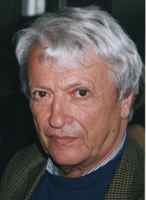
Predrag Matvejevic Credit: Kari Klemelä
He calls himself someone "who came in from the East" and who lives "between asylum and exile." A prolific writer, he uses his work to "defend human rights and the many persecuted East European intellectuals under the communist systems."
His 'Mediterranean Breviary', a poetic essay on the Mediterranean region published in 1988, has been re-published nine times and translated into 21 languages.
Matvejevic attended the International Cooperation Forum in Rome Nov. 3. The Forum was organised by the deputy minister for foreign affairs Patrizia Sentinelli to discuss Italy's commitment to "partnership policies and collaboration between governments and communities", in order to re-launch international cooperation in Italy.
"When I was invited to attend the forum, it was an unexpected and meaningful surprise to me," Matvejevic told IPS correspondent Sabina Zaccaro in an interview.
IPS: Do you consider this opening of politics to the world of culture a positive sign?
Predrag Matvejevic: It has been a beautiful surprise to me. I am not a politician, I belong to the political left, though never engaged politically. In Eastern Europe, I was a dissident opposing Stalinism, and decided to emigrate when nationalisms took power and led to war in the former Yugoslavia.
I was invited – and I think that is a positive sign – because politicians know that without an appeal to culture, to the intelligentsia, they just stay behind bureaucracy, they are too much officers, too much…politicians.
Some stimulus is needed from intellectuals to put down various problems. I think it is for that reason that I have been invited.
IPS: As a migrant and a specialist, what are your concerns about migration?
PM: I have realised how migration issues are always proposed in quantitative terms: how many people landed (on Italian coasts), how many have been expelled, how many remained, and how much manpower Italy needs…
Always like this. There's no effort for a qualitative approach to the immigration issue, considering migrants not as a category but as individuals.
If universities had done this kind of analysis, it could have contributed to a better understanding and reception, and prevented some problems that often occur.
IPS: Do you think it is too late?
PM: Well, it's never too late. But we could have started before, I would add.
IPS: You have said that civilisations don't clash, but ideologies do…
PM: Yes. From one side we see a difficult call, and desire, for an alliance among civilisations, coming from people like the Spanish President (Jose Luis Rodriguez) Zapatero. From the other side, we hear talk about the 'clash of civilisations', theorised by a U.S. professor, Samuel P. Huntington, which has met the favour of some hawks.
The alliance could appear as a utopia, but I believe there are some 'productive' and 'concrete' utopias. Moreover, this clash does not seem destined. Clash is not unavoidable; we must do our best to avoid it, and give space to the alliance.
IPS: What could culture do, and what must politics do?
PM: Culture can propose these reflections, and politics, little by little, could get used to that, receive those suggestions, and finally apply them.
IPS: Nevertheless, in most cases the intelligentsia doesn't dare to do that. What is it afraid of?
PM: I think it is afraid of getting involved. Intellectuals, and most of all leftist intellectuals, have made some wrong choices. We realised too late the faults of Stalinism and those of some European and global leftist governments, and the confusion in a part of socialism. We have made a mistake by sustaining those regimes. Having made mistakes, we do not want to be wrong again, and we do not have the courage to commit ourselves.
Nevertheless, our presence is absolutely needed in those cultural processes that could determine, or change, the nature of other political, economic, demographic processes.
IPS: Common people seem to be afraid as well. After a violent murder committed last week by an irregular immigrant from Romania, the news talks about a fear among Italian citizens. The Romanian community in Italy is also frightened, after having been targeted in some reprisal racist violence by young bands…
PM: This alarm is perhaps exaggerated, due to news reports that do not explain clearly how much migrants contribute to the economic growth of Western countries. The episode you mention is a criminal act, for which those responsible must be condemned. But are all the people from his country to be blamed for that? Of course not.
These episodes have to be explained differently. Clearly, (migrant) arrivals must be regulated. But hate does not help at all, and it can also damage the positive effects of migration to a country.
 Print
|




