
Thursday, October 22, 2026



News and Views from the Global South
Opinion
How the G7 Can Reset Global Finance
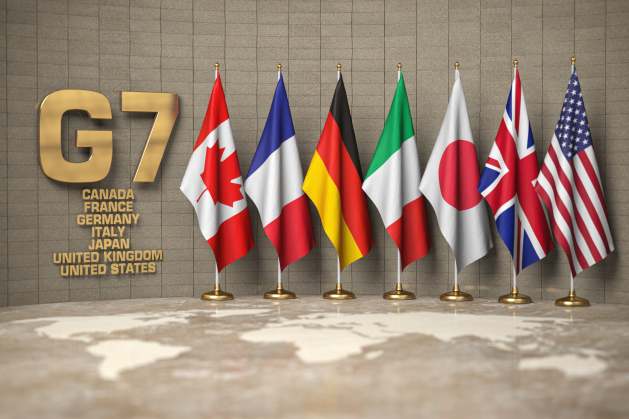
The global financial architecture needs a deeper reset; it should build a country's capacity to withstand shocks and grow over time. Credit: Shutterstock
- When G7 leaders arrive in Evian-les-Bains this month, France will host more than another summit. It will host a test of whether rich-country coordination can still solve problems that no country can manage alone. Aid budgets are shrinking, debt-service bills are crowding out investment, climate shocks are damaging infrastructure, and private capital remains scarce and expensive where it is needed most.
France has rightly made reducing global imbalances a priority of its G7 presidency. The G7 must show how finance should move differently and with global impact.
The urgent focus is development finance. G7 ministers have acknowledged that many partner countries face repeated crises, structural vulnerabilities, rising debt, food insecurity, and humanitarian needs. France has also placed African investment and the role of public development banks on the G7 agenda.
These issues are not separate. A drought that cuts harvests can weaken revenue, raise debt distress, damage health, interrupt schooling, and make the next investment more expensive. The current Ebola outbreak reminds us how vulnerable we all are to these crises.
That is why the global financial architecture needs a deeper reset; it should build a country’s capacity to withstand shocks and grow over time. Investments should work together. A solar plant that cannot feed a resilient grid, a road washed away by the next flood, or a hospital without reliable water, power, and social services support may look good in a project document and still fail the economy.
First, the world needs a better measure of wealth. GDP is useful, but incomplete. It counts activity; it does not tell us whether a country is building or consuming the assets on which future prosperity depends. A forest cleared for short-term export can raise GDP, and so can rebuilding after a flood.
Neither means that a country is becoming richer if its soils, water, skills, and institutional trust are deteriorating. A reset should ask whether produced assets, natural systems, people’s capabilities, and public institutions are becoming stronger together.
The practical step is not abstract. Finance ministries could require comprehensive wealth impact statements. When a government considers a debt-financed power system, port, irrigation program, or disaster-risk loan, it should show not only the likely effect on deficits and growth, but also the likely impact on water security, land-use management, public health, skills, and future disaster losses.
Creditors and rating agencies should look at the same evidence. A country that protects floodplains, strengthens schools, and reduces energy vulnerability is making itself a safer borrower, even if those gains remain invisible in conventional accounts.
Second, the world needs to appraise investment portfolios, not isolated projects. This is where many well-intentioned plans underperform. A seawall without drainage and mangrove protection may shift risk rather than reduce it.
Climate-smart agriculture without storage, cold chains, and roads leaves farmers exposed. Solar panels without grid upgrades and reliable payment systems can leave generations stranded. The question should not be which project has the highest standalone return, but which combination of investments most improves resilience, productivity, and long-term wealth in the public interest.
This approach would also help mobilize private capital. Investors are often told that developing countries are too risky. But part of that risk reflects weak systems: unreliable power, poor maintenance, exposed supply chains, thin insurance, and fragile public finances.
Coordinated ublic investments should be used to lower these risks at the portfolio level by preparing interconnected pipelines, funding data, providing guarantees, supporting local-currency finance, and strengthening early-warning systems and building the institutions that keep assets working when shocks hit. Capacity building would not be a charity; it would be risk reduction.
Third, states and markets need clearer rules for allocating capital. For policymakers, this means that budgets, debt strategies, and industrial plans should include the assets and vulnerabilities they create. For multilateral development banks, the IMF, credit-rating agencies, and regulators, it means treating climate adaptation, nature protection, social capability, and debt sustainability as one conversation, not four.
Country platforms should bring them into a single investment plan with clear priorities and accountability. For investors, assets that protect water, power, food systems, health, and skills should be viewed as infrastructure for returns, not as ESG decoration.
The G7 can make this pivot at Evian. It could agree that major development-finance packages should include wealth impact statements; that multilateral development-bank country strategies should use portfolio appraisal; that public development banks should standardize guarantees and project preparation for resilience; that debt workouts and new lending terms should reward verified investments that reduce future losses; and that private co-financing should be linked to transparent outcomes. These reforms simply require an acceptance by institutions to judge success differently.
None of this is anti-market, anti-growth, or anti-finance. It is pro-accuracy, pro-stability, and pro-prosperity. The central task is simple: build a financial architecture that strengthens society’s productive capacity and the planet that sustains it, not that merely flatters the next quarter’s accounts.
The current global financial architecture was built for a world that believed growth could be separated from ecology, projects from systems, and risk from resilience. That world is gone.
France’s G7 presidency offers a chance to replace it with a financial system that measures real wealth, funds investments that work together, and rewards countries for reducing the risks that threaten everyone. That is how we move from fragmented finance to resilient prosperity and from short-term gain to long-term global public investment.
Hyginus ‘Gene’ Leon is the Executive Director of the Development Bank for Resilient Prosperity and was the sixth President of Caribbean Development Bank (CDB)
Simon Reid-Henry, PhD is a Research Professor at the Peace Research Institute Oslo and Head of Secretariat of the Coalition of Governments (and International Organisations) on Global Public Investment
 Print
|
Print
|




