Tuesday, August 11, 2026



News and Views from the Global South
POLITICS-ZIMBABWE: A Tumultuous Week
Ken Ntuli
- In recent years, political developments in Zimbabwe have been as hot a topic of conversation in South Africa as they were in Zimbabwe itself. The past week has not proved an exception to this trend.
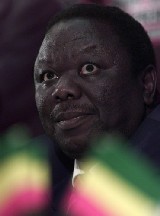
MDC leader Morgan Tsvangirai, whose party may not partake in an upcoming poll. (Photo: Joao Silva) Credit: PictureNET Africa
Following an acquittal on Oct. 15, Tsvangirai immediately embarked on a tour of South Africa and the Indian Ocean island of Mauritius, two key members of the 13-nation Southern African Community Development (SADC) – which includes Zimbabwe.
“I have spent the past week engaging political leaders and key players within civic society in the SADC, updating them on the current situation in Zimbabwe,” the MDC leader told journalists in South Africa’s commercial hub of Johannesburg.
Accompanied by the party’s secretary-general, Welshman Ncube, Tsvangirai held talks on Monday with South African president Thabo Mbeki, who also heads the SADC organ for defence, politics and security. Two days later he met Mauritian Prime Minister Paul Berenger, the current chair of SADC.
The purpose of these discussions was to persuade the two leaders to put pressure on Zimbabwe to implement fully the SADC Protocol on Principles and Guidelines Governing Democratic Elections. Adopted in Mauritius by regional heads of state in August, the protocol is aimed at ensuring that all polls held in the region are free and fair.
Zimbabwe’s parliamentary elections in 2000 and a presidential poll in 2002 were marred by widespread violence ahead of voting – the brunt of which was borne by the opposition – and irregularities in the electoral process. State media were biased in favour of the ruling ZANU-PF party.
Since then, the situation in Zimbabwe has not improved. The Public Order and Security Act allows police to restrict freedom of assembly, while the Access to Information and Protection of Privacy Act is widely seen as a bid to muzzle independent journalists. Both laws were enacted after the 2002 vote.
The SADC electoral protocol stipulates that all parties contesting a poll should be allowed to campaign freely, while enjoying equal access to state-run media. Amongst other things, it also calls for the establishment of impartial electoral institutions.
“We explained how Zimbabwe’s democratic deficit continues to widen at an alarming rate, making a free and a fair election impossible under the current circumstances,” said Tsvangirai.
“Since the SADC Protocol was signed by all member states on Aug. 17 there has been no serious attempt by the Zimbabwe government to implement measures which will ensure full compliance with the new SADC electoral standards,” he added.
Fearing a repeat of events in 2000 and 2002, the MDC suspended participation in all elections on Aug. 25 – including the next parliamentary poll, scheduled to take place by March 2005. However, the party has left the door open for rejoining the campaign.
“We explained (to Mbeki and Berenger) how the timing of our decision was deliberately aimed at giving the government sufficient time to address the severe deficits that exist with regards to complying with the SADC standards,” observed Tsvangirai.
“Prominent deficits such as the absence of the rule of law, political violence, repressive legislation that curtails basic civil and political liberties and an inaccurate voters’ roll cannot be addressed immediately prior to polling day,” he said.
“They need to be tackled at least six months or more prior to an election if public confidence and legitimacy are to be harnessed to the entire electoral process.”
Tsvangirai also painted a gloomy picture of Zimbabwe’s economy, putting unemployment at almost 80 percent and inflation at 280 percent. While the country has experienced financial difficulties for several years, matters took a turn for the worse after the start of a controversial land redistribution programme in 2000.
Veterans of Zimbabwe’s 1970s war of independence and government militants began occupying hundreds of farms owned by minority whites in what was originally portrayed as an attempt to rectify racial imbalances in land ownership that dated from the colonial era.
However, government critics claimed the farm seizures were orchestrated by Harare in a bid to deflect attention from its track record ahead of the 2000 parliamentary election.
The land redistribution programme has since contributed to severe food shortages in Zimbabwe that have affected millions.
In May, Harare began cutting down on food aid to the country, claiming that a good harvest was anticipated for Zimbabwe.
However, the London-based human rights watchdog Amnesty International said in a report earlier this month that local and foreign civic groups believed the government was preparing to use food aid to coerce people into voting for it during the upcoming parliamentary poll. The report in question was entitled ‘Zimbabwe: Power and Hunger – Violations of the right to food’.
Seven million people, more than half of Zimbabwe’s population, now need food aid, according to aid agencies.
Tsvangirai’s concerns about the economy were echoed by Wellington Chibebe, secretary general of the Zimbabwe Congress of Trade Unions, during an impromptu press conference held in Johannesburg on Wednesday.
Chibebe said economic decline in Zimbabwe had resulted in a massive, and ongoing exodus of citizens from the country – many of them desperately-needed doctors and nurses.
“Five million Zimbabweans are out of the country. This is scary, given the fact that Zimbabwe’s population is only 13 million,” he noted.
Also caught up in the Zimbabwean quagmire this week was a 13-member fact-finding delegation from the Congress of South African Trade Unions (COSATU), which found itself deported from Zimbabwe on Wednesday.
Information Minister Jonathan Moyo described the COSATU delegation as working for British Prime Minister Tony Blair and anti-Zimbabwean, pro-western interests. Britain, Zimbabwe’s former colonizer, is routinely accused by Harare of trying to undermine Zimbabwe.
The influential 1.5-million-strong COSATU is in political alliance with South Africa’s ruling African National Congress, which has adopted a policy of “quiet diplomacy” towards Harare.
While Tsvangirai commended Mbeki this week for what he termed a more “robust” approach to dealing with events in Zimbabwe, Pretoria’s response to the expulsion of COSATU members was muted.
“Zimbabwe is an independent, sovereign state that has an inalienable right to determine and to apply its immigration legislation as it may deem appropriate and in its own interest,” said Ronnie Mamoepa, spokesman for the Ministry of Foreign Affairs.
A visibly unhappy Violet Seboni, leader of the fact-finding delegation, said Thursday, “We respect their (government’s) rights of quiet diplomacy, if they think it’s the right thing to do.”
Acting COSATU spokesman Patrick Craven signaled that the organisation would not necessarily follow government’s lead, however.
“We will not accept (that) we can be banned. This is a normal trade union visit. Trade unions visit countries and they don’t need to get permission from government,” he told IPS, adding that COSATU would persist in its efforts to investigate the situation in Zimbabwe.
 Print
|
Print
|