Tuesday, September 22, 2026



News and Views from the Global South
Opinion
How the Global Anti-Rights Movement Is Targeting Women’s Rights in Africa Through Family Laws
Millions of African women live under laws that deny them equal rights at home. A well-funded global movement is working to make sure it stays that way.
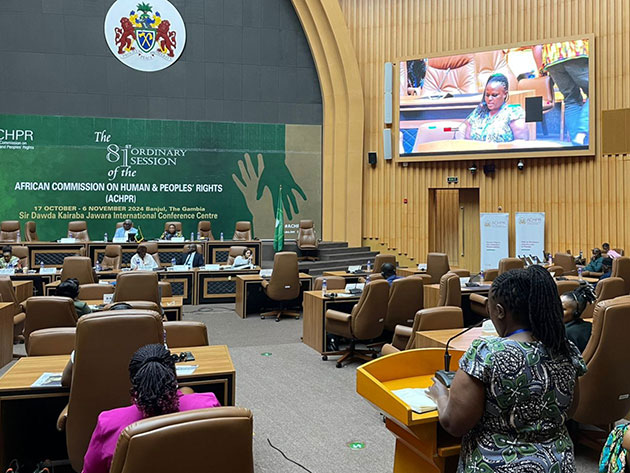
Deborah Nyokabi speaking at the 81st African Commission on Human & Peoples' Rights
- The theme of Africa Day 2026, “63 years of unity, integration and development,” offers a stark reminder of the gap that often exists between rhetoric and reality. While commendable regional legal frameworks have advanced legal protections for millions of women and girls, injustice remains written into the fabric of national family laws in many African countries, entrenching gender inequality in the home.
Such is the reality for the young woman in Kampala whose marriage was never legally registered and who, in the eyes of the State, does not exist as a wife.
For the woman in Lagos whose husband took their children after a divorce she did not want, and the law backed him.
For the Muslim widow in Nairobi who cannot inherit the home she shared with her husband for thirty years because property passes to his male relatives.
How the global anti-rights movement is targeting women’s rights in Africa
African countries have made laudable advances in legal rights for women and girls, but many laws governing marriage, divorce, child custody, and inheritance remain stubbornly unequal.

Deborah Nyokabi
Reform remains slow, uneven, and increasingly obstructed by a coordinated anti-rights movement that includes transnational ultra-conservative Christian organisations, populist political actors from the Global North, billionaire-funded conservative foundations, and right-wing think tanks and legal advocacy groups. They have found fertile ground in Africa, forging alliances with conservative organisations, religious leaders, and politicians who promote illiberal agendas.
Operating in plain sight and dressed in the language of culture, tradition, and sovereignty, these groups target parliaments, constitutional drafting processes, and regional human rights bodies. They draft model legislation, deploy strategic litigation, lobby policymakers, and cultivate relationships with heads of state and cabinet ministers.
They infiltrate international and regional human rights spaces to weaken protections, and run expensive communications campaigns while channeling cross-border funding to local organisations to portray coordinated efforts as grassroots.
Anti-rights groups seeking to reshape African policy
At the second Pan-African Conference on Family Values, held in Nairobi in May 2025, a declaration was adopted calling the family “not a flexible or negotiable construct” and committing to translate their discriminative doctrine into enforceable laws and regional partnerships. High-ranking Kenyan government officials delivered the opening and closing addresses.
The conference was co-sponsored by Family Watch International, C-Fam, and the Alliance Defending Freedom, all of whom served on the advisory committee of Project 2025, an initiative by the US-based Heritage Foundation seeking to roll back reproductive rights, LGBTQ+ rights, and diversity initiatives. These are not fringe actors. They are well-funded, politically connected, and pushing into the mainstream.
These groups have also drafted a proposed African Charter on Family, Sovereignty, and Values, which undermines gender equality by rejecting universal definitions of gender, sexuality, and sexual and reproductive health rights. Tabled at an inter-parliamentary conference in Entebbe in 2025, it calls for withdrawal from international human rights instruments and seeks to shield states from obligations under the Maputo Protocol, the African Union’s legally-binding women’s rights treaty.
Applications for observer status at the African Commission on Human and Peoples’ Rights from organisations such as the Alliance Defending Freedom signal an intent to infiltrate the very bodies designed to hold States accountable to their obligation to ensure equality, including in the family.
Harmful bills pass fast while equality bills stall
One of the most devastating patterns is the speed at which homophobic ‘family protection’ legislation moves, while paralysis grips laws to advance gender equality. In Uganda, the Anti-Homosexuality Act was passed in under three months. In Ghana, lawmakers are promoting the Human Sexual Rights and Family Values Bill; in Kenya, political support for the Family Protection Bill is growing. Backed by far-right organisations in the US, these bills seek to criminalise sexual minorities and promote a rigid, exclusionary vision of the family centred on heterosexual marriage and conservative social structures.
Meanwhile, family law reform bills that would give women equal rights in marriage, divorce, and custody have stalled for decades in Uganda, Cameroon, and Ghana. The contrast is not coincidental. The same movement blocking equality for women and girls in family laws is the one pushing legislation against LGBTQI+ people. It uses the same language: family values, cultural integrity, sovereignty, national cohesion. But when you trace the money and the actors, the strategy becomes clear. The goal is not to protect the family. It is to protect the patriarchy within it.
How African civil society and coalitions are fighting back
None of this goes unanswered.
When the Pan-African Conference on Family Values convened in Nairobi, over twenty Kenyan human rights organisations petitioned for the venue to refuse to host it. Billboards celebrating diverse families lined the road from the airport. Activists disrupted the social media narrative and organised in the streets.
Strategic litigation has compelled the government to reinstate safe abortion guidelines in Kenya. International coalitions, including African women, have pushed back against anti-rights infiltration at the UN’s Commission on the Status of Women. Survivors, lawyers, activists, and advocates are refusing to cede ground.
Working in coalitions is one of the most powerful tools available to those defending gender equality. The anti-rights movement succeeds in part because it is coordinated across borders, sectors, and institutions. The response must be equally organised. Equality Now’s coalition work is grounded in this understanding. Through the Africa Family Law Network, we join with civil society organisations, legal networks, faith communities, survivor advocates, and parliamentarians to build and sustain a stronger common front.
What African governments must do to reform family laws
This year’s Africa Day should serve as a call to action to prioritise family law reform. We are at a perilous moment of global regression in women’s rights, where hard-won legal safeguards are being deliberately dismantled. Discriminatory family law sits at the heart of that regression. The ask is not complicated. The political will is what is missing. We stand ready to work with you to change that:
To the African Union: Advocate for the universal ratification and implementation of the Maputo Protocol, a floor, not a ceiling. Push for lifting of reservations on equality in marriage, family, and reproductive rights by member states. Resist attempts to water down its provisions through model reservations crafted by anti-rights legal networks.
To African parliaments and parliamentarians: Reform discriminatory laws on marriage registration, equal divorce rights, child custody, and inheritance that have been stalled for too long. Every year of inaction is a year of harm. Do not allow parliaments to be used as platforms for movements that entrench inequality in the family under the disguise of protecting it.
To African governments: Enforce the Maputo Protocol, and ratify if not already undertaken. Conduct awareness-raising campaigns on family law rights. Invest in legal aid that reaches women in rural communities and informal settlements. Allocate sufficient budgets to gender equality and family law reform. Recognise unpaid care work. National family protection policies must protect all family members, not only those who fit a narrow ideological template.
To civil society, lawyers, journalists, and advocates: Build and sustain coalitions across borders. Expose the funding and actors behind anti-rights campaigns. Tell the stories of the women these laws fail. Make the abstract concrete. Keep going.
“Until family laws are equal, there is no equality in African society.”
This Africa Day, let us be clear about what we are celebrating, and honest about what still needs to change.
Deborah Nyokabi is a Legal Advisor on Legal Equality at Equality Now, a global human rights organisation dedicated to ending discrimination against all women and girls. She is based in Nairobi, Kenya.
IPS UN Bureau


 Print
|
Print
|