
Monday, October 5, 2026



News and Views from the Global South
ENVIRONMENT-BALKANS: Much Energy Now Goes to Waste
Vesna Peric Zimonjic* - IPS/IFEJ
- After years and even decades of neglect, Balkans nations are seeing a new awareness of environmental issues. But across Bosnia, Croatia, Montenegro and Serbia waste management remains a serious problem.
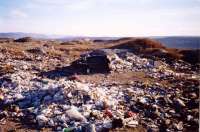
An open dump in Bor, Serbia. Credit: EkoForum
"Environmental problems were something no attention was paid to in the past," he said. "But we can say that 'the early start' is good; the issue if it could have been quicker is a completely different matter."
All countries in the region lacked awareness of environmental problems, abilities to deal with them including political will, institutions and mechanisms, legislation, and not least, adequate funds.
"Most of these problems have been surmounted as far as Serbia is concerned; things are better than in 2000, but they should improve further," first post-communist Serbian minister for protection of the environment Andjelka Mihajlov told IPS.
The year 2000 is considered a watershed in Serbia. That is when its leader for 10 years Slobodan Milosevic fell from power after leading the country into divisive wars. The decade of his rule was marked by isolation and economic collapse.
But the privatisation boom since has turned once dilapidated factories into production hubs, creating rising problems of waste.
"Management of waste is anything but easy," Vasiljevic says. Serbia is a country where "only dumpsites and no landfills existed until a couple of years ago." In environmental language, dumpsites are stretches of land where waste is deposited at random, mostly produce from homes.
Landfills represent a method for final disposal of solid waste. The refuse is spread and compacted, and a cover of soil is applied so that effects on the environment are minimised. Construction methods prevent the contamination of terrain and ground water.
So far three counties of the 29 have got proper landfills, but eventually all will under the National Strategy for Waste Management. But no one has any idea when this will happen.
The national strategy adopted in 2003, provides for appropriate treatment of waste but also recycling, which has yet to be widely introduced, even though more than 150 small, private re-cycling plants have come up in the past couple of years.
"At least we do not see provisional dumpsites along our major roads any more," Mihajlov said.
Serbia has a population of 7.5 million. Tiny Montenegro, with a population of 650,000, proclaimed itself "an environmental area" back in 1992, but so far has done little to keep up with that name.
It has instead produced environmental standards, such as an effort to build a hydro-power plant in the protected area of Buk-Bijela, in the canyon of Tara River, the second deepest canyon in the world after the one in Colorado in the United States.
The plant would have meant destruction of unique wildlife and forest along the river. Montenegrin environmentalist non-governmental organisations (NGOs) supported by similar groups from neighbouring Bosnia and Serbia succeeded in blocking the project.
Another result of growing environmental awareness in Montenegro has been the building of the first sanitary landfill on the Adriatic coast, in Lovanja village, near Tivat town.
This landfill "replaced dozens of dumpsites that had destroyed the look of the whole region," Petar Zivkovic, manager of the landfill told a local newspaper. Tivat is located at the entrance of Boka Bay, the winding fjord on the Adriatic coast.
Miomir Mugosa, mayor of Montenegrin capital Podgorica, told IPS that "solid waste treatment, particularly communal, tops the priority among new investments both in the capital and along the coast."
But another environmental issue that troubles Montenegro is the property boom along the coast, where new owners, many of them foreigners, are building inappropriate houses and hotel complexes, and adding to municipal waste problems without much care.
Croatia is now giving waste management priority in the face of flourishing tourism along the Adriatic coast.
As millions of tourists visit this nation of 4.5 million, 120 municipal disposal sites and landfills have been constructed over the last few years. Croatia has licensed 106 companies for collection, treatment and disposal of non-hazardous waste. But a recent assessment of the government and the World Bank says Croatia will have to invest another 10 billion dollars in environment protection ahead of EU accession, expected by the end of the decade.
In Bosnia-Herzegovina, little has been done in the area of environment protection and waste management. This de-populated country is still suffering from the consequences of war. Its industry is mostly still idle, and due to disunity among its Bosniaks, Croats and Serbs, no appropriate environmental legislation has been adopted. But several NGOs are lobbying for quick adoption of regulation because several industrial complexes are due to be revitalised.
(*This story is part of a series of features on sustainable development by IPS – Inter Press Service, and IFEJ – the International Federation of Environmental Journalists.)
 Print
|
Print
|




