
Friday, November 20, 2026



News and Views from the Global South
Q&A: “Confessions Are Not Always True”
Interview with Sakae Menda, exonerated death row inmate
- Japan is the only member of the Group of Seven industrialised nations other than the United States to retain capital punishment. And unlike capital punishment in the U.S., Japan’s use of the death penalty is on the rise.
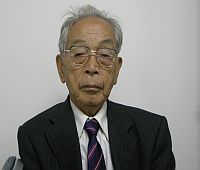
Sakae Menda, who was released from Japan's death row after a forced confession. Credit: Rajiv Fernando/IPS
Thus far, four prisoners have been released from death row in Japan after being proven innocent.
Sakae Menda was the first.
In 1948, at the age of 23, Menda was convicted of a double axe murder. The conviction was based on Menda’s confession, extracted after he was held for three weeks in a police station with little sleep, water or food, and no access to a lawyer.
In 1983, the court finally acknowledged that the police had concealed Menda’s alibi and he was released.
IPS Correspondent Mithre J. Sandrasagra spoke with Menda, now 81, at the U.N., ahead of a General Assembly vote on a death penalty moratorium expected in November.
IPS: Confessions carry enormous weight in prosecutions in Japan, and a reported 99 percent of people charged with crimes in Japan are convicted. What do you think of this system?
SM: We must change the system. We value confessions too much in Japan. We must value evidence more because confessions in Japan are sometimes things that judicial authorities make up. Confessions are not always true.
IPS: The police coerced your confession out of you. Could you speak about this?
SM: They ask leading questions over and over. I couldn’t eat at all, they refused water. This led to the confession.
IPS: Did they have any evidence against you?
SM: There was no evidence at all against me.
IPS: Can you describe the process you had to navigate to get a retrial?
SM: There is no guarantee of a lawyer in Japan. I appealed for retrial on my own many times. I was rejected several times. The third time, I hired a lawyer. I had to pay so much. Even this failed.
IPS: Japanese Justice Ministry officials claim that the system of secret executions is the most humane form of capital punishment. Japanese officials keep state executions out of public view and shrouded in secrecy. Not even the condemned prisoners know the day they will die. Can you describe the mentality of the prisoners on Japan’s death row?
SM: My fellow inmates knew that their lives would end there, so they gave up. Many of them became religious. If they must execute, it would be much better for them to let prisoners know in advance so that they can prepare mentally.
IPS: Were you allowed access to psychiatric professionals?
SM: Psychologists were not present. That is not something big in Japan.
IPS: The bodies of many executed prisoners go unclaimed in Japan because families disassociate themselves from the accused. What became of your relationship with your family?
SM: I was disowned by my father. I didn’t have much contact with any of my family while I was in prison. There is a big difference among death row prisoners, between those whose families come and take care of them and those that do not come at all. It makes a difference to how they get treated by the officers in the prison. The officers treat those that are abandoned by their families like they are abandoned by society.
IPS: The Japanese government awarded you compensation for your wrongful sentencing and incarceration. Has this helped you? Thus far, how have you found the process of reintegrating into society?
SM: It is not a nationally recognised compensation. I just get money for the time I spent in prison. As for reintegration, it is the society that is very cold. Society refuses to accept me. They look at me as an axe murderer and ex-death row inmate. It is very difficult to reenter society.
IPS: Polls indicate that many people in Japan support the death penalty. Is there a strong grassroots campaign against the death penalty?
SM: There are movements against the death penalty. They are not very public and not very big. Amnesty International’s work in Japan is the probably the biggest movement. I have been part of this movement for over 20 years.
IPS: Are there any inklings of change from within the government to change the system?
SM: Yes. But very, very little.
 Print
|




