Wednesday, August 26, 2026



News and Views from the Global South
ALBANIA: Last Outpost Beckons Foreign Capital
Zoltán Dujisin
- Albania aims to become a paradise of foreign investment in the hope its people will be allowed to share in the profits.
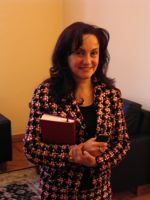
Suzana Guxholli, Economic Advisor to Albanian PM Credit:
Albania's economic growth has been consistently 5 to 6 percent of the gross domestic product (GDP) over the last six years and inflation has been kept under control, but 30 percent of Albanians live under the poverty line, and the same rate applies to the unemployed. An estimated one billion euro is sent by Albanian migrants in remittances each year.
'Albania for one euro' is the government's slogan for its strategy introduced in summer 2006 to attract foreign and domestic investment. That strategy consists of offering long-term leases at one euro annually, as long as the government agrees with the investor's long-term strategy.
"It's a symbolic price for companies willing to invest in processing, education, health and tourism," Suzana Guxholli, Economic Advisor to the Prime Minister told IPS.
Foreign investment is a relative historical novelty for Albania. Under communism, assistance was given by countries within the same bloc, but Albania's gradual fall-out with all of its allies left it without foreign assistance throughout the 1980s.
With the collapse of state socialism investment was encouraged but, unlike in much of Eastern Europe, Albania had to re-start from scratch following the 1997 collapse of pyramid schemes that cost the population some 2 billion dollars.
The 1999 Kosovo crisis and the subsequent influx of refugees also deterred investors, but the recent years have seen a steady growth in FDI, and Albania's cities are slowly beginning to exhibit more signs of the presence of foreign brands.
Most foreign investors in the country of 3.2 million have so far hailed from Italy, Greece, Germany and Turkey.
Setting up businesses in Albania has been a tricky venture for them, with common complaints about the need for political backing, and of being pressured by competing firms.
The government claims this has changed. Restrictions on the size of the investment, its sector, and on the profits that can be taken out of the country have all been lifted, together with implementation of a radical 10 percent flat tax, seen as socially unjust by the left.
Business registration times have shrunk spectacularly, and there are plans to create industrial zones to revitalise depressed regions.
The privatisation of the economy, already over 80 percent privatized, is likely to be stepped up during 2008, and unlike the flat tax is not the subject of much political controversy.
But some concerns remain. Besides inadequate infrastructure, legal uncertainty over property ownership is keeping some potential investors from coming in. Besides, chronic energy crises and subsequent electricity shortages have also played their role in putting investors off as even small businesses must rely on private electricity supply.
With Albanian living standards and expectations growing, and the urban population increasing as a result of migration from the countryside, demand for electricity has escalated exponentially.
But ambitious plans are under way to modernise hydroelectric plants and build new stations.
"There are many contracts being negotiated for hydropower plants, we have two-thirds of our hydropower capacity unused, and competition is becoming tougher as many companies are interested," Guxholli told IPS. "But we want to ensure that we protect public interest, and that these rivers will be environmentally protected."
The oil and gas sectors have already received large investments, and in early 2008 deposits of close to 3 billion barrels of oil and 3 trillion cubic metres of natural gas were discovered in northern Albania, raising hopes of further investments.
On the coastline, construction is ubiquitous. The value of land in coastal areas is rising, new roads and highways are making the coast more accessible, and this has not gone unnoticed among both legitimate and illegitimate investors.
With a largely unspoiled coastline that has so far managed to dodge the over-development of the Montenegrean or Croatian coast, experts see in tourism one of Albania's main competitive advantages with regards to other countries in the region.
"Tourism will experience incredible growth," Denis Kalenja, CEO of AlbInvest, the government's agency for promoting and assisting investment in the country told IPS.
But there is more. "Albania has the largest water resources in the region," Kalenja says, "which is good not only for hydroelectricity production but also for the food processing industry."
A cheap workforce, with experience abroad and versed in foreign languages, could complement a package that in Kalenja's view makes Albania the most attractive option for foreign capital today in the West Balkans.
 Print
|
Print
|