Thursday, July 16, 2026



News and Views from the Global South
RIGHTS: World Governments Move to Stifle Protest, Says Activist
Paul Weinberg
- Governments around the world are moving more aggressively to ôpre-empt protestö, a trend that has been highlig hted by recent episodes of harassment of free trade and globalisation protesters, sa ys activist Amit Srivastava.
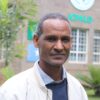
Srivastava, climate justice co-co-ordinator for the San Francisco- bas ed Corporate Watch, was one of two US non governmental organisation (NGO ) workers who were prevented from attending a counter teach-in on the oil indus try at the start of last week’s World Petroleum Congress in Calgary. The latte r event was attended by industry officials, energy experts and government representatives.
“I found myself being treated like a common criminal in what appears to have been a paranoid Canadian government effort to assert that Calgary was not to be another Seattle, (site of huge protests against the World Trade Organ isation) states Srivastava. “Talking informally to immigration officials, they admitted it was a political thing.”
Ironically, while the Calgary Police embarked upon heavy preparations for an assault by activists upon the World Petroleum Congress – high chain l ink fences, removal of potential missiles such as trash bins, blocking of f of nine blocks of the downtown area and having at the ready scores of policem en in riot gear, armed with pepper spray and truncheons – no violence materialis ed by the end of the conference Jun. 15.
Both Srivastava and Carwil James, a campaigner for Project Undergroun d, a Berkley California- based organisation that focuses on mining and oil activity, were held, investigated and deported by Canadian customs and immigrat ion officials at the Calgary International Airport.
The issue for the Canadian officials were misdemeanours or minor crim inal offences committed by them involving acts of civil disobedience at pa st political protests in the United States.
Srivastava told IPS that it was not an accident he happens to be of S outh Asian origin or that his colleague, Carwil James, is Afro-American. White U S activists flying into Calgary to support the protests greeting the Wo rld Petroleum Congress did not receive similar treatment in Canada, altho ugh they too had been convicted of minor charges back home, he says.
After arriving in Calgary, Srivastava recalls he and James being aske d to step aside, interrogated, notes photocopied, and laptop computer files and email examined. He and James were placed for close to five hours in the cit y remand centre by the end of the first day they arrived in Canada.
“We got there 5:00 or 6:00 pm and were booked. You have to go through the whole process that inmates do, including mug shots and taking off all of yo ur clothes. Getting into these blue jump suits and put in a cell,” recal ls Srivastava.
Early the following morning, with shackles on their legs and their ha nds handcuffed, the two men were placed within a four foot by five- foot c age in a van and driven to the Calgary International Airport. Upon arrival, th ey were forced by local officials to walk with shackles through the baggage c laim areas to get to the immigration section.
At that point, both men had the option of withdrawing their applicati on to enter Canada and then being deported, or stay and continue to be inve stigated. Srivastava opted to be thrown out of the country by about suppertime; while James refused and spent another night in jail.
Eventually, James was considered inadmissible to enter Canada because of a previous minor charge involving civil disobedience during the Seattle protests and was subsequently deported as well, says Srivastava. IPS was unabl e to reach him to clarify his own account.
Srivastava adds that another US activist David Solnit had been simila rly arrested and jailed in Windsor during the early June rallies targetin g the meetings of the General Assembly of the Organisation of American Stat es.
Like Srivastava who was questioned for a minor conviction a decade ea rlier, Solnit was also put through a similar process. He was released after an immigration board in Canada determined that charges against him were unfounded. Solnit had spent time in Windsor conducting a puppet-making workshop.
“Normally, we accuse our own government or oil companies of abusing h uman rights overseas and so it is a very big shock that it happened in Can ada. In retrospect, it was not very surprising primarily because oil companie s have been doing this for a long time. They work in collusion with governme nts across the world [against] people who are opposed or concerned,” says Srivas tava.
Srivastava states that with free trade, corporations can move easily across borders, “but people, especially those critical of corporate globalis ation, apparently cannot.”
 Print
|
Print
|