Languages
Monday, September 21, 2026



News and Views from the Global South
Analysis
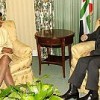
POLITICS: Arms for Arab Authoritarians, As U.S. Turns Back Clock
Just 25 months after Secretary of State Condoleezza Rice denounced 60 years of U.S. support for authoritarian governments in Arab world, she and Pentagon chief Robert Gates are on their way to the Middle East bearing arms and an uncannily familiar strategic vision to the same regimes.FRANCE: Sarkozy Charges Ahead
Since his inauguration as France's president in May, Nicolas Sarkozy has appeared as a whirlwind of activity following the often-lethargic decade-plus rule of his predecessor, Jacques Chirac.TURKEY: Erdogan Sailing Into Reality
Sunday's elections have elevated Turkey to the rank of mature democracy. By giving an impressive 46.7 percent of their vote to Recep Tayyip Erdogan, Turkish citizens have expressed determination for social stability, economic growth, and political emancipation of the urban middle class and rural populations.BOLIVIA: Indigenous and Mestizo Power Flexes Muscles
An immense tide of people demonstrating to keep the Bolivian seat of government in this city took to the streets last week to show support for the indigenous Aymara and mestizo leadership, in the greatest expression of popular power in the history of the country.POLITICS-US: Bush Line Distorts Iran's Real Interest in Iraq
As U.S. and Iranian diplomats met in Baghdad Tuesday for a second round of talks on Iraq, the domestic U.S. political climate appears decidedly more supportive of an aggressive U.S. posture toward Iran than just a few months ago, reflecting the apparent triumph the George W. Bush administration's narrative on Iran's role in Iraq.TURKEY: Military In or Out of Politics?
Turkey has a powerful military with no qualms about direct or other forms of intervention in politics in the name of its constitutional powers - safeguarding a secular republic from both external and internal threats. But now, while still held in high esteem by the populace, its continued role in politics is being questioned.TURKEY: Three Tickets To Parliament
With the Turkish legislative elections coming up Sunday, the picture of the post-Jul. 22 National Assembly takes a firmer shape. The number of the parties to share the red leather chairs of the spacious modern building in the Bakanliklar neighbourhood of Ankara will be limited to three.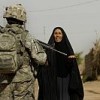
POLITICS-US: Partisan Lines Harden in Iraq Debate
After a week and a half of Senate debate, including an all-night session Tuesday, the possibility that legislation to de-escalate U.S. military intervention in Iraq soon could be adopted by a strong bipartisan majority appears to have receded, at least until mid-September, if not well into next year.TURKEY: Erdogan’s 300 At The Gates
After a quiet start, in relative indifference by the population, the electoral campaign has since last week gained momentum and decibels. Banners flying party colours alternate with the vivid red national flags in all public areas. Buses and vans, featuring aggressive patriotic slogans and moustached portraits of political leaders, parade their disco-like loudspeakers through the streets of all cities and villages throughout Turkey.MIDDLE EAST: Iran's Claim on Bahrain Aimed at US
While an editorial in Iran's influential ‘Kayhan’ daily laying territorial claims on Bahrain has sparked considerable tension in the region, the real target may lie in competition with the United States for influence in the Persian Gulf.TURKEY: Traffic Lights to Arbil Back on Red
It seems now certain: No invasion of Northern Iraq by the Turkish army before the legislative elections scheduled for Jul. 22. Disappointed? Many in Turkey are, not least the military. Surprised? Not a bit. Prime Minister Recep Tayyip Erdogan's fingers are expert at navigating between buttons of the yellow and red traffic lights of the road to Arbil.POLITICS-US: Wolfowitz – Return to Sender?
Recently forced out as president of the World Bank, Paul Wolfowitz, one of the primary architects of U.S. President George W. Bush's Iraq war, is heading back to familiar surroundings. And the Washington-based American Enterprise Institute (AEI), one of the United States' premier conservative think tanks, is more than pleased to welcome him back.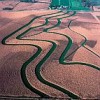
ENVIRONMENT: Replanting the Planet
In reviewing the literature on soil erosion, references to the "loss of protective vegetation" occur again and again. Over the last half-century, we have removed so much of that protective cover by clearcutting, overgrazing, and overplowing that we are fast losing soil accumulated over long stretches of geological time.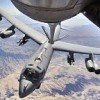
IRAQ-AFGHANISTAN: Overlooking the Air War
On Jun. 18, seven children were killed during a U.S.-led air strike against a suspected al Qaeda sanctuary in eastern Afghanistan. Three days later, at least 25 civilians died during a similar "incident" in Helmand province in the south of the country.CHINA/JAPAN: Nanking the Film May Reopen Old Wounds
That ‘Nanking’, the powerful new United States documentary on the rape of the city of that name, has been approved for domestic screening in China reveals the fact that the ghosts of the gruesome events 70 years ago still haunt Sino-Japanese relations.POLITICS-US: Bush Shielding of Musharraf Policy at Risk
The growing crisis over Islamic extremism in Pakistan is drawing attention to the complicity of that country's military government in the rise of the biggest haven for Islamic terrorism in the world.POLITICS-US: Bush’s al Qaeda Problem
As U.S. President George W. Bush's military adventure flounders in Iraq, his administration appears to be increasingly depicting the conflict as a struggle between the U.S.-led Coalition forces and the archetypal terrorist threat posed by the shadowy "radicals and extremists" of al Qaeda, often to the exclusion of other political actors in the mainly Sunni insurgency.TURKEY: Countdown Begins to Crossing into Iraq
The button of the stopwatch counting down the invasion of Northern Iraq by the Turkish army was probably pressed on Tuesday, at an impromptu meeting between Turkish President Ahmet Necdet Sezer and Prime Minister Recep Tayyip Erdogan.MIDEAST: After Sharm Talks, More of Nothing
Israeli Prime Minister Ehud Olmert's announcement earlier this week at a summit in the Egyptian Red Sea resort of Sharm el-Sheikh that he plans to release 250 Fatah prisoners in Israeli jails took the leaders attending and the media by surprise. But will this unexpected gesture, aimed at bolstering Palestinian President Mahmoud Abbas, be enough to produce a different outcome to that of all previous Sharm summits, which have turned out to be little more than elaborate photo opportunities.
ENVIRONMENT: Around the Globe, Farmers Losing Ground
In 1938, Walter Lowdermilk, a senior official in the Soil Conservation Service of the U.S. Department of Agriculture, traveled abroad to look at lands that had been cultivated for thousands of years, seeking to learn how these older civilisations had coped with soil erosion.MIDEAST: Empty Talk Begins Over New Talks
Israel and Syria are again feeling each other out about the possibility of renewing peace talks, as they did last year. But, again, it's not clear both sides really want to get to the negotiating table. The United States, it seems, would prefer they didn't.« Previous Page — Next Page »


The Week with IPS

NEXT STOP - SDGs
Tracking global progress towards a sustainable world
Tracking global progress towards a sustainable world
