Languages
Monday, September 21, 2026



News and Views from the Global South
Analysis
DEVELOPMENT: G8, G5 Or G4? A Tough Choice for India
India, which was invited to the G8 summit at Heiligendamm in Germany as one of five 'outreach' nations from the global South, is disillusioned with the countries of the North. It is toying with a proposal by another 'outreach' member, Brazil, to constitute a new select group that meets independently of the G8.TRADE: South Shows Its Muscle
The high-profile Potsdam meeting of the Group of Four members - the United States, the European Union, Brazil and India - broke down on "North-South" lines Thursday when the two developing countries thwarted sustained attempts by the trans-Atlantic trade partners to undermine the developmental concerns of the developing countries in the Doha Development Agenda trade negotiations.INDIA: Modest Global Power
Before the age of colonialism, India was a world power. Now, like China, it is returning to the global stage. With economic growth topping 9 percent in 2007, an acknowledged nuclear capability, and a growing role in international relations, it has attained the status of "emerging power."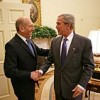
MIDEAST: Will Bush/Blair Intensify Peace Efforts?
Reports that U.S. President George W. Bush has asked outgoing British Prime Minister Tony Blair to act as the Quartet's special envoy for Middle East peace are adding to speculation that Washington plans to intensify peace efforts between Israel and the Palestinians, despite last week's takeover of Gaza by Hamas.U.S.-IRAN: New Arms Claim Reveals Cheney-Military Rift
In a development that underlines the tensions between the anti-Iran agenda of the George W. Bush administration and the preoccupation of its military command in Afghanistan with militant Sunni activism, a State Department official publicly accused Iran for the first time of arming the Taliban forces last week, but the U.S. commander of NATO forces in Afghanistan rejected that charge for the second time in less than two weeks.TURKEY: Into the Iraq Quagmire?
Turkey is beefing up military preparedness against Iraq-based Kurdish rebels as a prelude to a possible cross-border incursion that is opposed by the United States, European Union and the Iraqi government.MIDEAST: Israel Offers Dubious Backing to Fatah
As Hamas forces seized control of the Gaza Strip this week, Israeli leaders sat on the sidelines, watching with dismay but not intervening.
POLITICS-US: Bush Faces Crises from Palestine to Pakistan
Four years after the emergence of the first signs of a serious insurgency in Iraq, U.S. President George W. Bush finds himself beset with major crises stretching from Palestine to Pakistan.THAILAND: Schools Prime Targets for Malay-Muslim Rebels
The soldiers assigned to provide security for students and teachers at a school in the violence-torn southern province of Yala on Friday were part of a new plan by the military-appointed government in Bangkok. But they never made it.POLITICS: Democracy Recession in South-east Asia
The coup in Thailand, extrajudicial killings in the Philippines, limitations on religious freedom in Malaysia - South-east Asian democracies are not exactly flourishing these days.US-IRAN: New War Rhetoric Undercuts Iraq Talks
U.S. Senator Joseph Lieberman's call for cross-border raids into Iran appears to be the culmination of a two-week long campaign by proponents of war to put the military option centre-stage in the U.S. debate over Iran once more.POLITICS-US: Cheney’s Iran-Arms-to-Taliban Gambit Rebuffed
A media campaign portraying Iran as supplying arms to the Taliban guerrillas fighting U.S. and NATO forces in Afghanistan, orchestrated by advocates of a more confrontational stance toward Iran in the George W. Bush administration, appears to have backfired last week when Defence Secretary Robert Gates and the commander of NATO forces in Afghanistan, Gen. Dan McNeil, issued unusually strong denials.POLITICS-US: Cheney's Iran-Arms-to-Taliban Gambit Rebuffed
A media campaign portraying Iran as supplying arms to the Taliban guerrillas fighting U.S. and NATO forces in Afghanistan, orchestrated by advocates of a more confrontational stance toward Iran in the George W. Bush administration, appears to have backfired last week when Defence Secretary Robert Gates and the commander of NATO forces in Afghanistan, Gen. Dan McNeil, issued unusually strong denials.POLITICS-US: Could al Qaeda Attack Trigger War With Iran?
Following revelations of a George W. Bush administration policy to hold Iran responsible for any al Qaeda attack on the U.S. that could be portrayed as planned on Iranian soil, former national security adviser Zbigniew Brzezinksi warned last week that Washington might use such an incident as a pretext to bomb Iran.INDIA-US: Impasse Over Nuclear Fuel Reprocessing Rights
High official-level talks between the United States and India to clinch the nuclear cooperation deal initialled in July 2005 have failed to narrow mutual differences and produce an agreement.
G8: Bush Struggles to Regain Leadership at Summit
An ever-deteriorating situation in Iraq, a hostile Democratic Congress and a changing of the guard in some key allies may all combine to bring about a more cooperative, and perhaps more subdued, President George W. Bush at the summit of the Group of Eight most industrialised nations.IRAN/US: Iraq Talks – Rare Chance for Regional Security
While limited to the issue of security in Iraq, the direct talks between Iran and the United States in Baghdad is being seen as a breakthrough and an opportunity for both countries to deal with pressing issues of national interest as well as security in a region extending from Afghanistan in the east to Iraq and to Palestine and Lebanon in the west.IRAN/US: Iraq Talks – Rare Chance for Regional Security
While limited to the issue of security in Iraq, the direct talks between Iran and the United States in Baghdad is being seen as a breakthrough and an opportunity for both countries to deal with pressing issues of national interest as well as security in a region extending from Afghanistan in the east to Iraq and to Palestine and Lebanon in the west.IRAQ: Anxiety in Wake of U.S.-Iran Talks
U.S.-Iranian talks about Iraq have been received with scepticism and some foreboding here, with some calling for limitations on the extent of issues that the two countries can negotiate regarding Iraq.POLITICS-US: Surge Dirge
Despite President George W. Bush's victory last week in his protracted battle with Congressional Democrats for unconditional funding for the Iraq war at least through September, his administration appears to have given up hope that it can maintain his "surge" strategy well into next year and even beyond.POLITICS-US: Surge Dirge
Despite President George W. Bush's victory last week in his protracted battle with Congressional Democrats for unconditional funding for the Iraq war at least through September, his administration appears to have given up hope that it can maintain his "surge" strategy well into next year and even beyond.« Previous Page — Next Page »


The Week with IPS

NEXT STOP - SDGs
Tracking global progress towards a sustainable world
Tracking global progress towards a sustainable world
