Languages
Thursday, October 1, 2026



News and Views from the Global South
Opinion

It’s Time to Invoke “Responsibility to Protect” in Sudan
When war broke out in Khartoum, the capital of Sudan, in April 2023, those of us who know the region well feared what would happen to the west, in Darfur. In 2003, former Sudanese President Omar al-Bashir called on the Janjaweed Arab militia to quell an uprising in Darfur.
Celebrating Deaf Pride: Embracing Our Survival in a Mute System
Every July, the disability community honors its history, accomplishments, and experiences during Disability Pride Month. One such group is the deaf community in Uganda, which makes up 3.4% of the population.
Exchange Rate Movements Due to Interest Rates, Speculation, Not Fundamentals
Currency values and foreign exchange rates change for many reasons, largely following market perceptions, regardless of fundamentals. Market speculation has worsened volatility, instability and fragility in most economies, especially of small, open, developing countries.
TB Preventive Treatment: the Need for Choice
Before COVID-19 came along, the two most lethal infectious diseases were HIV and tuberculosis (TB). Even though HIV still lingers, with 1.5 million people contracting the infection every year, epidemiologists point to the availability of many HIV prevention options as a primary reason for the decreasing caseload.
Health, Nutrition & Heroes in Rural Afghanistan
The needs of Afghanistan’s children and families are immense. So are the efforts of those supporting them: teams of community workers made up of family members, teachers in community-based schools, vaccinators, and health workers working around the clock to bring life-saving services in the face of an unfolding humanitarian catastrophe.
A War That Could Have Been Averted
Perhaps the greatest tragedy of the immensely destructive Ukraine War lies in the fact that it could have been averted. The most obvious way was for the Russian government to abandon its plan for the military conquest of Ukraine.
Brazil Back on the Green Track
At a meeting with European and Latin American leaders in Brussels this July, Brazil’s President Lula da Silva reiterated the bold commitment he had made in his first international speech as president-elect, when he attended the COP27 climate summit in November 2022: bringing Amazon deforestation down to zero by 2030.
Blue Tourism Spurs Development Goals in Bangladesh
Blue tourism, widely referred to as Coastal or Maritime tourism, is a distinct idea from traditional tourism, which capitalizes on a country's ocean, sea, or coastal region.
Eswatini: Election with No Democracy on the Horizon
Eswatini heads to the polls soon, with elections scheduled for September. But there’s nothing remotely democratic in prospect. The country remains ruled by King Mswati III, Africa’s last absolute monarch, who presides over Eswatini with an iron fist. Mswati dissolved parliament on 11 July, confident there’s little chance of people who disagree with him winning representation.
Wagner Mutiny Could Push a Weak Russia Closer to Iran
Iran is not interested in a highly powerful Russia that could block Iranian ambitions in the South Caucasus and Middle East. At the same time, a too weak Russia would constitute a dangerous development paving the way for greater Western influence along Iran’s northern border and potentially even leading to the reversal of Moscow’s dependence on Tehran.
Transforming Africa’s Food Systems: Challenges & Opportunities
Q: As the African Union Special Envoy for Food Systems, what is the scope of your mandate and what should Africans expect from you? The role of special envoys of the AU is primarily to tackle a critical issue for which the AU needs support. A special envoy does not seek to replace or take over the responsibilities of the AU or the AU Commission (AUC). Instead, their role is to support and enhance their work by bringing additional value.

Leveraging Africa’s Renewable Energy Potential: A Call for Global Partnership
Africa is caught in the crosshairs of climate change. Despite contributing just 3-5% of global carbon dioxide emissions, the continent will endure climate change’s destructive impact, including more severe storms, rising temperatures and erratic rainfall in the years ahead that threaten the well-being of hundreds of millions of people.
Climate Justice – Is Litigation a Good Way Forward?
For years, the concept of climate justice has been built on the understanding that countries and communities contributing the least to global warming are disproportionately bearing the impacts of climate change.
Improving Healthcare for All
In 2015, almost all heads of government in the world committed to the United Nations’ Sustainable Development Goals (SDGs), including universal health coverage (UHC). This was consistent with the World Health Organization’s commitment to Health for All.
Seizing the Moment for a More Resilient Asia & the Pacific
The world faces a disaster emergency, yet nowhere is the threat more immediate than in Asia and the Pacific. Ours is a region where climate change-induced disasters are becoming more frequent and intense. Since 1970, two million people have lost their lives to disasters.
The Race Question in America’s Population Census
With preparations for America’s 2030 population census underway and the Census Bureau encouraging additional public input, it’s time to seriously evaluate the continued inclusion of the race question in the U.S. population census.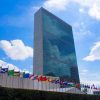
Most UN Agencies Lack Access to Information Policies, Survey Finds
Less than half of United Nations agencies have access to information policies, according to a survey by Eye on Global Transparency. Of 27 UN bodies surveyed, 13 have access policies. So, 14 UN agencies lack access policies. Setting a poor example, the UN Secretariat still lacks an access to information policy.
Impatience as a Virtue
We all know and agree that patience is a virtue. It is indeed. With one exception. In the face of a child’s suffering, impatience is the highest virtue. Or as we say in the spirit of Education Cannot Wait: “We must be unapologetically impatient” in our collective goal to reach 224 million crisis-affected children and adolescents with quality education.
What a World 1.5 degrees Hotter Would Look Like
The dangerous state of global climate has reached a new low as a World Metrological Organisation (WMO) analysis reveals. It confirms a known obvious: human activities continue to worsen conditions that have changed our planet’s climate.
Twenty-five Years After the Creation of the International Criminal Court
On the night of 17 July 1998, the outcome of the Diplomatic Conference convened to create the International Criminal Court was still uncertain. Hundreds of state representatives and civil society organizations assembled in the FAO headquarters in Rome, holding their breath in anticipation.
Invisible Women in Energy: Millions of Household Biomass Producers
An estimated 2.4 billion people currently lack access to clean cooking fuels, with the majority relying on biomass (firewood, charcoal, dung) to meet household cooking needs. This is only a slight decrease from 2017, when 2.5 billion people lacked access to clean cooking fuels.« Previous Page — Next Page »


The views expressed in these articles are those of the authors and do not necessarily represent the views of, and should not be attributed to, IPS-Inter Press Service

The Week with IPS

NEXT STOP - SDGs
Tracking global progress towards a sustainable world
Tracking global progress towards a sustainable world
