Languages
Tuesday, October 13, 2026



News and Views from the Global South

Arable Lands Lost at Unprecedented Rate: 33,000 Hectares… a Day!
Humankind is a witness every single day to a new, unprecedented challenge. One of them is the very fact that the world's arable lands are being lost at 30 to 35 times the historical rate. Each year, 12 million hectares are lost. That means 33,000 hectares a day!
One Humanity? Millions of Children Tortured, Smuggled, Abused, Enslaved
Children are being smuggled, sexually abused, maimed, killed for their vital organs, recruited as soldiers or otherwise enslaved. Not only: 69 million children under five will die from mostly preventable causes, 167 million will live in poverty, and 263 million are out of school. And 750 million women will have been married as children by 2030.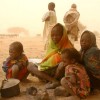
War on Climate Terror (II): Fleeing Disasters, Escaping Drought, Migrating
"No one can deny the terrible similarities between those running from the threat of guns and those fleeing creeping desertification, water shortages, floods and hurricanes.”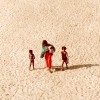
War on Climate Terror (I): Deserts Bury Two Thirds of African Lands
Two-thirds of the African continent is already desert or dry-lands. But while this vast extension of the second largest continent on Earth after Asia is “vital” for agriculture and food production, nearly three-fourths of it is estimated to be degraded to varying degrees.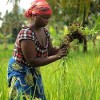
African Farmers Can Feed the World, If Only…
Can African farmers feed the world?. Apparently the answer is “yes.” Bold as it may sound, this statement is based on specific facts: Africa is home to 60-65 per cent of the world’s uncultivated arable land and 10 per cent of renewable freshwater resources, and it has registered a 160 per cent increase in agricultural output over the past 30 years.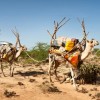
Climate Victims – Every Second, One Person Is Displaced by Disaster
Climate change and related extreme weather events have devastated the lives and livelihoods of tens of millions of most vulnerable people worldwide-- by far exceeding the total of all the unfortunate and unjustifiable victims of all terrorist attacks combined. However, the unstoppable climate crisis receives just a tiny fraction of mainstream media attention. See these dramatic facts.
400 Million People Live with Hepatitis But They Do Not Know
With some 400 million people around the world infected with hepatitis B or C, mostly without being aware, the United Nations top health agency encourages countries to boost testing and access to services and medicines for people in need to combat the 'ignored perils' of this disease.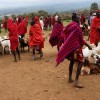
Rights of Indigenous Peoples ‘Critical’ to Combat Climate Change
No longer it is about restoring the legitimate rights of over 370 indigenous peoples spread across 70 countries worldwide, many of them living in dire situation, but now about their central, critical role in combating climate change.
Forests: To Farm or Not to Farm? This Is the Question!
The dilemma is critical: on the one hand, there is an absolute need to produce more food for the world’s steadily growing population; on the other, there is pressing urgency to halt -and further revert- the increasing trend to deplete the forests, which are as necessary for human survival as it is for ensuring their dietary needs.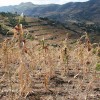
‘Monster’ El Niño Subsides, La Niña Hitting Soon
As if human-made armed conflicts, wickedness, rights abuse, gender violence, cruel inequality and climate catastrophes were not enough, now the saying “God Always Forgives, Men Sometimes, Nature Never” appear to be more true than ever. See what happens.
Human Security a Must in a Chaotic, Confused World – Japan
The question is simple and the answer, short: does eating more mean being better nourished?... Not Necessarily!
Xenophobic Rhetoric, Now Socially and Politically ‘Acceptable’ ?
“Xenophobic and racist rhetoric seems not only to be on the rise, but also to be becoming more socially and politically acceptable.” The warning has been heralded by the authoritative voice of Mogens Lykketoft, current president of the United Nations General Assembly, who on World Refugee Day on June 20, reacted to the just announced new record number of people displaced from their homes due to conflict and persecution.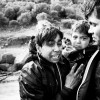
Xenophobia: ‘Hate Is Mainstreamed, Walls Are Back, Suspicion Kills’
“Hate is becoming mainstreamed. Walls – which tormented previous generations, and have never yielded any sustainable solution to any problem – are returning. Barriers of suspicion are rising, snaking through and between our societies – and they are killers…”
What If Turkey Drops Its “Human Bomb” on Europe?
Will the rapid--though silent escalation of political tensions between the European Union and Turkey, which has been taking a dangerous turn over the last few weeks, push Ankara to drop a “human bomb” on Europe by opening its borders for refugees to enter Greece and other EU countries?
Humanitarian Aid – Business As Unusual?
Big business is most often seen by human rights defenders and civil society organisations as “bad news,” as those huge heartless, soulless corporations whose exclusive goal is to make the biggest profits possible. Too often and in too many cases this is a proven fact.
World Oceans Day – A Death Sea Called Mediterranean
While the United Nations identifies 17 major regional seas in its planning, the Mediterranean is perhaps the most dramatic case as it has gone from being the so-called cradle of civilization to be a cemetery for thousands of asylum-seekers and migrants. And it is most probably also the most polluted water basin the whole world. See this report.
The Humanitarian Clock Is Ticking, The Powerful Feign Deafness
The humanitarian clock is now ticking away faster than ever, with over 130 million of the world’s most vulnerable people in dire need of assistance. But the most powerful, richest countries—those who have largely contributed to manufacturing it and can therefore stop it, continue to pretend not hearing nor seeing the signals.
Humanitarian Summit, The Big Fiasco
The World Humanitarian Summit (WHS) held in Istanbul on May 23-24, managed to send a strong wake-up call to the world about the unprecedented human suffering now in course, but failed to achieve the objective of attracting the massive funds needed to alleviate the humanitarian drama, as none of the leaders of the Group 7 of the richest countries nor of the five permanent members of the UN Security Council attended, with the exception of the German Chancellor Angela Merkel.
Humanitarian Summit: Too Big to Fail?
With a line up of heads of state or government telling all what they did to alleviate human suffering and promising to do more, along with leaders of civil society and humanitarian organisations denouncing lack of honest political will to act while governments continue spending trillions of dollars in weapons, the two-day World Humanitarian Summit kicked off today May 23 in Istanbul.
Humanitarian Summit Aims to Mobilise Up to 30 Billion Dollars
The two-day World Humanitarian Summit (WHS), opening today May 23 in Istanbul, aims at mobilising between 20 and 30 billion dollars to face the on-gowing, worst-ever humanitarian crises, said Stephen O’Brien, UN Under-Secretary-General for Humanitarian Affairs andEmergency Relief Coordinator.
Africa: Resolved to Address African Problems Using African Solutions
The African Union (AU) representing 54 countries and home to 1,2 billion inhabitants, will be in Istanbul to participate in the May 23-24, 2016, first-ever World Humanitarian Summit (WHS) with two key demands—that the international humanitarian system be redefined, and a strong, firm own commitment to itself, to the continent and its people, anchoring on the primacy of the states.« Previous Page — Next Page »





The Week with IPS

NEXT STOP - SDGs
Tracking global progress towards a sustainable world
Tracking global progress towards a sustainable world
