Languages
Saturday, October 17, 2026



News and Views from the Global South

‘We Cannot Keep Jumping from Crisis to Crisis’
“We cannot keep jumping from crisis to crisis. We have to invest in long-term development that helps people cope with shocks so that they can continue to grow enough food for their communities and not require emergency aid.”
Now 1 in 2 World’s Refugees Live in Urban Areas
It is true that millions of refugees, especially in Africa and the Middle East, reside in camps. But in all they represent only one-quarter of the total number of refugees. Meanwhile, more than 1 in 2 of all the world’s refugees live in slums or in informal settlements and on the fringes of cities, in overcrowded neighbourhoods and in areas prone to flooding, sanitation hazards and diseases.
‘Human Suffering Has Reached Staggering Levels’
“Human suffering from the impacts of armed conflicts and disasters has reached staggering levels.”
Middle East – The Mother of All Humanitarian Crises
When, in March 2015, delegates from the Middle East met in Amman for their regional consultations round in preparation for the May 23-24 World Humanitarian Summit in Istanbul, most likely what they had in mind is the fact that their region was --and still is-- the dramatic set of “the mother of all humanitarian crises.”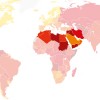
Mideast: 1 in 3 Bribes to Access Basic Public Services
Just an ordinary citizen living in a Middle East and North of Africa country and requring a birth certificate for your new-born daughter? No problem—just take something with you, either some cash, a pack of cigarettes or buy a glass of tea with milk and a lot of sugar.
Any Ways to Combat Extremism?
“The objective of extremists is for us to turn on each other [and] our unity is the ultimate rebuke for that bankrupt strategy.”
Climate: Africa’s Human Existence Is at Severe Risk
“Africa’s human existence and development is under threat from the adverse impacts of climate change – its population, ecosystems and unique biodiversity will all be the major victims of global climate change.”
Climate Change and the Middle East (II)
No Water in the Kingdom of the Two Seas—Nor Elsewhere
There is an oil producing country situated in the Gulf region, made of a cluster of islands. It is small, surface and population wise. But it holds the dubious privilege of ranking top of the list out of the 33 countries most likely to be water-stressed in the year 2040.

Climate Change (I)
Will the Middle East Become ‘Uninhabitable’?
This is not about any alarming header—it is the dramatic conclusion of several scientific studies about the on-going climate change impact on the Middle East region, particularly in the Gulf area. The examples are stark.
Can an Animal Heist Fable Help Solve the Middle East Crisis?
Make no mistake-the Middle East is the longest and perhaps the most complex crisis in recent History, this explaining the innumerable, successive –and frustrating- attempts to solve it.
A “Colombian Triangle” for Daesh in Libya?
Besieged by US, UK, French, Russian and Syrian war crafts and ground intelligence, both in Syria and Iraq, the Islamic State of Iraq and Levant (Daesh from its original acronym in Arabic) has reportedly been searching for a new base in the North of Africa, specifically in Libya, in what has been called the “Colombian Triangle.”
‘Worse Than World War I’
When the leaders of 28 European states enjoy again this week their exclusive flights, luxurious suites and official limousines, to meet for a new summit in Brussels to adopt a final decision on their proposed plan of using refugees as bargaining chips, 20.000 Syrians will most probably be still starving in the Idomeni camp in Greece, in a situation that has been described as “worse than World War I.”
“Take My Iraqis and Give Me Some Syrians” – Europe to Turkey
In a yet another violation of international laws and their own human values, 28 European countries have just agreed with Turkey to open a new “bazaar” of refugees, this time using the old barter system. i.e. Iraqis and Afghans in exchange of Syrians.
New Nuclear Hysteria in the Middle East
Three years ago when the tsunami of panic around Iran's potential capability to develop nuclear weapons reached its peak, a combined diplomatic, media campaign warning that a Gulf Arab state would think of purchasing atomic bombs was spread like an oil spot.
Africa Launches Largest Trading Block with 620 Million Consumers
In Egypt more than 1,500 public and private business delegates and state leaders agreed on 20-21 February to mobilise massive investments for the implementation of Africa's largest trading bloc whichwas created last year by 26 African countries with a total of 620 million consumers and a combined Gross Domestic Product (GDP) nearing 1,2 trillion dollars.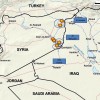
Big War Lords Playing Brinkmanship Game in Syria
When 25 million Syrians--half of them refugees abroad or at home and the other half terrorised by daily bombing, learnt that major world leaders in their meeting in Germany launched an unprecedented confrontation threatening with unleashing World War III, instead of easily agreeing on a ceasefire to alleviate their inhumane suffering, they most probably fell into an even deeper desperation. See what happened.
Cameron at large: Want Not to Become a Terrorist? Speak Fluent English!
“Do you speak English fluently? No? Then you risk to become a terrorist!.” IPS posed this dilemma to some young Muslim women living in Cairo, while explaining that this appears to be UK prime minister David Cameron's formula to judge the level of Muslim women's risk to fall, passively, into the horrific trap of extremism.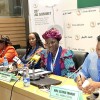
Women’s Rights First — African Summit
Despite the enormous challenges facing Africa now, the leaders of its 1.2 billion plus inhabitants have decided to spotlight the issue of Human Rights With a Particular Focus on the Rights of Women in their 26th summit held in Addis Ababa on 21-31 January this year. Why?
Africa, Only If It Bleeds It Leads?
Africa is clearly one of the most negatively impacted regions in the world, not helped by the increasing trend of the mainstream media to focus on tragic news, following a self-imposed rule: “if it bleeds it leads”.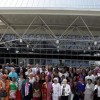
Seven Top Challenges Facing African Women
Economic exclusion; financial systems that perpetuate their discrimination; limited participation in political and public life; lack of access to education and poor retention of girls in schools; gender-based violence; harmful cultural practices, and exclusion of women from peace tables, are the major standing barriers to achieving gender equality in Africa.
Once Auctioned, What to Do with Syrian Refugees?
Few months ago, an unprecedented "humanitarian auction" was opened in Brussels at the European Commission, shortly after watching the image of the three-year old Syrian child that the sea threw up on the Turkish shores. The "auction" was about deciding upon the number of Syrian refugees to be hosted by each EU country. Germany won the largest batch.« Previous Page — Next Page »





The Week with IPS

NEXT STOP - SDGs
Tracking global progress towards a sustainable world
Tracking global progress towards a sustainable world
