Languages
Thursday, October 15, 2026



News and Views from the Global South

Science Academies and Disciplinary Groups Have Work to do on Gender Equality
Women remain under-represented in science careers and research all over the world. There are several reasons for this, including stereotypes about what kind of work women “can” or “should” do; patriarchal attitudes; and a lack of support for women pursuing science, technology, engineering and maths (STEM) careers.
Nature Insight: Speed Dating with the Future
 Speed dating is about having a short time to communicate things that could change your life. That’s exactly what we’re doing on this podcast, by introducing you to people with unique insight into our relationship with nature.

Education Cannot Wait Interviews The Rt. Hon. Gordon Brown, UN Special Envoy for Global Education and Chair of ECW’s High-Level Steering Group
ECW: You played a critical role in establishing Education Cannot Wait just five years ago. As the Chair of ECW’s High-Level Steering Group, what are some of the key successes achieved by ECW over the last five years; and what needs to be done in the next five years as we approach the 2030 Agenda for Sustainable Development deadline?
No Perfect Solution: Africa’s Smallholder Farmers Must Use Both Traditional and New Practices
As an agricultural and environmental scientist, I’ve worked for decades exploring the practical challenges that smallholder farmers encounter in East Africa. These include controlling weeds that can choke their crops and looking for new ways to deal with pests or diseases that threaten their harvests.
“Don’t Forget Leprosy” Campaign Gathers Pace as World Leprosy Day Approaches
Sasakawa Leprosy (Hansen’s Disease) Initiative is collaborating with 32 organizations from 13 countries to promote the message “Don’t forget leprosy” in the run-up to World Leprosy Day on January 30. The international campaign includes awareness-raising events and outreach to governments and is being publicized via newspapers, television, radio, and social media.
Our Global Food Systems Are Rife with Injustice: Here’s How We Can Change This
The pandemic – alongside growing threats from climate change, widespread malnutrition, economic instability and geopolitical conflict – has heightened problems with the ways we produce, distribute and consume food. And it’s made clear the urgent need to make global food systems more just.
Renewables Are Cheaper Than Ever – So Why Are Household Energy Bills Only Going up?
Not for the first time, global energy markets are in turmoil. Internationally traded gas prices more than quadrupled in 2021. In their wake, many energy suppliers have gone bust and household bills across Europe are set to soar. Energy prices are driving up the cost of living and inflation, but this is also a moment to realise the old saying: “never waste a good crisis”.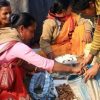
Can Barter System Work in Today’s India?
When COVID-19 hit in early 2020, it affected every aspect of people’s lives. For many from the most marginalised sections of society, it meant loss of employment and lack of access to education, food, and the market, among other things.
How Place of Birth Shapes Chances of Going to University
Many newly independent African countries in the 1960s inherited regional and ethnic inequalities in formal educational attainment. These new states bound together sub-national regions of diverse ethnic and religious communities. The regions differed in their exposure to missionary activity – the main vector in the spread of formal western education in the colonial era.
The Impact of Air Pollution on Child Health
Air pollution is a global public health crisis, and air pollution levels in India are among the highest in the world, posing a heavy threat to the country’s health and economy. According to the 2019 World Air Quality Report, India is home to 21 of the 30 most polluted cities in the world. In these cities, air quality can be as much as 10 times over the safe limits of air pollution recommended by the WHO.
2021: Yet Another Challenging Year in Review
 In 2020, 1.8 million people across the world died from COVID-19.
At the end of 2021 the death toll has risen to over 5.3 million.
In 2020, 1.8 million people across the world died from COVID-19.
At the end of 2021 the death toll has risen to over 5.3 million.
COP26 Agreed Rules on Trading Carbon Emissions – But They’re Fatally Flawed
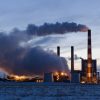
One surprise from COP26 – the latest UN climate change conference in Glasgow – was an agreement between world leaders on a new set of rules for regulating carbon markets. This would allow countries to trade the right to emit greenhouse gases.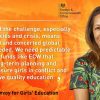
ECW Interviews UK Special Envoy for Girls’ Education, Helen Grant
Helen Grant became actively involved in politics in 2006 and was elected as Member of Parliament for the Kent constituency of Maidstone & The Weald at the 2010 General Election.
Plastic Trash in the Ocean is a Global Problem, and the US is the Top Source
Plastic waste of all shapes and sizes permeates the world’s oceans. It shows up on beaches, in fish and even in Arctic sea ice. And a new report from the National Academies of Sciences, Engineering, and Medicine makes clear that the U.S. is a big part of the problem.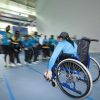
Building a Disability-Friendly Workplace: Why Includability Matters
In her famous speech ‘The Danger of a Single Story’, Nigerian writer Chimamanda Ngozi Adichie warns us against a singular narrative of a person—a stereotype. This, Adichie asserts, is not because stereotypes are untrue, but because they are incomplete—“They make one story become the only story.” This is true in all walks of life, including in our interactions with people with disabilities at workplaces.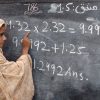
How Inequality Drives HIV in Adolescent Girls and Young Women
Despite the advances that have been made against HIV, the world has 37 million people living with HIV. And 680,000 people died from AIDS-related causes in 2020. While the prevention of mother to child transmission, and provision of treatment as prevention, are great successes, there are still gaps. Over 1.5 million new HIV infections were recorded in 2020.
Safety of Women Journalists
On International Day for the Elimination of Violence Against Women (25 November), UNESCO is raising awareness for the continued violence, threats and harassment that women journalists and female media workers face all around the world.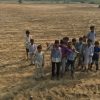
The Good, the Bad, the Ugly: What Went Wrong During India’s COVID-19 Response
From its devastating economic impact and the migrant crisis to the startling death toll, the COVID-19 pandemic in India unfurled one crisis after the other. The glaring gaps in our system, which had always been there, became even more prominent during the pandemic. There is one question at the back of everyone’s mind that still remains unanswered: What went wrong?
Antimicrobial Resistance Calls for Brainpower of a Space Agency and Campaigning Zeal of an NGO
The cost of infectious diseases is somewhere between staggering and incalculable. Around $8 trillion and 156 million life years were lost in 2016 alone. Throughout human history, pestilences have wiped out more lives than famine and violence.
Inequity in Funding: Africa’s Agripreneurs Pay a High Price for Start Up Finance
Africa has pinned its hopes on agriculture for the creation of jobs and the resulting reduction of poverty. But its role is being stymied by the high cost of financing.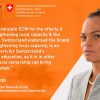
Education Cannot Wait Interviews Patricia Danzi, Director General of the Swiss Agency for Development and Cooperation
Patricia Danzi was appointed Director General of the Swiss Agency for Development and Cooperation (SDC) in May 2020. For nearly three decades, she has dedicated her career to serving the world’s vulnerable populations.« Previous Page — Next Page »





The Week with IPS

NEXT STOP - SDGs
Tracking global progress towards a sustainable world
Tracking global progress towards a sustainable world
