Languages
Thursday, October 15, 2026



News and Views from the Global South

Commonwealth Secretary-General Urges Leaders to “Dig Deeper” in Climate Talks for the Sake of Vulnerable Nations
Commonwealth Secretary-General Patricia Scotland has appealed to world leaders attending the UN Climate Change Conference COP26 to close the gap in ongoing negotiations this week in Glasgow, with millions of lives and livelihoods on the line in climate-vulnerable countries.
COP26 – New Toolkit to Boost Clean Energy Investments in Small Island Nations
A new toolkit launched in the margins of the UN Climate Change Conference COP26 aims to unlock clean energy investments for small island nations, many of whom rely heavily on imported fossil fuels for power generation.Campaigners Petition UN to Investigate Racial and Gender Discriminations in Global COVID-19 Vaccine Roll-Out
An international coalition of human rights law groups, public health experts, and civil society organisations is taking legal action against the US, UK, Germany, Norway, and Switzerland, on the grounds that these countries are in violation of international human rights law by failing to intervene on what has been an inequitable and racially discriminatory roll-out of the vaccine and other COVID healthcare technologies.
Optimizing Sustainable Groundwater Management Calls for a System Thinking Approach
“The Systems thinking approach could innovatively contribute to a water-secure Southern African Development Community (SADC) region to mitigate the acerbating impacts of climate change”. This view is shared by Engineer James Sauramba, SADC-GMI Executive Director.
Helena McLeod Appointed as GGGI’s Deputy Director-General and Head of Green Growth Planning & Implementation
The Global Green Growth Institute (GGGI) has announced the appointment of Ms. Helena McLeod, Cardno International Development Group’s Team Leader of UK Aid’s Cities, Infrastructure and Growth Program (Uganda) and former Director of KPMG International Development Advisory Services (IDAS) Africa, as the incoming Deputy Director-General and Head of Green Growth Planning & Implementation (GGP&I). Ms. McLeod will succeed Ms. Hyoeun Jenny Kim, who was named Ambassador and Deputy Minister for Climate Change in the Ministry of Foreign Affairs of the Republic of Korea on July 31, 2021.
COP26 – Commonwealth Chief Calls for “Highest Possible Ambition” at Climate Summit
Commonwealth Secretary-General Patricia Scotland has called for all countries to deliver an ambitious and transformative outcome at the imminent UN Climate Change Conference COP26, while appealing for increased support for the smallest and most vulnerable nations.
Education Cannot Wait Calls For Urgent Funding To Fulfill The Right To Education Of All Children And Youth In Afghanistan
Immediately following the first all-women UN mission to Afghanistan since takeover by the de facto authorities, Yasmine Sherif, Director of Education Cannot Wait - the United Nations global fund for education in emergencies and protracted crises - appealed to donors to significantly increase financial support for a robust collective humanitarian-development nexus response. This includes urgent scaled up funding to UN agencies and NGO partners delivering life-saving education to vulnerable children and adolescents on the ground.
How the Social Sector Thinks About Tech Is Wrong
Today, technology has become integral to almost all aspects of work—from implementing and standardising processes and collecting data to monitoring and evaluation and helping an organisation scale. This was increasingly apparent during the COVID-19 pandemic, when all organisations turned to technologies like WhatsApp and Zoom to stay connected and deliver their programmes to communities. And yet in the nonprofit sector, tech is viewed as an overhead rather than being fundamental to the functioning of an organisation.
World Food Day 2021
 Our lives depend on the world’s agri-food system.
Every time we eat, we participate in the system.
A sustainable agri-food system is one in which sufficient, nutritious and safe foods are available to everyone.
Our lives depend on the world’s agri-food system.
Every time we eat, we participate in the system.
A sustainable agri-food system is one in which sufficient, nutritious and safe foods are available to everyone.
Education Cannot Wait Interviews the LEGO Foundation’s New CEO Anne-Birgitte Albrectsen
Anne-Birgitte Albrectsen is the CEO of The LEGO Foundation. Ms. Albrectsen has spent almost 30 years in fields of international development, human rights and diplomacy, most recently holding the position of Global CEO at Plan International since September 2015.
GGGI and Qatar MME sign an MoU and funding agreement to promote climate resilience and green growth in Qatar
The Global Green Growth Institute (GGGI) and the Ministry of Municipality and Environment (MME) of the State of Qatar have signed a Memorandum of Understanding (MoU) to formalize their joint cooperation to promote climate resiliency and green growth in the State of Qatar.
Mental Health at a Cost, Inequality
World Mental Health Day was on October 10, 2021. The theme for this year was "Mental Health in an unequal World". This is an appropriate focus given the extreme inequities to access to mental health services that exist in our society.
India: Gaps in the Government’s Plan to Help Unorganised Workers
The Government of India launched the e-Shram portal with the mandate of registering 380,000,000 unorganised workers in the country. The portal aims to bridge the gap in unorganised workers’ ability to access social welfare and employment benefits by issuing an e-Shram card (or Shramik card) upon registration.Hack the Planet Competition 2021 Finalists Offer Innovative Climate and Ocean Solutions
After an unprecedented pan-Commonwealth search for innovative satellite-driven solutions to tackle the challenges of the climate emergency and ocean sustainability, the Satellite Applications Catapult and the Commonwealth Secretariat are delighted to announce the inaugural finalists of the Hack the Planet competition 2021.
New Education Cannot Wait Annual Results Report Highlights Multiplying Education Challenges for Children & Adolescents Living in Emergencies & Protracted Crises amid Covid-19
On this World Teachers’ Day, Education Cannot Wait (ECW), the United Nations global fund for education in emergencies and protracted crises, announced it has reached more than 4.6 million children and adolescents (48% of whom are girls) with quality education in more than 30 of the worst humanitarian crises around the world.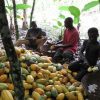
Ivorian Cocoa Farmers Are Beating a System To Reduce Child Labour: Here’s How
The evidence of child labour on cocoa farms in West Africa became public knowledge in the late 1990s. This followed press reports documenting the existence of hazardous child labour on cocoa farms. Pressure on the cocoa industry to end child labour has been growing ever since, particularly from civil society and more recently from both US and European regulators.
Young People Urge Leaders to Protect the Most Vulnerable Against Climate Change
More than 2,000 young leaders and youth-led organisations from across the Commonwealth are urging governments to respect the needs and contributions of the world’s most vulnerable groups, in the lead up to global climate talks in Glasgow in November.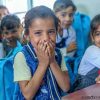
Donors Come Together with US$138.1 Million in New Funding for Education Cannot Wait During Un General Assembly to Leave No Child Behind
– On the sidelines of this year’s United Nations General Assembly, public, private and philanthropic donors announced a total of US$138.1 million in new contributions to Education Cannot Wait (ECW).
Right to Food: Can Millets Improve Nutrition Outcomes in Chattisgarh, India?
Chhattisgarh was one of the first few states in the country to universalise the public distribution system (PDS) and provide ‘Right to Food’ to its people. In order to ensure access to quality foodgrains for its vulnerable population, the state introduced the Food Security Act in 2012. The state has been providing support—35 kg of rice at INR 1 and INR 2 per kg; 1 kg of iodised salt and 1 kg refined oil at no cost; 2 kg of grams at INR 5 per kg—to each eligible family (as defined in the act).
GGGI and KOGAS Join Forces to Promote Green Hydrogen
The Global Green Growth Institute (GGGI) and the Korea Gas Corporation (KOGAS), a public natural gas company, signed a Memorandum of Understanding (MoU) today to promote green hydrogen in developing and emerging countries, including Indonesia. The two organizations have agreed to share knowledge and cooperate to develop joint projects through the provision of technical assistance.
White Privilege: What It Is, What It Means and Why Understanding It Matters
A prestigious, private school in Pretoria, South Africa, recently became a site of protest. Black learners and parents accused Cornwall Hill College of rejecting calls to make its whites-only board more representative of its diverse learner body.« Previous Page — Next Page »





The Week with IPS

NEXT STOP - SDGs
Tracking global progress towards a sustainable world
Tracking global progress towards a sustainable world
