Languages
Thursday, October 15, 2026



News and Views from the Global South

Details of Talks with IAEA Belie Charge Iran Refused Cooperation
The first detailed account of negotiations between the International Atomic Energy Agency and Iran last month belies earlier statements by unnamed Western officials portraying Iran as refusing to cooperate with the IAEA in allaying concerns about alleged nuclear weaponisation work.Alleged Photos of “Clean-up” at Iran’s Parchin Site Lack Credibility
News stories about satellite photographs suggesting efforts by Iran to "sanitise" a military site that the International Atomic Energy Agency (IAEA) has said may have been used to test nuclear weapons have added yet another layer to widely held suspicion that Iran must indeed be hiding a covert nuclear weapons programme.
Iran Holds Up Access to Parchin for Better IAEA Deal
The failure of a mission by the International Atomic Energy Agency (IAEA) to get Iranian permission to visit a military testing site mentioned in its latest report has been interpreted in media coverage as a stall to avoid the discovery of confirming evidence of past work on nuclear weapons.
Karzai Demand on Night Raids Snags U.S.-Afghan Pact
Nearly a year after the Barack Obama administration began negotiations with the government of Afghan President Hamid Karzai on a U.S. military presence in Afghanistan beyond 2014, both sides confirmed last week that the talks are still hung up over the Afghan demand that night raids by U.S. Special Operations Forces (SOF) either be ended or put under Afghan control.Army Officer’s Leaked Report Rips Afghan War Success Story
An analysis by Lt. Col. Daniel Davis, which the U.S. Army has not approved for public release but has leaked to Rolling Stone magazine, provides the most authoritative refutation thus far of the official military narrative of success in the Afghanistan War since the troop surge began in early 2010.U.S. Leak on Israeli Attack Weakened a Warning to Netanyahu
When Defence Secretary Leon Panetta told Washington Post columnist David Ignatius this week that he believes Israel was likely to attack Iran between April and June, it was ostensibly yet another expression of alarm at the Israeli government's threats of military action.Dempsey Told Israelis U.S. Won’t Join Their War on Iran
Chairman of the Joint Chiefs of Staff Gen. Martin Dempsey told Israeli leaders Jan. 20 that the United States would not participate in a war against Iran begun by Israel without prior agreement from Washington, according to accounts from well-placed senior military officers.U.S. Probe of Border Attack Hardened Pakistani Suspicions
The Pakistani military leadership's response to the U.S. report on its helicopter attack on two Pakistani border posts Nov. 26 assailed the credibility of the investigation by Air Force Brig. Gen. Steven Clark and expressed doubt that the attack could have been "accidental".In Signal to Israel and Iran, Obama Delays War Exercise
The postponement of a massive joint U.S.-Israeli military exercise appears to be the culmination of a series of events that has impelled the Barack Obama administration to put more distance between the United States and aggressive Israeli policies toward Iran.Clinton Revives Dubious Charge of “Covert” Iranian Nuclear Site
U.S. Secretary of State Hillary Rodham Clinton's charge Tuesday that Iran had intended to keep the Fordow site secret until it was revealed by Western intelligence revived a claim the Barack Obama administration made in September 2009.IRAN: Obama Seeks to Distance U.S. from Israeli Attack
President Barack Obama and Israeli Prime Minister Benjamin Netanyahu are engaged in intense maneuvering over Netanyahu's aim of entangling the United States in an Israeli war against Iran.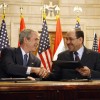
How Maliki and Iran Outsmarted the U.S. on Troop Withdrawal
Defence Secretary Leon Panetta's suggestion that the end of the U.S. troop presence in Iraq is part of a U.S. military success story ignores the fact that the George W. Bush administration and the U.S. military had planned to maintain a semi-permanent military presence in Iraq.Rejecting Apology, U.S. May Hasten End of Pakistan as Client
President Barack Obama has sided with U.S. military and Defence Department officials in rejecting a proposal by the U.S. ambassador to Pakistan for a U.S. apology for last weekend's attack on two Pakistani border posts, and approving an investigation into the attack that won't be completed until Dec. 23 at the earliest.Pak Border Post Attack a Big Loss for U.S. War Policy
The U.S. military and the Barack Obama administration have been thrown into confusion by the attack on two Pakistani military posts near the border with Afghanistan Saturday morning, even as the attacks provoked the Pakistani government and military leadership into much stronger opposition to U.S. policy in the region.Ex-Inspector Rejects IAEA Iran Bomb Test Chamber Claim
A former inspector for the International Atomic Energy Agency (IAEA) has repudiated its major new claim that Iran built an explosives chamber to test components of a nuclear weapon and carry out a simulated nuclear explosion.IAEA’s “Soviet Nuclear Scientist” Never Worked on Weapons
The report of the International Atomic Energy Agency (IAEA) published by a Washington think tank Tuesday repeated the sensational claim previously reported by news media all over the world that a former Soviet nuclear weapons scientist had helped Iran construct a detonation system that could be used for a nuclear weapon.
ISAF Data Show Night Raids Killed over 1,500 Afghan Civilians
U.S. Special Operations Forces (SOF) killed well over 1,500 civilians in night raids in less than 10 months in 2010 and early 2011, analysis of official statistics on the raids released by the U.S.-NATO command reveals.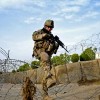
U.N. Tally Excluded Most Afghan Civilian Deaths in Night Raids
A July United Nations report asserting that only 30 civilians died in targeted raids in Afghanistan during the first six months of 2011 reflected only a very small fraction of night raids in which civilians were killed, according to officials of the independent Afghan commission which had co-produced the 2010 report on civilian casualties with the U.N. Mission.U.S. May Have Concealed Deterrent Aim of Iranian Plan
Scepticism about the U.S. allegation of an Iranian plot to assassinate the Saudi ambassador has focused on doubts that high-level Iranian officials would have used someone like used car salesman Monssor Arbabsiar to carry out the mission.U.S. Officials Peddle False Intel to Support Terror Plot Claims
Officials of the Barack Obama administration have aggressively leaked information supposedly based on classified intelligence in recent days to bolster its allegation that two higher- ranking officials from Iran's Revolutionary Guard Corps (IRGC) were involved in a plot to assassinate Saudi Ambassador Adel al-Jubeir in Washington, D.C.FBI Account of “Terror Plot” Suggests Sting Operation
While the administration of Barack Obama vows to hold the Iranian government "accountable" for the alleged plot to assassinate the Saudi ambassador in Washington, the legal document describing evidence in the case provides multiple indications that it was mainly the result of an FBI "sting" operation.« Previous Page — Next Page »





The Week with IPS

NEXT STOP - SDGs
Tracking global progress towards a sustainable world
Tracking global progress towards a sustainable world
