Languages
Sunday, November 8, 2026



News and Views from the Global South
MALAWI: Women Claim Equal Share of Family Property
Seated on a wooden bench at her Katoto township house in Mzuzu, Grace Mkandawire’s face reflects the traumatic experiences she has endured since her husband’s death in 1998. She looks lost and confused and as she narrates her story there is fear, hatred and resignation that Malawi’s Marital Property Law of (1882) disenfranchises poor women like her.
POLITICS- NAMIBIA: Numbers of Women in Government Declining
Twenty years after independence, representation of women in senior government structures and in Parliament is declining in Namibia. According to the latest demographic survey results of August 2010, out of a population of around 2 million, women outnumber men 10:9. In 2001, the ratio was 94 males per 100 females.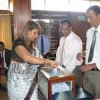
MAURITIUS: They Do Politics Differently
"I do politics every day, but partisan politics? No, thank you," says Jane Ragoo, long-time trade unionist and social worker. She believes in working to bring about change in society and improve people’s lives but has no interest in clambering onto a truck to campaign for office.Ecobreves – BRAZIL: Shell of Amazon Fruit Replaces Flour in Bread
A bread made from the shell of the cupuaçú (Theobroma grandiflorum), a typical fruit of the Amazon forest, was widely approved in a consumer test. This alternative product, developed by researchers from the University of São Paulo (USP), achieved a favorable rating from more than 90 percent of those surveyed.Ecobreves – HONDURAS: Renewed Permit for Gas del Caribe
After eight months of hearings, the Honduran Secretariat (ministry) of Environment and Natural Resources announced the two-year permit renewal for the controversial Mexican company Gas del Caribe, which operates in the Atlantic region of Omoa, in the Honduran northwest.Ecobreves – ARGENTINA: Free Bicycles in Buenos Aires
To encourage the use of bicycles, the Buenos Aires city government this month made about 100 two-wheelers available to anyone interested.Ecobreves – MEXICO: Innovative Octopus Farm Expands
The Mexican Mayab Mollusk Cooperative will expand its production of baby four-eyed octopus (Octopus maya) in order to expand its sales.
AGRICULTURE: Desperation Over Subsidies
As the rains start to fall in Malawi, marking the beginning of the growing season, government is continuing to implement the fertiliser and seed subsidy programme which has since made the country a bread basket in the Southern African Development Community, SADC.MIDEAST: Racist Jews to the Fore
Emotions are running high in this working class town on the Mediterranean adjacent to Tel Aviv, the Israeli metropolis that has long been the symbol of liberal laissez-faire Israel. Principally, anti-Arab emotions: Racism is on the march.
POLITICS: Human Suffering Escalates in Cote d’Ivoire
For three days, 25-year-old Ousmane Traoré attended the private clinic in the populous district of Abobo, north of Abidjan. Suffering from gunshot wounds to the head and abdomen as a result of the Ivorian opposition demonstrations, he was forced to leave the main hospital in Treichville, south of Abidjan, due to a lack of assistance.
KENYA: Mobile Phones to the Rescue for Pregnant Women
Pumwani Maternity Hospital, in the impoverished Nairobi neighbourhood of Eastlands, is the site of a trial project using mobile phones to help HIV-positive mothers avoid passing the virus on to their children.
U.S. Finning Ban Caps Busy Year for Shark Conservation
The U.S. Congress banned shark finning in all U.S. waters Tuesday, a victory environmental advocates are hoping sends a message to international regulators.Street Vendors Defend Right to Make a Living in San Salvador
Juan Antonio Gallegos sells Mexican tortillas in Cuscatlán Park in the capital of El Salvador. Like other street vendors who work in the area, he has one thing on his mind these days: how to resist the imminent eviction that forms part of the city's government's urban renewal plan.WIKILEAKS: Yours Obediently, Europe
Commenting on the state of trans-Atlantic relations in 2008, former U.S. president Jimmy Carter argued that European Union governments are "not our vassals" but "occupy an equal position with the U.S." Documents released over the past month appear to offer a different view.Caribbean Lagging on EPA Deadlines with Europe
Two years after Europe signed an Economic Partnership Agreement (EPA) with the Caribbean Forum countries, concerns are being raised in the region about the timeline for future negotiations in a number of areas.
REFUGEES: Liberians Struggle to Cope With Fleeing Ivorians
Albertine Yahwah sits on a hard wooden bench, cradling her little baby in her arms. The 20 year-old walked from the Ivory Coast with her two children and her husband to reach this small town across the border in Northern Liberia.“Don’t Ask, Don’t Tell” Repeal Marks Rare Victory for Obama
The U.S. Senate's repeal of the military's "Don't Ask, Don't Tell" policy Saturday ended what had become for many an embarrassing and awkward policy - and marked a rare victory for the agenda of President Barack Obama in the U.S. Congress.Ecobreves – CHILE: Growing Opposition to Mining in the North
"Every day there are more organizations" that oppose the expansion of major mining in the northern Andean region of Chile, due to its harm to glaciers and water sources, activist Mauricio Ríos, of the Northern Environmental Network (RAN), told Tierramérica.Ecobreves – VENEZUELA: On Alert at El Ávila National Park
Venezuelan environmentalists sounded the alarm when President Hugo Chávez announced the partial "deallocation" of El Ávila national Park, which extends over 85,100 hectares in the mountains between Caracas and the Caribbean, in order to build housing on the mountainsides facing the sea.Ecobreves – HONDURAS: IDB Supports Programs to Fight Climate Change
The Inter-American Development Bank (IDB) will make 30 million dollars available in loans for developing renewable energy in Honduras.Ecobreves – BRAZIL: Most Support Environmentalism, But Few Practice
Although 59 percent of the Brazilians surveyed said that preserving the environment is more important than ensuring economic growth, just 18 percent considered it their personal duty.« Previous Page — Next Page »





The Week with IPS

NEXT STOP - SDGs
Tracking global progress towards a sustainable world
Tracking global progress towards a sustainable world
