Languages
Sunday, November 8, 2026



News and Views from the Global South
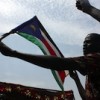
SOUTH SUDAN: Looking to the Future
The peaceful achievement of an independent South Sudan could have economic and security benefits for its East African neighbours in particular. Analysts say it may also shift the balance of power in controlling vital water resources in the region.RIGHTS-DR CONGO: Soldiers Accused of Rape Arrested
The reported arrests of ten Congolese soldiers accused of looting stores and raping at least a dozen women in the Fizi District earlier in January is not enough to reassure local civil society.MIGRATION: Stateless in Calais
In September 2009 French police bulldozed the migrant encampment at Sangatte near Calais, inhabited by hundreds of mostly Afghan asylum seekers seeking to reach the United Kingdom. The destruction of the Sangatte ‘jungle’ was carried out in the full glare of publicity, and the French and UK governments hailed it as a major blow against illegal immigration.
HAITI: OAS Whitewashed Flawed Polls, Says Watchdog Group
Fresh calls emerged Wednesday for Haiti to void its recent disputed presidential elections, following a new analysis from the Center for Economic and Policy Research (CEPR) showing serious and unprecedented flaws in the Nov. 28 voting process.Report Shows Rollback on Rights in China
A new report released Tuesday by Human Rights Watch (HRW) charges that China has largely failed to meet the commitments laid out in its first-ever National Human Rights Action Plan (NHRAP), introduced in 2009.
DR CONGO: Promise of Potable Water for Kikwit
When the ground is broken for the Kakobola dam, engineers just might be able to hear the jubilation in the city of Kikwit, 200 kilometres away. The city's million residents are desperate to improve their water supply.
AFPAK: People Turning Against Taliban
The Taliban once regarded as true jihadists here are rapidly losing popularity in response to their ongoing targeting of mosques, schools and innocent people.Ecobreves – ARGENTINA: Glacier Protection Law Suspended
Environmental organizations in Argentina are protesting the delays in the application of the law to protect glaciers passed in late September 2010.Ecobreves – CHILE: New Actions Planned Against Mine Tailings Deposit
Residents of the northern Chilean community of Caimanes are planning new actions to fight for the closure of the mine tailings deposit operated by the Chilean-Japanese mining company Los Pelambres.Ecobreves – BRAZIL: Stock Exchange Joins Fight Against Climate Change
The São Paulo Securities, Commodities and Futures Exchange and the Brazilian Development Bank (BNDES) have launched the Carbon Efficient Index (ICO2) to encourage companies to measure and disclose their greenhouse gas emissions.Afghanistan Solutions Heighten Central Asian Crisis
International efforts to replace poppy fields with food crops and improve living standards in impoverished northern Afghanistan seem undeniable progress in the conflict-ridden country. But some experts worry that these efforts will have unintended negative consequences for the nation’s neighbours, where water and energy resources are sparse and tensions run high.ECONOMY: South Africa Prepares to Head Into the BRIC fold
South Africa’s inclusion in the BRIC group of powerful emerging economies has sparked intense debate, with some saying it has done itself a disservice by trying to punch above its weight, and others lauding the inclusion as a step towards becoming a more important player on the global stage.
ELECTION-WATCH: Countdown Begins to Southern Sudan Referendum
"We want an independent country of our own that is Southern Sudan, and we want a new country". Calm and with a passion in his voice, the secondary school teacher, John Kiri, a native from Juba explained the excitement he is feeling for Sunday’ referendum.
ECONOMY: Namibia Embarks on Nuclear Policy
Namibia is set to develop its rich uranium resources and intends to pursue uranium enrichment locally. It also plans to build its own nuclear electricity plant.
Cassava Combating Rural Hunger in Zambia
In Zambia, a silver lining has emerged for widespread rural hunger and poverty, thanks to homegrown agricultural research. Local scientists have successfully developed four new, early-maturing and high- yielding cassava cultivars in an ambitious research project conducted in the cassava-rich Luapula Province, under the on-going Root and Tuber Improvement Programme (RTIP).AFPAK: Give Us This Day Our Weekly Drone
Hundreds of Al-Qaeda and Taliban leaders have fallen to drones since the first attack that killed Taliban leader Nek Muhammad in South Waziristan. Now many local people welcome drones.
AFPAK: Bombed Schools Feed Illiteracy, And Militancy
"I have now hired a house in the adjacent Dera Ismail Khan district where my three daughters are studying in a school," says Jamil Shah Wazir of the militancy-riddled South Waziristan. Getting girls to school is a real struggle here.
A Caribbean Cinderella: St. Domingo’s Colonial Zone
Santo Domingo de Guzmán was the New World’s first colonial city, the Spanish Empire’s capital, the Catholic Church’s Rome in the West Indies, and Francis Drake’s most coveted prize.
AGRICULTURE – SOUTH AFRICA: Small Scale Farmers Face Uphill Battle
Just before sunrise 39-year -old Alan Simons, an emerging small-scale farmer, gets ready for his usual nine-hour day of harvesting, packing and deliveries. In his black Nissan van he drives ten kilometres to the seaside town of Strand outside of Cape Town to pick up his six workers, all of who are women.
Motherhood Matters
 We are two-thirds of the way to achieving the Millennium Development Goals - in terms of time, not by way of meeting the target. Achievements are failing widely in the march to the 2015 targets agreed by world leaders in 2000. But there are successes too, and five years still to go over which speeded up efforts can go a long way to fighting poverty and to promoting health and education -- aims that are at the heart of the eight MDGs. IPS here reports on the progress and the shortfalls on way to those goals.
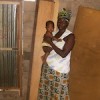
GAMBIA: Families Left Homeless by Floods
Amie Manneh and her family lived securely in their single-bedroom home in Bundung, 15 kilometers from the capital, Banjul. Then their home was destroyed by heavy rainfall in September. Since then Amie, her husband and six children have been living in the damaged house.« Previous Page — Next Page »





The Week with IPS

NEXT STOP - SDGs
Tracking global progress towards a sustainable world
Tracking global progress towards a sustainable world
