Languages
Tuesday, October 20, 2026



News and Views from the Global South
Ghanaian Fisherfolk Blasting Their Way to Finding Fish
Explosives, high-watt light bulbs, monofilament nets, and poison: these are a few methods fisherfolk are using to catch ever-dwindling fish stocks off Ghana’s shores.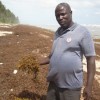
Western Ghana’s Fisherfolk Starve Amid Algae Infestation
Sam Kojo stands in a thigh-high pile of brown seaweed that blankets a beach in western Ghana. Behind him, a decomposing mound of Sargassum stretches down the shore past the fishing village of Beyin.SIERRA LEONE: The Isolation of Epilepsy Sufferers
Elizabeth Zainab Kargbo was a successful young woman, eight months pregnant and working in Sierra Leone’s civil service, when she had her first seizure.
AFRICA: Regulating the Rush for Land
The adoption of international guidelines to regulate so-called land grabs has been pushed to next year after negotiators failed to agree on conditions for large-scale land investments and enforcement.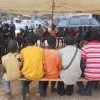
SIERRA LEONE: Child Rights Exist Only on Paper
The six-year-old girl pulls her T-shirt up to show the dozens of pale lines across her back. They are fresh scars from the lashing she received from her caregiver after she lost 500 Leones, the equivalent of about 10 cents.SIERRA LEONE-HEALTH: Free Health Care Not Really Free
There is a brief bustle and then a woman wails as the small body is wrapped in cloth and set on a cot by the door of the paediatric ward. Nurses in pristine white uniforms continue to pad quietly around the large room at Ola During Children's Hospital in Freetown, Sierra Leone's capital city.
SIERRA LEONE: Substandard and Counterfeit Drugs Flood the Market
Bubble-wrapped pills are scattered across the crude table in a busy market beside crumpled boxes of lubricant, paracetamol and anti-fungal powder.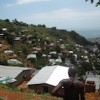
SIERRA LEONE: Deforestation Leaves Poor Vulnerable to Landslides
Samuel Weekes remembers when the hills stretching out beyond the heart of Freetown were green.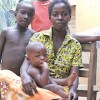
Agencies Grappling With Liberia Refugee Crisis
The yard at Peter Saye's is full: of kids, of cooking pots, of chickens, goats, and piles of belongings. Women carry firewood and stir coals, plait hair and snap at the children scampering around in the dust. There are nearly 100 refugees sheltering here from the violence across the border in Côte d'Ivoire.





The Week with IPS

NEXT STOP - SDGs
Tracking global progress towards a sustainable world
Tracking global progress towards a sustainable world
