Languages
Tuesday, October 13, 2026



News and Views from the Global South
LEBANON: Conflict Finds a Creative Side
Can beauty arise from conflict? When looking at the art scene in the Middle East, where a fault line of political instability stretches from Lebanon, Syria and Israel to Iraq and Iran, the answer seems to be a resounding 'yes'.
LEBANON: Civil Wars Find New Fronts
An eerie calm reigns over the new demarcation lines drawn in northern Tripoli, the second largest city in Lebanon, which gets its name from the Greek 'tri-polis', or 'three cities'. One week after violent combat erupted between the Alawite minority from the Jabal Mohsen area and the Sunni community of Bab el-Tebbaneh - separated by the wide Syria Street - tensions still run high.LEBANON: After Accord, the Inevitable Bickering Begins
A month has gone by since the May 21 Doha agreement between warring Lebanese factions, which ended a week-long civil conflict that erupted on May 7, and led to the death of 67 people. Painstakingly brokered in Qatar's capital with the support of the Arab community, the peace deal also stipulated the election of consensus president Michel Suleiman. But ever since, Lebanese politicians have been bickering relentlessly over ministries in the future government.
LEBANON: Wine Flows Under Hezbollah's Shadow
Pine trees adorn majestic mountain flanks separating south Lebanon from the Chouf region in the village of Jezzine. Amid the shrubbery, lush vines, their crisp leaves tinted emerald green, bear the promise of a future harvest as the grapes start to form on the twisted branches. Bordering known Hezbollah strongholds, wine production seems to be thriving, in an area where the peaceful co-existence between the culture of the vine and the 'party of God' is indeed a paradox.LEBANON: Newsrooms Fall Prey to Seven Deadly Sins
Prejudiced reporting is not uncommon anywhere, but in Lebanon the level of news distortion has taken on a new dimension as a result of assassinations, physical threats, political pressure, biased reporting, lack of professionalism, rampant corruption and self-censorship. These are the seven deadly sins that have increasingly been plaguing the Lebanese media over the years.
LEBANON: Divided We Arm
Despite the new peace agreement in Doha, Lebanese are becoming increasingly polarised, with confrontation between groups affecting the population at every level.LEBANON: Celebrities and Celebration Take Their Own Toll
In the dark streets across from the main Hamra road, one of the major commercial arteries in Lebanese capital Beirut, light streams from behind the drapes of a first floor apartment. A politician's speech blaring from a TV resonates loudly in the night. As music cues the closing credits of the show, sudden celebratory gunfire from the political figure's supporters erupts outside.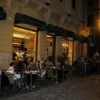
LEBANON: In Beirut, the Party Has Begun
The 'party capital' of the Middle East seems to be awakening after an 18-month slumber. As news of a political agreement between feuding Lebanese factions and an imminent presidential election circulated on Wednesday May 21, Lebanese almost immediately began to gather in the Beirut Central District while the tent city erected by the opposition was still being dismantled.LEBANON: Breakthrough At Last
The highway connecting East and West Beirut, known locally as 'the ring', was bustling with unusual activity Wednesday morning. An incredible sight seemed to attract passers-by, who slowed down their cars suddenly before coming to a full stop and exiting. By the Riad al-Solh statue in the Beirut Central District (BCD), a symbol of Lebanese dissension had fallen.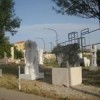
LEBANON: Druze Take On Hezbollah, Because They Must
Ghostly white sculptures are scattered along the greenery on each side of a sinuous road leading up to a Lebanese mountain range, their silhouettes contrasting against the violet sky. This area, known as the Symposium in Aley, Mount Lebanon, is located behind the infamous '888' mountaintop, a strategic point in Lebanese military history.LEBANON: All Roads Do Not Lead to Beirut
In the wake of the deadly conflict that has left Lebanon with at least 65 dead and 200 injured, the roads in and out of the Land of the Cedars have proved a difficult journey for most. As the rubble was being cleared by large trucks - after an Arab delegation was able to negotiate a breakthrough among feuding politicians – some Lebanese are asking how long the roads will remain clear.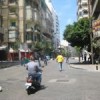
LEBANON: Hezbollah, In Opposition, Takes Charge
At least 11 people are dead and 30 injured during ferocious gun battles pitting opposition Shia Amal and Hezbollah fighters against members of the Sunni Future Movement, which is part of the majority March 14 alliance in government. As the opposition's militia men clamped down on government headquarters, the balance of power seems to have been shifted permanently in the Land of the Cedars.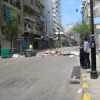
LEBANON: Hezbollah Unleashes a Coup Bid
Men clad in black have roamed the streets of Beirut since Wednesday, their faces covered with ski masks or dark kaffiya, as they wreaked havoc in the large avenues leading to the airport or dividing Sunni and Shia areas. As darkness loomed over Lebanon, the winds of discord seem to set the Lebanese capital ablaze.LEBANON: Al-Qaeda on a Slippery Base
Al-Qaeda's second-in-command, Ayman Zawahiri, announced in an audiotape broadcast Apr. 21 that Islamic groups would play a pivotal role in the war against Jews, and encouraged militants to expel invading 'Crusaders' masquerading as peacekeepers, referring to UNIFIL troops deployed in South Lebanon.LEBANON: Wobbling In Uncertainty
As clashes between supporters of Lebanon's feuding factions become increasingly frequent, Lebanon seems to be walking a fine line between stability and violence.LEBANON: Hate the U.S., And Head For It
The growing rift between the U.S. and Iran has spread also to Lebanese soil, with Shia youngsters frequently seen burning U.S. flags. But ironically, for many of Hezbollah's Shia constituency, the U.S. is home.LEBANON: Christian Divisions Complicate Politics
The political crisis gripping Lebanon has chipped away at what has been viewed by most since the 2005 parliamentary elections as an unlikely alignment of two political heavyweights.LEBANON: Assassinations Shake Christian Town
The lush Bekaa Valley is nestled between snowy Mount Lebanon and the Syrian border. The region, reputed for its wine production, was this week the witness to a violent crime in the Christian city of Zahleh, where two members of the anti-Syrian Kataeb party (Phalangists) were gunned down.
LEBANON: Fleeing a Refugee Camp for Refuge
Music resonates down the rundown streets of Beddawi, an overpopulated suburb of Tripoli. People have moved into garages and covered the entrance with bed sheets in a feeble attempt at privacy.LEBANON: Children Learn That Religion Excludes
From East to West, the Arab region is afflicted with mounting religious divides that are increasingly affecting the well-being of the region's children. Lebanon's constitution, which splits power equally between Muslims and Christians, is no exception to this growing chasm.LEBANON: Hopes of Peace from Lords of War
The pages of Lebanon's history are drenched in blood. And, more than 30 years after the start of the 1975 civil war, Lebanese factions are still pitted against each other in a confrontation with a recurring sectarian dimension amidst a volatile regional context.« Previous Page — Next Page »





The Week with IPS

NEXT STOP - SDGs
Tracking global progress towards a sustainable world
Tracking global progress towards a sustainable world
