Languages
Wednesday, November 11, 2026



News and Views from the Global South
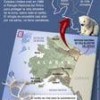
Bush Launches New Offensive for Oil Drilling in the Arctic
The White House is treating the issue of oil drilling in a pristine Alaskan wildlife refuge as fait accompli. But oil companies are maintaining a cautious attitude about investing in the 607,000-hectare Arctic National Wildlife Refuge.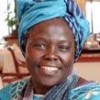
Poor Deserve Fair Price for Their Lumber, Says Nobel Laureate
Environmentalist Wangari Maathai, winner of the 2004 Nobel Peace Prize, spoke with Tierramérica about the threat of illegal logging worldwide.Ecobreves – GUATEMALA: Eyes on Flora and Fauna
Over the next two months a biology center will be set up in the northern Guatemala department of Petén to gather satellite data on the plant and animal life of the Yaxhá Park.Ecobreves – BRAZIL: Transgenics Expand
Fields of genetically modified crops will see rapid expansion in Brazil now that the Biosecurity Law, approved by Congress on Mar. 2, legalizes channels for pursuing this form of biotechnology.Amazon Forest – Destruction and Hope
Annual tropical wood harvests have decreased by two million cubic meters, but illegal logging extends into the heart of the Amazon, according to a new report to which Tierramérica had access.
The Tuna Dispute – Environmentalism or Trade Protectionism?
Imports of Latin American tuna continue to face a ban in the United States, which claims that its strict rules are to protect dolphins. But the region's fishing industry charges that it is an undue barrier to free trade.Bottles Versus Faucets
The bottled water business leads to privatization of water utilities, say water rights activists. But the industry counters that bottled water is safe and environmentally friendly.Ecobreves – COLOMBIA: Indians Protest Free Trade Treaty
The indigenous community of the Jambaló reserve in southern Colombia, with some 14,000 inhabitants, staged a day of protest Mar. 6 against the free trade agreement the government is negotiating with the United States.Ecobreves – GUATEMALA: : Alarm Sounds for Forest Fires
Guatemalan officials have issued a yellow alert due to the intensity of the 67 forest fires recorded during 50 days so far this year and which have destroyed 500 hectares of forest.Ecobreves – MEXICO: Environmental Training for Young People
Dozens of youths from the Mexican capital will soon receive training to bring about environmental changes in their communities, all part of the Geo Youth project of the United Nations Environment Program.Ecobreves – SOUTH AMERICA: Promoting Sustainable Fishing
Artisanal fisherfolk from seven South American countries met in Argentina Mar. 1-4 to discuss small-scale sustainable fishing and to exchange information on fishing stock management.Ecobreves – PERU: Seeking Small Investment in Reforestation
The new National Plan for Reforestation, to be debated in coming weeks by the Peruvian Congress, modifies the existing policy for promoting forestry, which favors major investors, and instead would also promote participation by small and medium investors.CRISIS OF THE CIVIC NATION?
For US historian Samuel Huntington the greatest threat to the national cohesion and identity of the US is Hispanic immigration. For Peruvian novelist Mario Vargas Llosa, demands for autonomy for the Bolivian region of Santa Cruz presents a danger that must be promptly nipped in the bud. For some, the greatest threat to the cohesion of the Spanish government is the possible approval of a proposal for a new Basque state, writes Joaquin Roy, Jean Monnet professor and Director of the Centre of the University of Miami. What these three cases have in common, Roy writes in this article, is the failure of, or the perception of disappointment with, the civic nation, and irritation at persistent intransigency, the marginalisation of the different, and irresponsible centralism. In any case, they are the product of a globalisation that pressures each to conserve his particular signs of identity, whether beneath the various configurations of the nation-state or the more varied experiments in international integration and cooperation. The United States may have reached the exhaustion of its model and doubts about its cohesion, and as a result is trying to invent for itself an identity-based nation (based on a race and an ethnicity, when not on a denomination of Christianity as well) that never existed. In Latin America the failure of the civic model is more scandalous because it is easier to adopt but is more expensive.WORLD SOCIAL FORUM: ANOTHER MODE OF COMMUNICATION IS POSSIBLE
Analysis of the world media carried out after the Fifth World Social Forum (26-31 January) showed that coverage of the Forum\'s activities has shrunk, writes Mario Lubetkin, director-general of IPS. This development seems to jar with the fact that the WSF is the largest and most representative forum of civil society, with higher attendance this year than ever -- about 150,000 -- as well as more than 4000 accredited journalists present from around the world, Lubetkin writes in this analysis. We must pay attention not only to media coverage but also to gaps in coverage caused by media policies, the author argues. It is a question of understanding who decides, and why, to limit coverage of the major themes of civil society, in particular those related to development, which though extremely important to the future of humanity are too often pushed aside by frivolous stories. Only a combination of serious, creative, and participatory initiatives will make it possible to move from the simple assertions and critiques regarding what is covered badly or not at all to a process that provides citizens with the information they need to understand, make decisions, and act. Lubetkin outlines three initiatives by World Forum on Communication and Information to address the situation: the creation of a world network to connect the media present at the forum; the organisation of a virtual global community of journalists; and the creation of a virtual university for journalists. One of the challenges presented by the WSF is to forge another form of communication which can give rise to another form of participation. Without this, the objective of creating \'\'another possible world\'\' will never be more than a wish planted in the imaginations of millions and millions of people.INTERVIEW WITH FERNANDO SAVATER: “THE WORLD, HOW MUCH MORE JUST, HOW MUCH SAFER?”
Basque writer and philosopher Fernando Savater gave this interview shortly before the anniversary of the March 11, 2004, bomb attacks on three passenger trains in Madrid, Spain, which killed 192 people and wounded two thousand. Savater (born in San Sebastian, 1947) is a philosophy professor and the author of numerous essays, which have been translated into a dozen languages. He leads the Basta Ya movement, which represents the victims of terrorism in the Basque Country. The previous Spanish government, of Jose Maria Aznar, stated that there should be no discussion of the causes of terrorism because there could be no possible justification. What is certain is that there is still no internationally-accepted definition of terrorism today. Why is this important? I think there is a mistaken notion that all terrorism is equal. This is the same as saying that all fatal diseases are equal. But cancer is not the same as AIDS. They may both kill you, but they are not the same. Their causes must be understood for them to be treated. Similarly, and with no intention of justifying terrorism, the causes of terrorism must be understood. Ethnic terrorism is not the same as religious terrorism, or the terrorism of the poor against the rich.PORTUGAL: THE CARNATIONS ARE BLOOMING AGAIN
When the Portuguese Socialist Party and its leader, Jose Socrates, take office on March 12, they will assume a tremendous burden of responsibilities.The country\'s crisis is profound, has many different ramifications, and cannot be resolved magically by a fortunate election, writes Mario Soares, former president of Portugal. I expect that the new prime minister will take advantage of his first days in office to make a clear break with the past, giving clear signs that he grasps the hopes and expectations of the voters. He must make it understood in word and deed that Portugal will be ruled by the government selected by popular vote and backed by the majority of the Assembly of the Republic -- and not by the main economic powers or corporations or lobbies which seek only to use the government for their own ends.THE ROAD TO DEVELOPMENT PASSES THROUGH TRADE AND SO THE WTO
Only the WTO can improve global rules for the conduct of trade, which is so necessary to complement development and poverty-reduction strategies, writes Supachai Panitchpakdi, Secretary-General of the World Trade Organisation. The WTO\'s Doha Development Agenda is a single undertaking which we will not be able to conclude unless we make progress across the board, the author writes in this analysis. We cannot afford to wait for results in agriculture before making further advances in tariffs on industrial products, services, rules, and the other areas. With respect to agriculture, while far-reaching commitments were agreed on domestic support, export competition, and market access, there remain a number of gaps to be filled and thorny issues to be resolved. On export competition, despite the important commitment to eliminating export subsidies, we still need to fix an end date. With respect to domestic support,the actual level of commitments still needs to be carefully negotiated. On market access, we still need to negotiate the actual percentage of reductions. We also need to establish which products can be designated \"sensitive\" and \"special\" and agree on disciplines to ensure that flexibility in this area is not used to circumvent market access commitments. The road ahead could still be a rough one. The DDA is still behind schedule and every new delay weakens its credibility and value. We need to approach our work over the coming months with a sense of urgency and determination.DIGITAL DEBRIS: ELECTRONIC WASTE AND THE HAZARDS OF COMPUTER RECYCLING
Electronic waste is the fastest growing disposal problem in the world. From the industrial backwaters of mainland China to rapidly industrialising regions of India and Pakistan, a wide range of electronic devices and appliances are being received and recycled in conditions that imperil the health of the recyclers, their communities, and their environments, writes Mark Sommer, who directs the US-based Mainstream Media Project and hosts \"A World of Possibilities\", an award-winning internationally-syndicated radio programme, where a three-part series on electronic waste can be accessed and downloaded.. In this article, Sommer writes that most of the components in these devices are recovered by poor, often migrant scavengers and sold for reuse. But in the process they and the environments around them are exposed to heavy metals like mercury, lead, beryllium, cadmium, and brominated flame retardants that leave lethal residues in bodies, soils, and watercourses. Governments and electronics firms have long known about the hazardous effects of this \"effluent of the affluent\" and as early as 1989 drafted the Basel Convention, an international treaty dealing with the global trade in toxic wastes. In 1994 it was strengthened to ban the export of all hazardous wastes from rich to poor countries, even for the purpose of recycling. Alone among developed countries, the US has refused to ratify the Basel Convention and has consistently sought to undermine its implementation. Yet as with so many other global agreements, the rest of the world has ceased waiting for the US to lead and has instead taken the initiative itself. The EU has already implemented the Basel Convention, banning the export of all hazardous wastes to developing countries for any reason, while readying a comprehensive set of regulations that will require electronics manufacturers selling to its 25 member countries to bear the responsibility for the entire life cycle of their products, taking them back at the end of their useful life and phasing out their toxic components.IRAQ: THE MOTHER OF ALL CORRUPTION SCANDALS?
When the new Iraqi government takes office in the coming weeks it will face the daunting task of reversing decades of state-sponsored looting, writes Peter Eigen, Chairman of Transparency International, a non-profit organisation dedicated to the fight against corruption. Transparency International\'s Global Corruption Report 2005 (www.globalcorruptionreport.org), released March 16, features a special section on post-war reconstruction. In this article, the author writes that infrastructure development has suffered greatly at the whims of dictatorship, the scheming of the Oil-for-Food programme, and the opaque contracts of the Coalition Provisional Authority, which doled out billions of dollars worth of construction and engineering contracts at break-neck speed in the aftermath of the war. The potential for abuse remains immense. The safety and prosperity of future generations, and by extension the success of peace and democracy, will rest, literally, on the foundations built today. It is indispensable that Iraqis see the new government as legitimate and accountable. The scene unfolding, however, does not bode well. The government should decentralise aid and reconstruction projects where possible, shortening reporting lines and strengthening a sense of ownership. A strong and independent local media is also vital to keep a watchful eye on those in power. Competitive and transparent bidding must be ensured. With unprecedented sums earmarked by the US government for Iraqi reconstruction and an oil industry and infrastructure still in tatters, the opportunities and the risks are immense. If urgent steps are not taken, Iraq will not become the emblem of democracy that many of us hope for; it will become the mother of all corruption scandals.BEYOND IDEOLOGY: US “SILENT MAJORITY” SEEKS NEW POLITICS
Domestic divisiveness within the United States represents a far greater danger to the American democratic republic than any threat from foreign terrorists, writes Mark Sommer, host of the award-wining internationally syndicated radio programme, \"A World of Possibilities\" and co-creator, with William Ury, of BothAnd (www.bothand.org). In this article, Sommer argues that as currently framed, the war on terror is the ultimate either/or paradigm: \"You\'re either with us or against us.\" But this frame has divided Americans both from one another and the rest of the world in ways that could prove fatal to the country\'s future if it does not soon reframe the struggle in more inclusive ways. A different kind of Middle America - both principled and pragmatic, strengthened rather than weakened by its differences -- could bring fresh energy to a paralysed body politic by creating a vibrant new process outside the dead zones that are the White House and Congress today. By combining the best of many perspectives into creative, effective syntheses, they may yet produce hybrid solutions with the vigour to withstand our all-too- human fractiousness.INTERVIEW WITH BALTASAR GARZON: “WE ARE CLOSING THE SPACE OF IMPUNITY.”
Any attack or act of aggression against a civilian population, whether by civilian groups, insurgents, terrorists, or regular armed forces is an act of terrorism, asserts Spanish judge Baltasar Garzon, who won international renown for his prosecution of the ex-dictator of Chile Augusto Pinochet (London 1998) as well as of socialist functionaries for the \"dirty war\" (1983-1986), Spanish and foreign drug traffickers, and the Basque terrorist group Eta and its press and political organs.« Previous Page — Next Page »





The Week with IPS

NEXT STOP - SDGs
Tracking global progress towards a sustainable world
Tracking global progress towards a sustainable world
