Languages
Saturday, November 14, 2026



News and Views from the Global South

Promises and Challenges of Ecotourism
Just three to seven percent of the 680 million travelers worldwide are considered ecotourists, but this sector of tourism has great potential for growth.Argentina Sees Growing Interest in Eco-Villages
Sustainable development is possible, say the residents of the Gaia community, who define their home as an ecovillage where they respect the environment and live "life itself."
Ecotourism Summit
Ecotourism, or ecological tourism, is a phenomenon of modern times that combines the passion for travel with concern for protecting the environment. It has become an important economic activity, to the point that it has prompted a global summit devoted to the issue.Ecobreves – PERU:: Campaigning for 35 New Protected Areas
The Biomar consortium, made up of 10 environmental organizations from Peru and abroad, is attempting to convince the Peruvian government to declare 25 islands and 10 areas of the country on the Pacific coast wildlife refuges.Ecobreves – REGIONAL: Water for the Americas
Experts, business leaders and environment ministers from throughout the Americas are to meet Oct 8-11 in Mexico to draw up and adopt strategies for distributing and conserving the region's freshwater supplies.Ecobreves – COLOMBIA: High Plains in Danger
The ecosystem of the Andean high plains is in danger because the poverty of its residents forces them to engage in unsustainable farming practices, warned experts at the World Plains Congress, held May 13-18 in the southwest Colombian city of Paipa.
The Return of Nuclear Power
Faced with the volatility of the world petroleum market, the wealthiest countries, with the United States in the lead, are turning their gaze to nuclear energy.Whaling Puts Japan on the Defensive Yet Again
The annual meeting of the International Whaling Commission once more is provoking debate about the whale meat trade, while hunting of these cetaceans has been sharply restricted by a moratorium since 1986.
Deserts
Deserts evoke images of uninhabited arid lands in which the phenomenon of life seems to be a complicated undertaking. But the truth is that they are ecosystems with their own flora and fauna and cover more than a fifth of the Earth's land surface.Ecobreves – VENEZUELA: Turtles Returned Home
Biologists from Venezuela's Environment Ministry released 16,000 young Arrau turtles into the waters of the Orinoco River as part of a conservation program.Ecobreves – CUBA: Plague Threatens Forests
A plague of 'chinches harinosas' (mealybug, or Maconellicoccus hirsutus), encouraged by drought and warm temperatures, has endangered the fruit, ornamental and ligneous trees in the Cuban capital.Ecobreves – COSTA RICA: A Ban on Open-Pit Mining
The new government of Costa Rica will ban open-pit mining, announced the recently appointed Environment Minister, Carlos Manuel Rodríguez.
New Park Shows Off the Wonders of the Sea
The natural wealth of Cocos Island was made famous by the late French oceanographer Jacques Cousteau, and is now one of the main attractions of a new Costa Rican sea park.
The Alpaca
The alpaca, whose official name is 'Lama Pacos', entered into the lives of humans some 5,000 years ago, when Andean civilizations began to domesticate this member of the camel family. Today, the alpaca, also related to the llama, is the basis of a global industry.Ecobreves – PERU: Tourists Spoil Nature
Environmental activists and volunteers collected more than 17,000 plastic bottles left by tourists during the last Southern Hemisphere summer at Peru's Paracas Nature Reserve, a 335,000-hectare sanctuary on the Pacific coast.Ecobreves – MÉXICO: Marine Vaquita Endangered
Environmental organizations are working to prevent the extinction of the marine 'vaquita', a mammal similar to the dolphin and unique to Mexico. The population has dwindled to fewer than 600.Ecobreves – COLOMBIA: In Search of Clean Energy
Two Colombian companies have presented clean energy generating projects to the World Bank, which has invited companies from Japan and the Netherlands to finance clean development mechanisms in the countries of the developing South.New Ammunition to Fight Abuse of Animals
Thousands of animals in the Mexican capital suffer torture, abandonment or laboratory testing. There is a new law to protect them, but activists say it is not enough.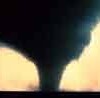
Tornados
First comes the calm, and then the fury is unleashed. In the center of it all could be a tornado, a natural storm formation that spins at incredible speed and always - like in the movies - seems unstoppable as it approaches.Ecobreves – VENEZUELA: Sanctuary for Iguanas
Some 320 iguanas, a threatened species in Venezuela, now are protected in a refuge in the central industrial city of Valencia, the work of an environmentalist couple with the backing of a private company.Ecobreves – REGIONAL: Civil Society Has the Word
The World Development Report 2003, published by the World Bank, will include an environmental development and conservation proposal drawn up by indigenous and ethnic leaders, academics and civil society representatives from throughout Latin America who gathered last week in Costa Rica.« Previous Page — Next Page »


The Week with IPS

NEXT STOP - SDGs
Tracking global progress towards a sustainable world
Tracking global progress towards a sustainable world
