Languages
Wednesday, October 14, 2026



News and Views from the Global South
Ecobreves – VENEZUELA: Readying for Reforestation
Venezuela's Environment Ministry announced that it will finalize resources for the Tree Mission, a reforestation program for river headwater areas begun in 2006, and now intended to recover national parks affected by the fires resulting from the drought that has lasted since 2009.WHERE IS THE GLOBAL ECONOMY HEADED?
After a deep and widespread contraction in economic activity and a significant drop in output and employment, policy makers, financial analysts, and media pundits all appear to be heartened by the news from different parts of the world that the worst is over. The main concern now is about the strength and the shape of the recovery.Ecobreves – ARGENTINA: Threats Against Eco-Activists
Environmental and neighborhood groups in the eastern Argentine province of Santa Fe have reported threats that they believe are related to their fight against the spraying of dangerous agrochemicals near urban zones.Ecobreves – BRAZIL: Macaúba Palm for Biodiesel
The macaúba (Acrocomia aculeata), an abundant palm native to Brazil, will be important raw material for biodiesel, according to Entaban Ecoenergetics of Brazil, a partnership of Spanish and Brazilian capital.Clear Waters Mercosur's Underground Treasure
The Guaraní Aquifer remains unpolluted and an essential reserve for an increasingly thirsty world, according to a detailed report from the four countries under which it lies.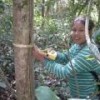
Forests at the Climate Crossroads
The use of forests as a tool to fight climate change is facing more and more doubts.
Final Throes for Jamaica's 'Hippie Paradise'?
What was once a magical place in Jamaica is on the verge of losing its best trait: the beaches.Ecobreves – MEXICO: Worm-Made Fertilizer Regenerates Soils
The use of organic fertilizer made by worms is on the rise in Mexico.DEVELOPING COUNTRIES NEED A GREEN REVOLUTION
The current financial and economic crisis drew attention away from the food crisis, but the latter still remains a threat to the achievement of the Millennium Development Goals (MDGs) and sends a warning of the dangers of low investment and poor policies in the agricultural sector.
Quake a Chance for Sustainable Rebuilding in Chile
Chilean environmentalists are promoting sustainable and inclusive reconstruction of their country in the aftermath of the Feb. 27 quake. They want better-planned cities and unconventional renewable energy sources.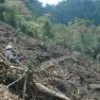
The Tangled Road of Peru's Forest Law
Some of the provisions of new regulations for protecting the forests of Peru and the rights of the indigenous communities of the Amazon have stirred up controversy.Sturgeons Return to the Danube
A program involving experts and officials from eight European countries is working to repopulate the iconic Danube with the endangered beluga sturgeon.Ecobreves – VENEZUELA: Fires Cover Caracas in Smog
A hot, dense haze covered the Venezuelan capital in late March, when the ash from a series of fires across some 140 hectares on Mount Ávila, which looms over the capital, mixed with the city's usual air pollutionEcobreves – CHILE: Quake Shifted the Environmental Calendar
The government's environmental agency CONAMA on Mar. 19 suspended for 15 workdays the deadlines for proceedings before the Environmental Impact Evaluation System in the regions of El Maule, Bío-Bío and La Araucanía, the hardest hit by the Feb. 27 earthquake.Ecobreves – CUBA: Eastern Region under Seismic Alert
A quake measuring 5.5 on the Richter scale shook up residents in Cuba's southeastern provinces, prompting concern about increasing seismic activity in the Caribbean, most notably the Jan. 12 earthquake in Haiti.DARFUR PEACE TALKS: WHERE ARE THE WOMEN?
While the normalization of diplomatic relations between Chad and Sudan and the signing of a cease fire and framework for peace negotiations between the Sudan government and the Justice and Equality Movement (JEM) are being heralded as critical steps towards peace in Darfur, there is still a long way to travel to resolving the ongoing crisis in Darfur.EUROPE. THE CRISIS OF THE LEFT
The victory of the right in January's elections in Chile has stirred reflections on the crisis of the left. Of the 15 countries in Europe that had leftist governments in 1992, only five do today, and of these three -Portugal, Spain, and Greece- presently find themselves in grave financial and social difficulty. For people under fifty, it is hard to grasp how deep the roots of this crisis go. The solution does not seem to be a quick one.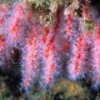
Corals Fight for Survival
Delegates from 175 countries discuss listing endangered plant and animal species to protect them from unregulated trade. For corals it's a lost opportunity.
The Caribbean Trembles
The Haiti earthquake was a reminder that the beautiful Caribbean is one of the planet's most geologically active zones.Ecobreves – MEXICO: A Green University
The private Ibero-American University of Mexico is working to reduce its harm to the environment through the ambitious "Green Campus" program.Ecobreves – BRAZIL: Bioinsecticide Against Dengue
A biological insecticide developed at Brazil's Oswaldo Cruz Foundation is an effective weapon against dengue because it does not harm human health or the environment, say researchers.« Previous Page — Next Page »





The Week with IPS

NEXT STOP - SDGs
Tracking global progress towards a sustainable world
Tracking global progress towards a sustainable world
