Languages
Friday, November 6, 2026



News and Views from the Global South
Ecobreves – MEXICO: Peasant Farmers Oppose Hydroelectric Dam
The Federal Electricity Commission of Mexico has put off until 2018 the construction of La Parota dam, in the southern state of Guerrero, but residents there say they will never allow it to be built.Ecobreves – BRAZIL: Low-Income Housing with Solar Heaters
The "My House My Life" program, which is slated to finance one million low-income housing units in Brazil in a bid to reactivate the economy and create jobs, will also promote the use of environmentally friendly materials and technologies, including solar energy.LET THE INTERNATIONAL CRIMINAL COURT DO ITS WORK
Representatives of African States will meet in Addis Ababa (June 8-9) to "exchange views" on the International Criminal Court (ICC). Prompted by the war crimes indictment of Sudanese President Omar Al-Bashir, the meeting will provide a platform for the Court's dissenters in Africa, and aim to sew discord among ICC supporters.BURMA: DEMOCRACY LEADER TRIAL A RUSE TO KEEP HER OUT OF POLITICS
The 15-member UN Security Council issued a press release on 22 May expressing concern "about the political impact of recent developments relating to Daw Aung San Suu Kyi". The council members reiterate "the importance of the release of all political prisoners" as well as the need for Burma's military leaders "to create the necessary conditions for a genuine dialogue" with Daw Suu Kyi and other opposition and minority groups in order "to achieve an inclusive national reconciliation".Ecobreves – CUBA: Invasive Plants Gain Ground
Cuban scientists have warned that this Caribbean island nation lacks an updated inventory of invasive plant species and sufficient information about the real damage they cause the ecosystems.Ecobreves – BRAZIL: University Students Take On E-Waste
The University of São Paulo has opened Brazil's first government-run center for recycling electronic waste.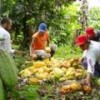
The Farmers Who Abandoned Coca for Cocoa
Amidst the violence of civil war and the illegal coca trade, a handful of Colombian farmers have embraced chocolate production in the Amazon forest.
“I Hope We Are Civilized When Climate Disaster Hits”
"It's like the pre-World War II calm," says British scientist James Lovelock in describing the human situation and lack of action to adapt to global climate change.Ecobreves – VENEZUELA: Orinoco Delta Now a Biosphere Reserve
The Orinoco Delta, Venezuela's youngest geological area at just one million years old, has been added to the network of 544 biosphere reserves of UNESCO (United Nations Educational, Scientific and Cultural Organization).Ecobreves – CHILE: No to a Gas Tax Cut
Environmental groups in Chile oppose President Michelle Bachelet's decision to lower the maximum tax on gasoline until April 2010.Ecobreves – HONDURAS: Oil Exploration Threatens Marine Resources
The oil exploration effort that the Honduran government plans for parts of the Caribbean coast endangers the marine areas of the Mesoamerican biological corridor, warned the Environmental Prosecutor's Office.PANDEMIC THREATS SPUR DEVELOPMENT OF GLOBAL HEALTH COMMONS
The specter of a swine flu pandemic has driven home the urgent need for more rapid and effective responses to a wide range of public health threats. But in order to respond more effectively, we need to create a more open system for the exchange of vital health information and research across sectors, disciplines, geographic, economic and cultural boundaries. In a world of increasingly global emergencies, we need all hands on deck, including the patients and publics most affected.
Tourism Threatens Natural Treasure
A unique natural and geological site in the Dominican Republic hangs in the balance in the debate between ecotourism and major hotel expansion.Preserve Peru, Save the World
Serious threats to Peru’s natural wealth and biodiversity mean it is urgent to get its regulations up and running.Ecobreves – MEXICO: Testing Tiny Device to Fight Epilepsy
Mexican researchers say they are ready to involve patients with epilepsy in tests of a millimeter-sized device placed in the brain and which releases substances to control the illness.Ecobreves – ARGENTINA: New Environmental Party
Political leaders and environmental activists in Argentina this month founded the Green Initiative Party, which will field its own candidates in June’s legislative elections.Ecobreves – HONDURAS: Gas Company Case Goes to OAS
Residents, environmentalists and civil society groups will ask the Organization of American States to intercede on their behalf with the governments of Mexico and Honduras to relocate installations of Gas del Caribe, a Mexican firm that has caused damage in the Honduran region of Omoa.Ecobreves – BRAZIL: Final Steps to Eliminate Ozone-Depleting Gases
The Brazilian government this month launched its HCFC (hydrochlorofluorocarbon) Elimination Program, in keeping with the Montreal Protocol, whose goal is to halt consumption of these gases and eliminate them by 2030.THE UBIQUITOUS PHANTOM OF INSECURITY
Not long ago the people on this planet lived without the anguish of insecurity. This is because they assumed that insecurity was the natural state of things, for everyone, rich and poor, powerful and weak, for the colonised and the imperialist occupiers. Life seemed comparatively more normal, and people were more fatalistic and resigned. The world was, you might say, predominantly conservative. Only a minority of bold visionaries, idealists, and renegades took the risk of seeking change, frequently at a high cost to themselves (repression, imprisonment, execution, exile).PASHTUNISTAN: A NEW MEMBER OF THE UNITED NATIONS?
An outside-the-box approach is needed for the worsening problems of Afghanistan and Pakistan. US official policy in its war in Afghanistan is to combat Al Qaeda and make sure there are no further attacks on the USA from their safe havens. Yet, on his recent visit to the US, Afghan President Hamid Karzai said that there are no Al Qaeda members in Afghanistan. General David Petraeus, US Central Command Commander, also stated that no Al Qaeda members are in Afghanistan.BEYOND THE CRISIS
Though the world economic outlook continues to look grim, it is worth asking what the world will be like when we exit this crisis. We have to identify the forces that are affecting the course of events so that we can change the existing order and avoid these problems in the future.« Previous Page — Next Page »





The Week with IPS

NEXT STOP - SDGs
Tracking global progress towards a sustainable world
Tracking global progress towards a sustainable world
