Languages
Wednesday, October 21, 2026



News and Views from the Global South
In His Fight Against WHO, Trump Plays Politics with Human Lives
President Donald Trump’s threat to abruptly cut all US funding to the World Health Organization (WHO) has been described as ‘reckless and deadly”—particularly at a time when the Geneva-based UN agency was engaged in an uphill battle against the spreading coronavirus.
Modern Day Slavery Reaches a Far Corner of the World
The deadly, fast-spreading coronavirus which upended three key UN conferences—on the empowerment of women, on nuclear disarmament and on indigenous rights—claimed another casualty last week when a commemorative meeting on the transatlantic slave trade was postponed.
White Supremacists, Yellow Peril & “Chinese Virus” Add to a Volatile Political Mix
When US President Donald Trump repeatedly characterized the fast-spreading COVID-19 as a “Chinese virus” last week, it prompted some white supremacists to resurrect an age old ethnic slur against Chinese and East Asians: the “Yellow Peril” which, in a bygone era, was touted as a xenophobic threat to the Western world.
Could the Coronavirus Be a Biological Weapon in the Not-Too-Distant Future?
The devastating spread of the deadly coronavirus across every continent-- with the exception of Antarctica-- has triggered a conspiracy theory on social media: what if the virus was really a biological weapon?
As Virus Spreads, New York City Goes into a Locked Down Mode
As the deadly coronavirus spread across the five boroughs, New York city (NYC) was a on a locked down mode with the closure of public schools, the shutting down of sporting events, restrictions on Broadway shows and limiting the capacity at bars and restaurants.
UN Reaches 90:90 Gender Parity in Senior Leadership Transforming Organizational Culture
The United Nations claims it has reached one of its primary goals relating to women’s rights in the world body: gender parity at senior levels of management and in the highest echelons of the Organization.
Coronavirus Threatens to Wreck Nuclear Review Conference
First, it was the ill-fated annual sessions of the UN Commission on the Status of Women (CSW), scheduled for March 9-20, which was undermined by the spreading coronavirus COVID-19.
Coronavirus Claims its First UN Casualty
The deadly coronavirus COVID-19, which is spreading across China, Japan, South Korea, Iran, Italy-- along with new cases in Asia, Western Europe and the Middle East-- has claimed one of its first casualties at the United Nations.
UN Accused of “Hypocrisy” Launching Equal Pay Day While Condoning Wage Discrimination
The United Nations, which has long preached the irrefutable concept of income equality to the outside world, is now accused of condoning wage discrimination in its own backyard.
A Post-2020 Global Biodiversity Framework Aims at Reinforcing Efforts to Save World’s Ecosystem
The UN’s highly-touted socio-economic agenda, which lays out an ambitious global plan for “people, planet and prosperity”, has been dominated by “goals, targets and deadlines.”
As Planet Burns, One Million Species in World’s Eco-System in Danger of Extinction
When UN Secretary-General Antonio Guterres addressed the 193-member General Assembly last December, he focused on the smoldering climate crisis-- pointing out that the last five years have been the hottest ever recorded.
A Multi-Billion Dollar US Mideast Arms Market May be in Jeopardy
When President Saddam Hussein ran one of the world’s most authoritarian regimes in the militarily-volatile Middle East during 1979-2003, US newspapers routinely described him as “the strongman of Iraq” — as most journalists rightly view dictators worldwide.
World’s Young Activists at War: First, Occupy Wall Street, Next Un-Occupy Palestine
The world’s young activists, numbering over 3.8 billion, are on the war path. The rising new socialist movements—which included “Black Lives Matter,” “Occupy Wall Street” “Un-Occupy Palestine” and "the #Me Too Movement" triggering women's marches— were aimed at battling racism, institutionalized inequalities, political repression and sexual harassment.
UN Staffers Rattled by Deadly Coronavirus Pandemic
With over 37,500 staffers in its global Secretariat payroll, the United Nations has gone high alert as the deadly coronavirus continues to take a heavy toll worldwide.
New York City, with 8.3 million People, on High Alert to Stall Spread of Deadly Coronavirus
Faced with a potential pandemic of the deadly coronavirus, New York city officials took a series of preventive measures to stall the spread of the disease as it was spinning out of control in China.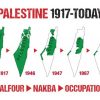
US Mideast Peace Plan: Israelis Offered the Cheese & Palestinians the Holes
The Israeli human rights organization B’Tselem has described the much-ballyhooed US Middle East peace plan as “more like Swiss cheese-- with the cheese being offered to the Israelis and the holes to the Palestinians”.
China Ranked World’s Second Largest Arms Producer Trailing Behind US
Donald Trump, the vociferously unpredictable US president, has long chastised China for seeking “unfair” advantage over trade and tariffs, violating intellectual property rights and “manipulating” the country’s currency to its advantage.
When UN’s Cash Crisis Undermines Human Rights, Are the World’s Torturers the Key Beneficiaries?
The UN’s ongoing cash crisis, which has virtually destabilized the Organization’s day-to-day operations, has also undermined the human rights mandate of the Geneva-based Human Rights Council (HRC).
UN Chief & Staff Union Predict Another Cash Crisis in 2020—if Member States Don’t Pay Up
UN Secretary-General Antonio Guterres declared last week that the United Nations just “managed to survive its deepest financial crisis in a decade.”
Geneva Staff Battles UN Chief over Unequal Pay & Illegal Salary Cuts
As the United Nations commemorates its 75th anniversary this year, the financially-crippled Organization is also saddled with a rash of administrative problems, plus an ongoing cash crisis, perhaps one of the worst in history.
Global Women’s March Hits the Streets of New York
The streets of New York city were the center of the fourth annual Global Women’s March when tens of thousands of women, along with men, joined hands to defend and advance the cause of women’s rights worldwide.« Previous Page — Next Page »





The Week with IPS

NEXT STOP - SDGs
Tracking global progress towards a sustainable world
Tracking global progress towards a sustainable world
