Languages
Tuesday, October 6, 2026



News and Views from the Global South
New Set of Sustainable Development Goals Looks Beyond 2015*
When world leaders from over 100 countries wind up their three-day Rio+20 summit in Brazil next week, they will leave behind the shattered remains of a slew of proposals that never got off the ground.
Activists Aren’t Mourning Obama’s Absence at Rio Summit
When a reluctant George H.W. Bush, Sr., then U.S. president, changed his mind and decided at the eleventh hour to address the 1992 Earth Summit in Rio, he sounded defensive in his strong response to charges that the United States was one of the major powers responsible for the some of the world's worst environmental ills - from greenhouse gases to conspicuous consumption.
Q&A: Volunteer Spirit Alive in Rio
When the Rio+20 summit gets underway in Brazil next week, the estimated 50,000 to 60,000 participants will not only include world leaders, government delegates and U.N. staffers but also a staggering array of activists from the far corners of the world.
Defining Green Economy May Stymie Rio Summit
The thematic battle at the U.N. Conference on Sustainable Development (UNCSD) in Brazil next week will be primarily around the new concept of a "green economy" - and how best to define it.
Rio+20: Transforming Political Platitudes into Economic Realities
When world leaders endorse the final plan of action, titled "The Future We Want, at the Rio+20 summit in Brazil next week, a lingering question may remain unanswered: how best can the United Nations transform political platitudes into economic realities?
Will Water Dry Up at Summit on Sustainable Development?
The headline in a New York newspaper last March captured the essence of a future potential threat to political stability the world over: "U.S. Report Sees Tensions Over Water."
How Would You Measure Success at the Rio Summit?
When the heavily hyped three-day U.N. Conference on Sustainable Development (UNCSD) comes to a close in Rio de Janeiro Jun. 22, what would be the yardstick to measure its successes and failures?
RIO+20: A Stalemated U.N. in Do-or-Die Session on Action Plan
After weeklong negotiations, a meeting of the Preparatory Committee (PrepCom) to finalise a plan of action titled "The Future We Want" for next week's Rio+20 summit has failed to reach agreement - and deferred a decision to a final three-day session in Brazil.
Expo 2012 Shadows Rio+20 on Sustainable Oceans
When the U.N. Conference on Sustainable Development (UNCSD) takes place in Brazil next week, it will be closely shadowed by another event thousands of kilometres away in the South Korean coastal town of Yeosu: Expo 2012.
RIO+20: Earth Summit Negotiated the Size of the Zero
Amidst much political fanfare, the 1992 Earth Summit in Rio de Janeiro concluded with the adoption of the Rio Declaration on Environment and Development and the landmark Agenda 21 blueprint for a sustainable future in the 21st century.
U.N. Aims To Offset its Own Carbon Footprint
As the international community readies for a global mega-conference on sustainable development in Brazil mid-June, the United Nations is determined to practice what it preaches to the outside world: improve resource efficiency and drastically reduce its own greenhouse gas emissions.
RIO+20: Canada, Last Holdout, Drops Opposition to Water as Human Right
Canada, in a dramatic political turnaround, has signaled its willingness to recognise water and sanitation as a basic human right.
Q&A: North-South Divide Looms Heavily Over Rio+20 Summit
The 1992 Earth Summit in Rio de Janeiro was to a large extent derailed by a North-South divide: a battle between a coalition of rich industrial nations versus the world's developing countries led by the Group of 77.“Big Five” Crushes “Small Five” Over Veto Powers
At the height of the Cold War, a Peruvian diplomat, Dr. Victor Andres Belaunde, publicly expressed scepticism about the ability of small countries to survive the diplomatic might of the big powers in the world body.
U.N. Chief Disappointed Over Deadlocked Rio+20 Negotiations
Secretary-General Ban Ki-moon, who has invested heavily in the success of the upcoming U.N. Conference on Sustainable Development (UNCSD), is publicly expressing his frustration at the lack of substantial progress on a final plan of action for a greener economy and a sustainable future worldwide.
Q&A: Earth Summit Deadlocked Until Eleventh Hour
The 1992 Earth Summit in Rio de Janeiro has been described as one of the largest international conferences in the history of the United Nations, attracting over 20,000 participants, including more than 100 world leaders.
Maternal Deaths Drop By Nearly Half
The statistics have remained staggering: every two minutes, a woman dies of pregnancy and child birth-related complications caused primarily by severe bleeding, infections, high blood pressure and unsafe abortions.
“Small Five” Challenge “Big Five” Over Veto Powers
The 193-member General Assembly is expected to vote on a resolution - described as "historic" - requesting the five permanent members (P5) of the Security Council to consider "refraining from using their vetoes on action aimed at preventing or ending genocide, war crimes and crimes against humanity".
Q&A: Protecting Oceans Equals Protecting Our Planet
The U.N. Environment Programme (UNEP), whose mandate includes the preservation and protection of the world's fast-degrading oceans, will play a pivotal role in Expo 2012, an international exhibition to be formally opened later this week in the coastal town of Yeosu in South Korea.
U.N. Fails to Finalise Rio+20 Plan on Sustainable Future
After two weeks of closed door negotiations, a U.N. preparatory committee (PrepCom) has failed to reach consensus on a global plan of action, titled "The Future We Want," to be adopted by a summit meeting of world leaders mid-June in Brazil.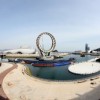
Expo 2012 Aims to Protect World’s Endangered Oceans
Come May 12, South Korea will host its largest single landmark event for the year - an achitecturally-glittering Expo 2012 - continuing a 161-year-old tradition going back to the first Great Exhibition in England in 1851 showcasing the steam engine.« Previous Page — Next Page »





The Week with IPS

NEXT STOP - SDGs
Tracking global progress towards a sustainable world
Tracking global progress towards a sustainable world
