Languages
Thursday, October 8, 2026



News and Views from the Global South

U.S. Lifestyle Is Not Up for Negotiation
Just before the 1992 Earth Summit in Rio de Janeiro, some of the industrial nations, and specifically the United States, were lambasted for their obscenely high consumption of the world's finite resources, including food, water and energy.
Q&A: The Road to Rio Goes Through Cairo
The U.N. Population Fund (UNFPA) rightly believes the road to Rio goes via Cairo - and that sustainable development and population are inextricably linked.
Taylor’s War Crimes Conviction Sends Powerful Message
The United Nations is rejoicing over the conviction of a former head of state for committing crimes against humanity, specifically involving the recruitment of child soldiers.
U.N. Focuses on Largest Generation in History
The United Nations, which has remained focused on the world's political and military hotspots, has turned its attention to the bigger socioeconomic issues facing adolescents and youth, including poverty, sexual abuse, female genital mutilation and lack of reproductive health care.
U.N. in Last Ditch Bid to Finalise Rio+20 Action Plan
The Rio+20 sustainable development summit, scheduled to take place in Brazil in June, is billed as a key meeting of world leaders who are expected to renew their political commitment and approve a wide-ranging plan for a greener future.
Economic Crisis Takes a Bite From Military Spending
The global economic crisis - which had its origins back in 2008 - has had a spreading negative impact on military spending worldwide, according to a new study released by the Stockholm International Peace Research Institute (SIPRI).
Reaffirmation of Women’s Rights Key to Rio+20 Success
The Rio Declaration on Environment and Development, unanimously adopted by 178 governments at the June 1992 Earth Summit in Brazil, specifically recognised that "women have a vital role in environmental management and development."Eastern Europe, a Cold War Relic, Still Alive at U.N.
A politically intense battle between Lithuania and Serbia for the post of president of the next General Assembly sessions has shifted the focus on an anomaly of the Cold War era: the existence of the long-defunct Eastern Europe.
World’s Dictators More Scared of Tweets Than Opposing Armies
In his keynote address to the Global Colloquium of University Presidents at New York's Columbia University last week, U.N. Secretary-General Ban Ki-moon spoke of the growing power exercised by the world's younger generation in an age of high- speed technology and the information superhighway.
U.N. Warns of Staggering Urbanisation in Asia, Africa
Asia and Africa will account for a hefty 86 percent of all increases in the world's urban population in the next four decades, the United Nations said in a report released Wednesday.
Q&A: U.S. Funding Cuts in UNESCO More Audible than Visible
When the 194-member General Conference of the U.N. Educational, Scientific and Cultural Organisation (UNESCO) was on the verge of admitting Palestine as a full-fledged member of the Paris-based U.N. agency last year, the United States warned against it - and threateningly.
U.N.’s Mega Renovation Project Runs Short of Funds
The United Nations, which is in the process of refurbishing its 62-year-old headquarters building at a cost of over 1.8 billion dollars financed by member states, is now seeking additional funds because of huge cost overruns.
Rio+ 20 Suffers Leadership Void Weeks Ahead of Summit
When a landmark U.N conference on sustainable development kicks off in Brazil mid-June, more than 120 world leaders are expected to participate in the much-ballyhooed talkfest on the future of the global environment.
Asia Accounts for World’s Five Largest Arms Buyers
China, India and South Korea - three of the most vibrant economies in Asia - are also beefing up their military arsenals with new weapons systems from the United States, Russia, Germany, France and UK.
Q&A: Expo 2012 to Focus on Protecting World’s Marine Resources
The United Nations, which is hosting a major international summit on the global environment in Brazil in late June, points out that while the world's oceans account for 70 percent of the earth's surface, only one percent of this area is protected.
Seoul Summit Aims at Nuclear Safety Amidst Rising Threats
Against the backdrop of a politically-waffling, nuclear-armed North Korea as its unpredictable neighbour, South Korea is hosting a nuclear security summit later this month to be attended by over 40 heads of state and government.
Gender Empowerment Still Lags Far Behind in Global Village
When the United Nations concluded a two-week session highlighting the plight of rural women last week, the meetings singled out both the achievements and shortcomings of the ongoing relentless battle for gender equality in a world still dominated - and overwhelmingly ruled - by men.The soul of ‘Save Maldives’ now in the sea of silence
Fathulla Jameel, who passed away after a brief illness in Singapore last week, had the distinction of being Foreign Minister of the Maldives for more than 27 years, second only to his counterpart in Bahrain back in the 1990s. At the U.N. delegate's lounge, he was once blessed with the title: "Dean of foreign ministers." And he missed finding a place in the Guinness Book of World Records as "Foreign Minister for Life."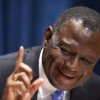
U.N. Aims at Major Global Conference on Women in 2015
As the race towards gender equality moves at an exceedingly slow pace, the United Nations is calling for a major international conference on women in 2015 - 20 years after a landmark meeting in Beijing in 1995.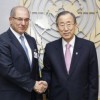
Syria’s Chemical Weapons Trigger New Threats in War Zone
As the besieged government of President Bashar al-Assad continues to violently suppress the warring political opposition in Syria, the United Nations has expressed "concern" over reports "on the possible existence of chemical weapons" in the embattled Middle Eastern country.
Abolitionists Target Funders of Nuclear Arms Industry
The world's nuclear weapons industry is being funded - and kept alive - by more than 300 banks, pension funds, insurance companies and asset managers in 30 countries, according to a new study.« Previous Page — Next Page »





The Week with IPS

NEXT STOP - SDGs
Tracking global progress towards a sustainable world
Tracking global progress towards a sustainable world
