Languages
Thursday, October 8, 2026



News and Views from the Global South
Abolitionists Target Funders of Nuclear Arms Industry
The world's nuclear weapons industry is being funded - and kept alive - by more than 300 banks, pension funds, insurance companies and asset managers in 30 countries, according to a new study.
World Has Met Development Target on Water, U.N. Claims
When the U.N. General Assembly unanimously adopted a resolution back in September 2000 laying out eight Millennium Development Goals (MDGs), it specified 2015 as the target date to achieve them.
World Has Met Development Target on Water, U.N. Claims
When the U.N. General Assembly unanimously adopted a resolution back in September 2000 laying out eight Millennium Development Goals (MDGs), it specified 2015 as the target date to achieve them.Abolitionists Target Funds Behind Nuclear Arms Industry
The world's nuclear weapons industry is being funded - and kept alive - by more than 300 banks, pension funds, insurance companies and asset managers in 30 countries, according to a new study.
U.N. Chief Exercises Selective Transparency in Key Posts
As Secretary-General Ban Ki-moon announced Friday the appointments of two of his most senior officials, he has also broken new ground in his global search for a new team: an advertisement in a British weekly calling for applicants for vacant high-ranking jobs in the Secretariat.
U.N. Chief Exercises Selective Transparency in Key Posts
As Secretary-General Ban Ki-moon announced Friday the appointments of two of his most senior officials, he has also broken new ground in his global search for a new team: an advertisement in a British weekly calling for applicants for vacant high-ranking jobs in the Secretariat.Women Still Trapped Below Glass Ceiling of Party Politics
The right of women to participate in political life is guaranteed by several international conventions, but transforming an abstract right into a reality requires hard work on the ground, says a new study released here.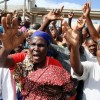
Women Still Trapped Below Glass Ceiling of Party Politics
The right of women to participate in political life is guaranteed by several international conventions, but transforming an abstract right into a reality requires hard work on the ground, says a new study released here.
Syria Stalls Senior U.N. Official’s Visit to War Zone
The United Nations, which remains politically deadlocked over the drawn-out crisis in Syria, has hit another roadblock, this time over humanitarian assistance to the thousands of men, women and children caught up in the 11-month-old conflict.Syria Stalls Senior U.N. Official’s Visit to War Zone
The United Nations, which remains politically deadlocked over the drawn-out crisis in Syria, has hit another roadblock, this time over humanitarian assistance to the thousands of men, women and children caught up in the 11-month-old conflict.
Women, Victims of War, Have No Seat at Negotiating Table
When the U.N. Commission on the Status of Women (CSW) held its inaugural meeting in London back in 1946, the U.S. delegate, Eleanor Roosevelt, read an open letter to "the women of the world" calling on governments to encourage women everywhere to participate in national and international affairs.
Somalia’s Rich Maritime Resources Being Plundered, Report Says
The international community has failed to grapple with the real underlying political and economic issues facing the troubled East African nation of Somalia, which has been surviving without an effective government for over two decades, according to a new study released here.Has the U.N. Reached a Dead End in Syrian Crisis?
When the 193-member General Assembly adopted a resolution against Syria by an overwhelming majority Thursday, the U.N.'s highest policy making body was conscious of the fact that its rulings - unlike the dictates of the 15-member Security Council - are politically impotent because they have no enforcement power.Under Threat in Nepal, Former U.N. Officials Seek Protection
Facing implicit death threats from Nepal's ruling Maoist political party, two former U.N. officials based in Kathmandu have appealed to the United Nations for help and protection.Peace Activists Push for Nuke Abolition Summit in 2015
A coalition of anti-nuclear peace activists and non- governmental organisations (NGOs) is launching a global campaign for a summit meeting of world leaders calling for the total elimination of one of the world's most devastating weapons of mass destruction: the nuclear bomb.Russian, Chinese Arms Fuel Conflict in Sudan, Says Amnesty
Russia and China, two veto-wielding permanent members of the Security Council described as key arms suppliers to the embattled regime in Syria, are now accused of supplying weapons and fuelling an ongoing conflict in another military hotspot: Sudan.South-South Focus to Keep Pace with Rising Population
When the world's rising population hit the historic seven billion milestone last October, the United Nations predicted that population growth will continue to increase, reaching an estimated 9.3 billion by the year 2050.U.N. Security Council Remains “Neutered” by Five Big Powers
Since Russia and China vetoed a key resolution critical of Syrian President Bashar al-Assad's violent repression of the ongoing 11-month old civilian uprising, there has been plenty of public outrage directed at the two permanent members of the Security Council who stood defiant against an overwhelming majority.Russia Sticks to Its Guns Against Heavy Hitters Backing Syria
The political heavy hitters were all there at a key Security Council meeting early this week to decide on the future of beleaguered Syrian President Bashar al-Assad.U.N. Panel Launches Blueprint for Sustainable Development
A long-awaited report by a U.N. high-level panel on global sustainability recommends several far-reaching proposals, including the establishment of new institutions and the creation of global indicators, aimed at protecting the world's environment and strengthening the U.N.'s sustainable development strategy.U.N. Arms Embargoes Busted by Ships from the West
When the Security Council penalises governments with economic sanctions and arms embargoes, the world body's 193 member states are mandated to help implement the wide-ranging punitive measures imposed on these countries.« Previous Page — Next Page »





The Week with IPS

NEXT STOP - SDGs
Tracking global progress towards a sustainable world
Tracking global progress towards a sustainable world
